The fallout from Formula 1’s controversial Monaco Grand Prix continues to grow, with Mercedes team principal Toto Wolff revealing that the team is consulting its lawyers to determine whether there is any way to recover the points George Russell lost due to the FIA’s pit-lane timing controversy.
What initially appeared to be a routine penalty situation has evolved into one of the most significant officiating disputes of the 2026 Formula 1 season. The FIA’s decision to reinstate Pierre Gasly’s Monaco podium after admitting a timing-system error has reopened questions about fairness, consistency, and whether other affected drivers deserve compensation.
For Mercedes, the issue is not merely about a lost result. It could have major consequences in the championship battle.
WHY MERCEDES IS SO FRUSTRATED
The controversy stems from a flaw in Monaco’s pit-lane speed monitoring system. After the race, officials acknowledged that a timing discrepancy caused inaccurate speed readings, leading to penalties that should never have been issued. Alpine successfully challenged Pierre Gasly’s penalties, resulting in the French driver being restored to third place and reclaiming a valuable podium finish.
George Russell, however, suffered a much harsher outcome.
The Mercedes driver initially received a five-second penalty for the same alleged pit-lane speeding infringement. Matters worsened when Mercedes failed to serve that penalty correctly, triggering a drive-through penalty that dropped Russell out of the points entirely. What could have been a podium challenge turned into a disastrous finish.
When the FIA later admitted that the original speeding penalties were based on faulty data, Russell’s situation suddenly looked even more painful.
Unlike Gasly, Russell had already served his punishment during the race, and current regulations offer no straightforward mechanism to reverse such penalties after the fact.
TOTO WOLFF WANTS ANSWERS
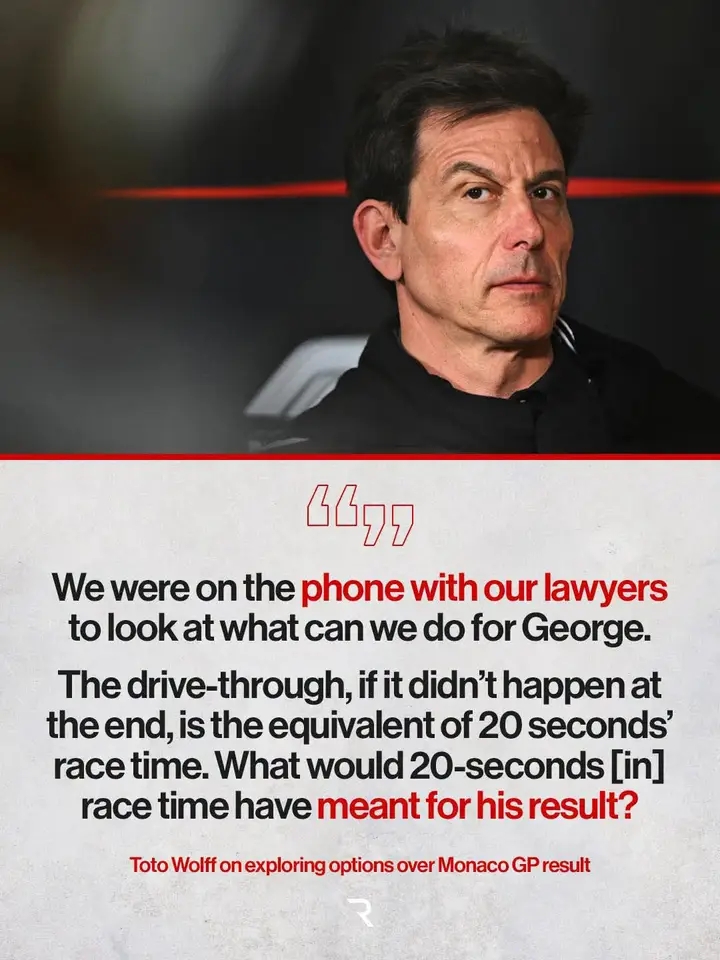
Speaking after the FIA’s ruling, Wolff made it clear that Mercedes is investigating every possible avenue.
The Austrian emphasized that the team is not trying to overturn Gasly’s reinstated result. Instead, Mercedes wants the FIA to examine whether there is any remedy available for Russell, whose race was severely compromised by a penalty that should never have existed in the first place.
The challenge is that Formula 1’s rulebook was never designed for a situation quite like this.
Once a race has concluded and points have been awarded, altering results becomes extremely difficult. Even if everyone agrees that Russell was unfairly affected, identifying a legal pathway to restore lost championship points could prove nearly impossible.
THE BIGGER ISSUE: A PRECEDENT FORMULA 1 NEVER EXPECTED
What makes this situation so important is the precedent it creates.
Formula 1 teams accept that stewarding decisions can be controversial. However, this case is different because the FIA effectively admitted that the underlying data was wrong. The debate is no longer about interpretation of regulations; it is about whether competitors were penalized because of an official measurement error.
That distinction could have long-term implications.
If one team successfully overturns a penalty caused by faulty data, should every team affected by the same error receive equal treatment? Many observers believe the answer should be yes.
Others argue that opening past results could create legal chaos and undermine the finality that motorsport depends upon.
Either way, Formula 1 now finds itself in unfamiliar territory.
THE CHAMPIONSHIP CONSEQUENCES COULD BE MASSIVE
Russell’s disappointment is amplified by the championship context.
The Mercedes driver entered Monaco fighting to stay within touching distance of the title leaders. Instead, he walked away with no points after what had been a strong recovery drive through the field. The result significantly increased his deficit in the standings and dealt a major blow to his championship aspirations.
In modern Formula 1, championships are often decided by small margins.
A lost podium in June can become the difference between winning and losing a world title in December.
That reality explains why Wolff is unwilling to simply move on.
Mercedes understands that every point matters, particularly in a season where the competitive order remains incredibly close behind the front-runners.
WHAT THE FIA MUST LEARN FROM THIS INCIDENT
Beyond the immediate controversy, Monaco has exposed weaknesses in Formula 1’s procedural safeguards.
Several teams reportedly questioned the unusual number of pit-lane speeding violations before the race ended, yet the full extent of the timing issue was only discovered later. Critics argue that warning signs were present and should have triggered a deeper investigation sooner.
The FIA and Formula One Management have already pledged to review their procedures to prevent similar incidents in the future. That review cannot come quickly enough.
As Formula 1 becomes increasingly dependent on complex technology and data systems, ensuring the accuracy of those systems is just as important as enforcing the regulations themselves.
COULD MERCEDES ACTUALLY WIN THIS FIGHT?
Realistically, the chances of Mercedes recovering Russell’s lost points appear slim.
Formula 1 regulations place enormous importance on preserving final race classifications, and there is currently no obvious mechanism for retroactively awarding points to a driver whose penalty was served during the race.
However, that does not mean Mercedes’ efforts are pointless.
By challenging the situation, the team can push the FIA to clarify its procedures, establish new precedents, and potentially create regulations that better address similar situations in the future.
Even if Russell never gets those points back, Mercedes may help shape how Formula 1 handles officiating errors for years to come.
FINAL THOUGHTS
The Monaco Grand Prix controversy has evolved from a simple penalty dispute into a defining governance issue for Formula 1.
George Russell may ultimately remain the biggest victim of the FIA’s timing-system error, while Pierre Gasly enjoys the podium finish he deserved all along. Yet the broader story is about accountability, consistency, and trust in the sport’s decision-making processes.
Toto Wolff’s legal review is unlikely to rewrite the Monaco results. But it does send a powerful message: when official mistakes influence a championship fight, teams will demand answers.
And with the 2026 title battle still wide open, this saga may not be over yet.