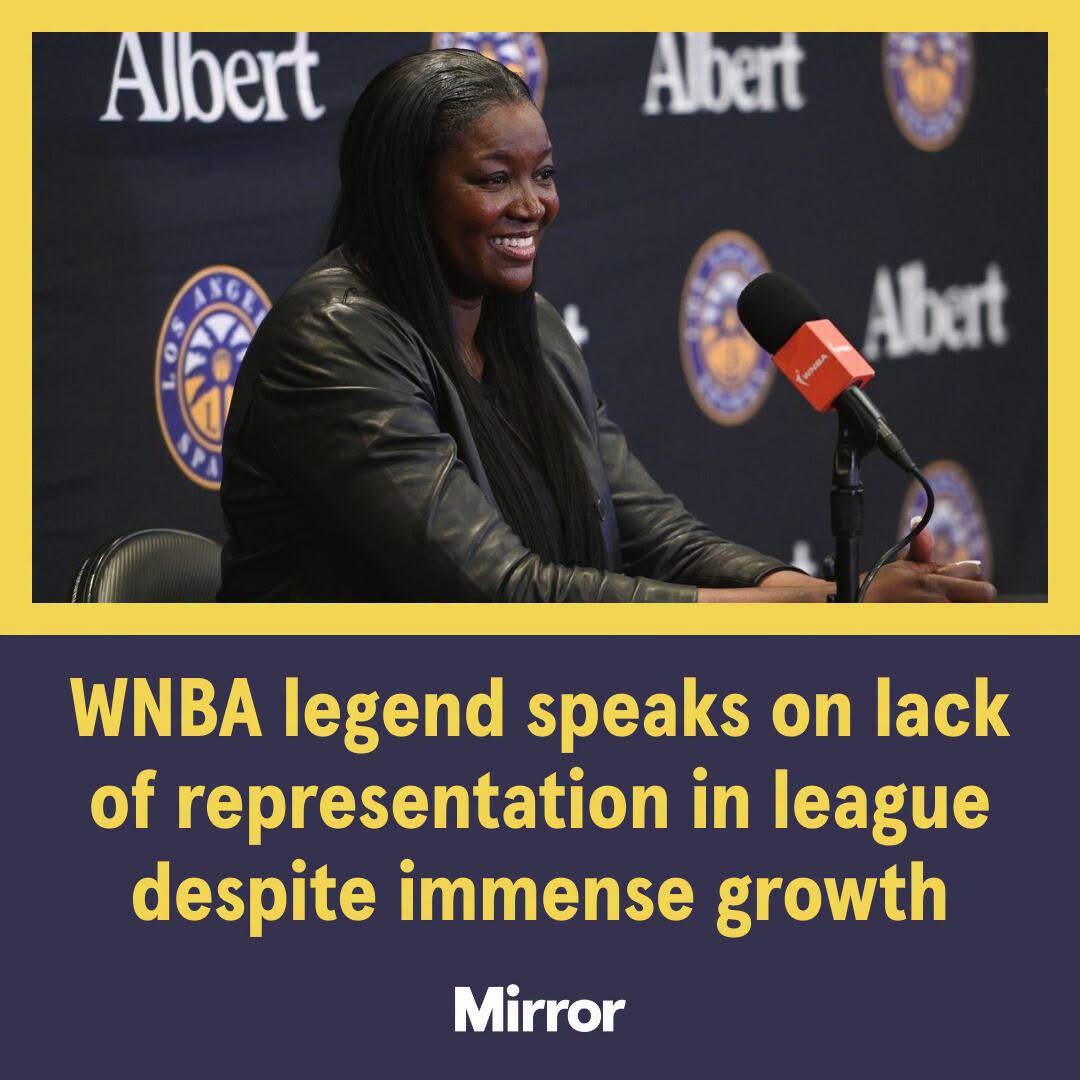
The WNBA is enjoying one of the most successful periods in its history, with record-breaking television ratings, sold-out arenas, and unprecedented global attention. Yet amid the celebration surrounding the league’s remarkable rise, Los Angeles Sparks legend DeLisha Milton-Jones believes one important issue still deserves greater attention: diversity in leadership positions.
During a ceremony honoring her remarkable career with the Sparks, Milton-Jones used the spotlight not only to celebrate the league’s progress but also to raise questions about representation among WNBA head coaches. Her comments have reignited an important conversation about leadership opportunities, career pathways, and whether the league’s coaching ranks fully reflect the diversity of its players.
A WNBA ICON USES HER PLATFORM TO ADDRESS A BIGGER ISSUE
Milton-Jones is one of the most respected figures in WNBA history. A two-time WNBA champion with the Los Angeles Sparks and one of the league’s original stars, she helped shape women’s professional basketball during its formative years.
As the Sparks honored her by retiring her iconic No. 8 jersey, the basketball legend reflected on how dramatically the league has evolved over nearly three decades.
However, while praising the WNBA’s rapid growth, Milton-Jones also acknowledged that progress on the court has not always been matched by equal progress in leadership opportunities. She pointed to the noticeable lack of representation among head coaches despite the league featuring a player base largely made up of women of color.
Her comments were not framed as criticism of individual coaches but rather as an invitation to continue improving the league’s leadership pipeline.
THE WNBA HAS GROWN RAPIDLY—BUT SO HAVE EXPECTATIONS
Few professional sports leagues have experienced the type of momentum the WNBA is currently enjoying.
Television audiences continue to climb, attendance has reached record levels, sponsorship investment is expanding, and stars such as Caitlin Clark, A’ja Wilson, Breanna Stewart, Sabrina Ionescu, Angel Reese, and many others have introduced the league to millions of new fans worldwide.
With that success comes increased attention on every aspect of the sport—not only the product on the court but also the people making decisions behind the scenes.
As organizations continue investing heavily in player development, facilities, and technology, many believe equal attention should also be given to developing future coaches and executives from diverse backgrounds.
WHY REPRESENTATION MATTERS BEYOND THE BENCH
Leadership representation extends far beyond symbolic value. Coaches help shape team culture, mentor athletes, influence organizational decisions, and inspire future generations entering the sport.
Former players often possess years of professional experience, deep basketball knowledge, and firsthand understanding of the challenges athletes face throughout their careers. Creating more opportunities for those individuals to transition into coaching strengthens the league’s overall talent pool.
Milton-Jones herself represents that pathway. After an accomplished playing career, she moved into coaching, gaining experience at both the professional and collegiate levels. Her journey demonstrates how former players can continue contributing to the game long after retirement.
THE CONVERSATION COMES AT A PIVOTAL MOMENT
Milton-Jones’ remarks also arrive as franchises across the WNBA continue evaluating their long-term direction.
Coaching changes have become increasingly common as organizations attempt to maximize championship opportunities during one of the league’s most competitive eras. Every hiring decision now carries greater visibility because of the WNBA’s expanding audience.
For owners and front offices, balancing experience, tactical expertise, leadership ability, and diversity has become an increasingly important part of the hiring process.
While every coaching appointment must ultimately be based on qualifications, many within basketball believe expanding opportunities for underrepresented candidates can strengthen competition while broadening the pool of elite coaching talent.
THE SPARKS CONTINUE BUILDING FOR THE FUTURE
Milton-Jones’ comments also come during an important period for the Los Angeles Sparks.
The franchise remains focused on rebuilding into a championship contender while navigating increased expectations from one of the league’s largest markets. Head coach Lynne Roberts has previously spoken about the pressure that accompanies leading one of the WNBA’s most historic organizations, especially during a rebuilding phase.
As the team works toward long-term success, the broader conversation surrounding coaching opportunities reflects challenges facing many organizations throughout professional sports.
WHAT COULD COME NEXT FOR THE WNBA
The league has consistently demonstrated a willingness to evolve, whether through expansion plans, improved facilities, greater investment in officiating, or enhanced player resources.
Many believe leadership development could become another important area of focus in the years ahead. Expanded mentorship programs, coaching fellowships, and executive development initiatives could create additional pathways for former players interested in remaining involved in the game after retirement.
Such initiatives would not guarantee coaching positions but could help ensure qualified candidates receive greater opportunities to compete for leadership roles.
A CONVERSATION THAT EXTENDS BEYOND BASKETBALL
DeLisha Milton-Jones’ remarks are about more than coaching statistics—they reflect the broader evolution of a league that continues to redefine women’s professional sports.
As the WNBA reaches new commercial and competitive heights, conversations surrounding inclusion, opportunity, and leadership are becoming increasingly important. Ensuring that growth extends beyond attendance figures and television ratings to include opportunities throughout the sport may prove just as valuable to the league’s long-term success.
For Milton-Jones, whose legacy is already firmly established on the court, using her platform to encourage continued progress may become yet another lasting contribution to the game she helped build.