Ferrari’s official denial of speculation surrounding Fred Vasseur’s future as team principal has triggered an immediate wave of déjà vu across the Formula 1 paddock and among the Tifosi. On 29 September 2026, the team’s chief communications officer, Maria Conti, convened a hastily arranged media briefing to declare “full confidence” in Vasseur and his group. The message, delivered on behalf of chairman John Elkann and CEO Benedetto Vigna, stated that Ferrari had “made its choices already” and wanted the focus to remain on the upcoming races rather than external noise.
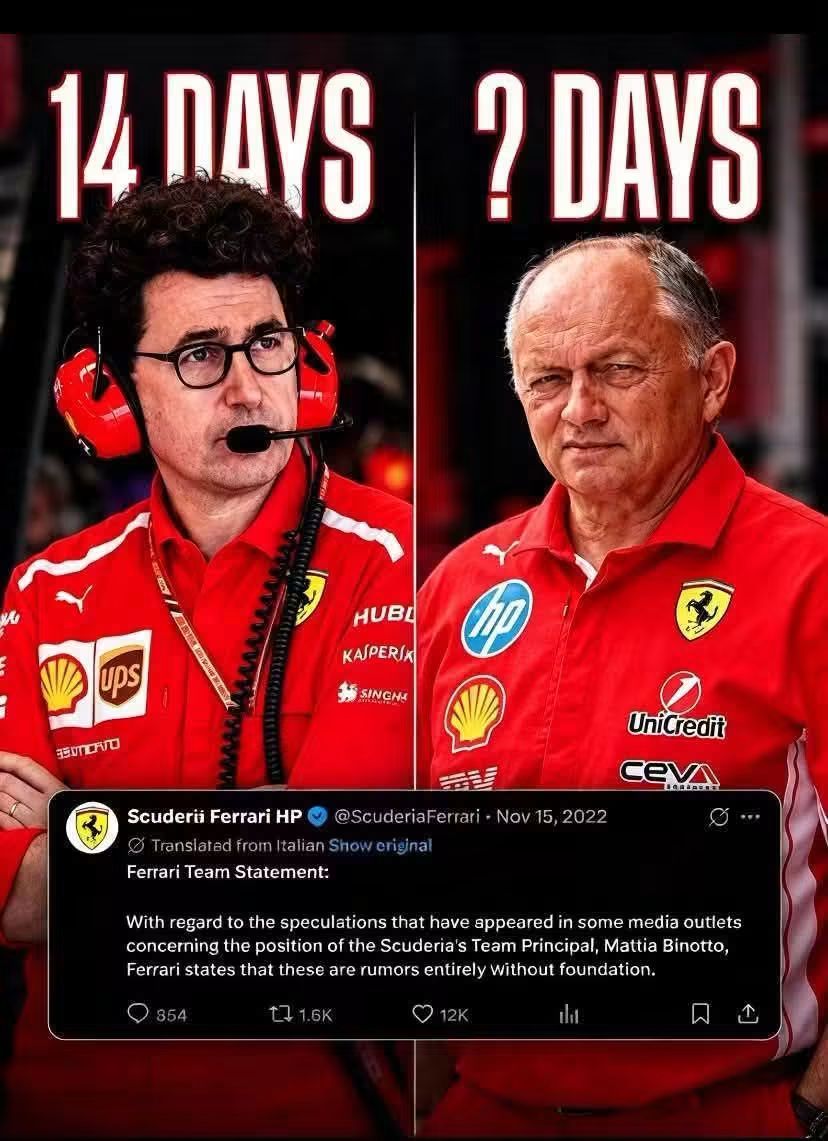
The timing and tone feel familiar. In November 2022, Ferrari issued a near-identical public statement dismissing reports that Mattia Binotto was on his way out. Fourteen days later, Binotto’s resignation was confirmed. That parallel is now the most shared “small data point” in F1 circles, complete with the wry Chinese hashtag that roughly translates to “nobody cares about the small data.” Except this time, plenty of people are paying close attention.
THE 2022 PRECEDENT THAT WON’T DIE
On 15 November 2022, Ferrari posted a concise social media statement: the rumours about Binotto’s position were “totally without foundation.” The team was under pressure after a season that began with genuine title contention and ended in strategic errors, reliability issues, and a slide that nearly cost them second in the constructors’ championship. Binotto, a Ferrari lifter who had risen from engine engineer to team principal, had overseen the early promise of the new ground-effect regulations. Yet the internal and external scrutiny proved decisive. By 29 November, the resignation was official. Fred Vasseur, then at Alfa Romeo, arrived in Maranello for 2023.
That sequence is now being replayed in real time. Vasseur has been in the role since the start of 2023. He was instrumental in bringing Lewis Hamilton to Ferrari for 2025. The team currently sits second in the constructors’ standings, a solid but frustrating position given the expectations that come with the prancing horse. A five-race podium drought and a sizable gap to the leaders have amplified every rumour. Christian Horner’s recent comments—that Ferrari remains the one team he would consider joining without an ownership stake—added fuel. Vasseur himself called the distraction “frustrating” in Baku, noting the team was “not working in the perfect serenity.”
Ferrari’s decision to go public with a confidence vote is rare. Teams usually prefer silence. The fact that Conti felt compelled to speak suggests the noise had reached a level that risked internal cohesion heading into the Malaysian Grand Prix weekend.
WHY THIS MATTERS BEYOND THE HEADLINES
Leadership instability at Ferrari is never just about one person. The Scuderia operates under unique pressure: global brand expectations, passionate Italian media, and a championship drought that stretches back to 2008. A change at the top affects engineering priorities, driver relationships, and the delicate balance between short-term results and long-term car development, especially with the major 2026 regulation shift already shaping resource allocation.
For the drivers, the impact is immediate. Charles Leclerc has spent years waiting for a consistent title contender. Lewis Hamilton arrived with the explicit goal of adding to his record. Persistent leadership speculation creates an atmosphere of uncertainty that can seep into the garage, strategy calls, and the drivers’ ability to extract maximum performance. Vasseur has repeatedly emphasised unity and focus. Whether the public backing restores that calm or merely postpones the next round of questions will become clear in the coming weeks.
The broader F1 industry watches closely. Ferrari remains the sport’s biggest commercial magnet. Any prolonged instability can influence driver market dynamics, sponsor confidence, and the perceived stability of the mid-to-front grid. Horner’s availability has already kept the rumour mill spinning; a genuine opening at Maranello would reshape the managerial landscape overnight.
THE DIFFERENCES THAT COULD BREAK THE CYCLE
History is not destiny. Several factors distinguish 2026 from 2022. Vasseur signed a multi-year contract extension in 2025. The current car has delivered consistent points and occasional race wins, even if podiums have dried up recently. The 2026 power unit and chassis regulations represent a genuine reset; teams that keep continuity through the transition often gain an edge. Ferrari’s public messaging this time was more detailed and proactive, framing the confidence vote as protection for the team’s focus rather than a simple rebuttal.
Still, the optics are awkward. Public denials that later unravel damage credibility. The Italian press has a long memory and an even longer list of sources inside Maranello. If results do not improve quickly, the same cycle of speculation can restart with greater intensity.
PREDICTIONS AND THE ROAD AHEAD
The most probable short-term outcome is relative calm through the remaining races of 2026. Ferrari has drawn a line. Vasseur will continue to stress internal focus, and the drivers will be expected to deliver on track. A dramatic mid-season exit is unlikely; Ferrari historically prefers end-of-season transitions when possible.
Longer term, performance remains the only currency that truly matters in Maranello. If the team closes the gap to the leaders and shows clear progress toward the 2026 regulations, the current confidence vote will be remembered as a successful stabilising move. If the podium drought continues and internal friction reports persist, the 14-day parallel will be cited with increasing frequency.
For the Tifosi, the situation is emotionally charged. Ferrari fans have endured more than a decade without a title. They want stability and results, not another round of managerial theatre. The “small data” of 2022 serves as both warning and cautionary tale: official statements can buy time, but they cannot manufacture performance or erase underlying pressures.
Ferrari has spoken. The next chapter will be written on the track, not in press releases. Whether history repeats or the Scuderia finally breaks the pattern will define the remainder of Vasseur’s tenure and shape the team’s trajectory into the new regulatory era. In Formula 1, confidence is declared in public. Results are the only thing that lasts.