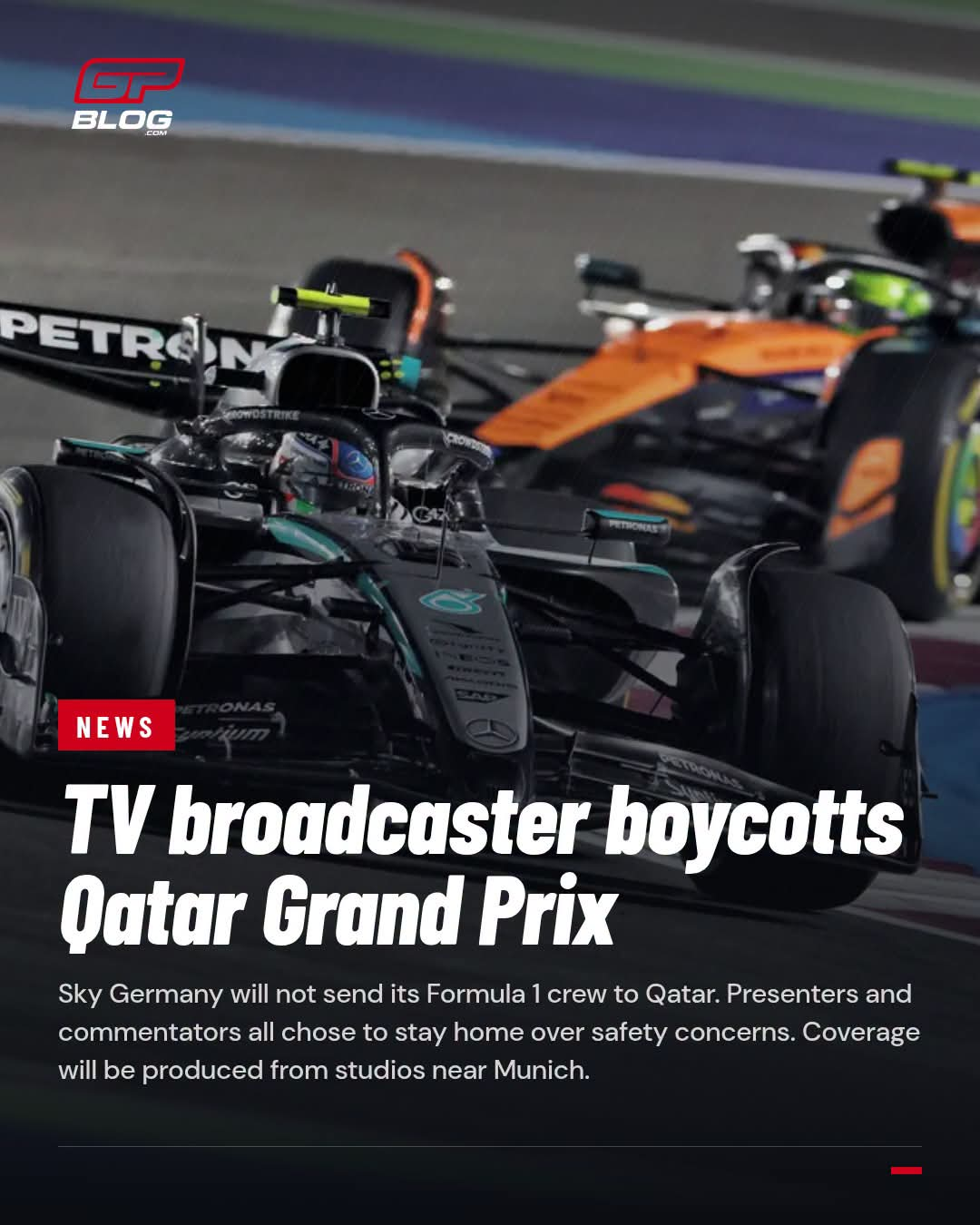
Formula 1’s penultimate round of the 2026 season is suddenly looking a lot emptier in the media center. Sky Germany has confirmed it will not send its Formula 1 television crew to the Qatar Grand Prix, opting instead to produce the entire weekend’s coverage from its studios near Munich. The decision, driven by serious safety concerns linked to the escalating conflict involving Iran, marks a rare and telling break from the sport’s usual on-the-ground broadcast culture.
The German rights holder had maintained a full on-site presence at every one of the season’s previous 20 races. This time, presenters, commentators, and experts including familiar faces such as Peter Hardenacke, Sandra Baumgartner, Ralf Schumacher, and Timo Glock will stay home. The broadcaster left the choice to the talent themselves. They unanimously declined to travel. Coverage of the Lusail race weekend, scheduled for late November, will therefore come entirely from Unterföhring.
The race itself will still air live. Viewers in Germany will not miss the action. What they will miss is the usual paddock atmosphere, trackside interviews, and the immersive feel that only comes from being there. That shift alone speaks volumes about the current climate.
WHY THIS DECISION MATTERS FAR BEYOND ONE BROADCASTER
This is not a minor logistical tweak. Sky Germany’s move is the highest-profile media withdrawal yet from a major F1 event over security fears. It arrives against a backdrop of rising regional instability in which Qatar has found itself both a diplomatic mediator and a target of missile attacks. Circuit organizers have already circulated emergency shelter protocols for potential attacks, a detail that underscored the seriousness of the situation for anyone planning to be on site.
Other European broadcasters appear to be following a similar path. Reports indicate that France’s Canal+, Austria’s ServusTV, and DAZN’s Spanish operation are also planning remote coverage. Sky’s UK and Italian arms have been mentioned as reviewing their own plans. Even some commercial partners, including staff from supplier Puma, are staying away. The collective decision by media organizations that normally treat the paddock as their second home signals a clear prioritization of personnel safety over traditional production values.
For Formula 1 itself, the optics are awkward. The championship has insisted the Qatar and Abu Dhabi races will go ahead as scheduled. Drivers and team personnel will still travel. Yet when the people whose job is to tell the story of the race decide the risk is too high, it raises legitimate questions about the balance between commercial commitments and human safety. Max Verstappen had already voiced public skepticism about racing in the region while conflict continues nearby, noting that contracts should not override basic judgment. His comments now look more prescient than provocative.
**THE HUMAN AND OPERATIONAL IMPACT ON F1 COVERAGE**
On-site media teams do more than provide pretty pictures and live commentary. They deliver the unscripted moments, the exclusive access, the mood of the paddock that studio-based coverage struggles to replicate. Remote production, while technically polished, often feels more distant and less immediate. German fans who have grown used to the polished, personality-driven presentation of Sky’s F1 team will notice the difference.
There is also a broader industry signal here. Sports media organizations have spent years refining remote and hybrid production models, especially after the pandemic. Those tools are now being deployed not for convenience or cost, but for safety. That shift could become more common if geopolitical volatility continues to intersect with the global motorsport calendar. Races in certain regions may increasingly feature thinner media presence, which in turn affects the depth of storytelling available to fans and the commercial value of local coverage.
Teams and the FIA will continue to emphasize that they rely on official security assessments and government advice. Sky’s statement that employee safety remains the top priority is both standard and significant. When a major rights holder reaches this conclusion after consulting its own talent, it puts quiet pressure on everyone else involved to keep reassessing the situation rather than simply following the calendar.
WHAT HAPPENS NEXT FOR ABU DHABI AND THE SPORT’S FUTURE
Sky Germany has indicated it currently intends to send a team to the season-ending Abu Dhabi Grand Prix one week later, while continuing to monitor developments. That distinction is telling. It suggests the broadcaster is making case-by-case judgments rather than issuing a blanket Middle East boycott. Whether that position holds will depend on how events unfold in the coming days.
For Formula 1, the episode adds another layer of complexity to an already demanding end to the season. The championship has long expanded into new and sometimes challenging territories in pursuit of growth and commercial deals. Those deals deliver significant value, but they also bring exposure to risks that pure racing calendars of the past largely avoided. When media partners, suppliers, and even some drivers begin questioning attendance, the conversation inevitably moves beyond sporting considerations into political and ethical territory.
The Qatar Grand Prix will still take place. The cars will race under the lights at Lusail. The championship points will be decided. Yet the absence of familiar media voices from the circuit itself will serve as a visible reminder that the sport does not operate in isolation from the world around it. Safety concerns that once seemed distant have arrived in the paddock in a very concrete way.
In the short term, fans will still get the race. In the longer term, this moment may force organizers, broadcasters, and governing bodies to confront harder questions about when commercial ambition should yield to prudence. Sky Germany’s decision to cover the Qatar Grand Prix from home is more than a production choice. It is a statement that, for some, the risk has crossed a line.