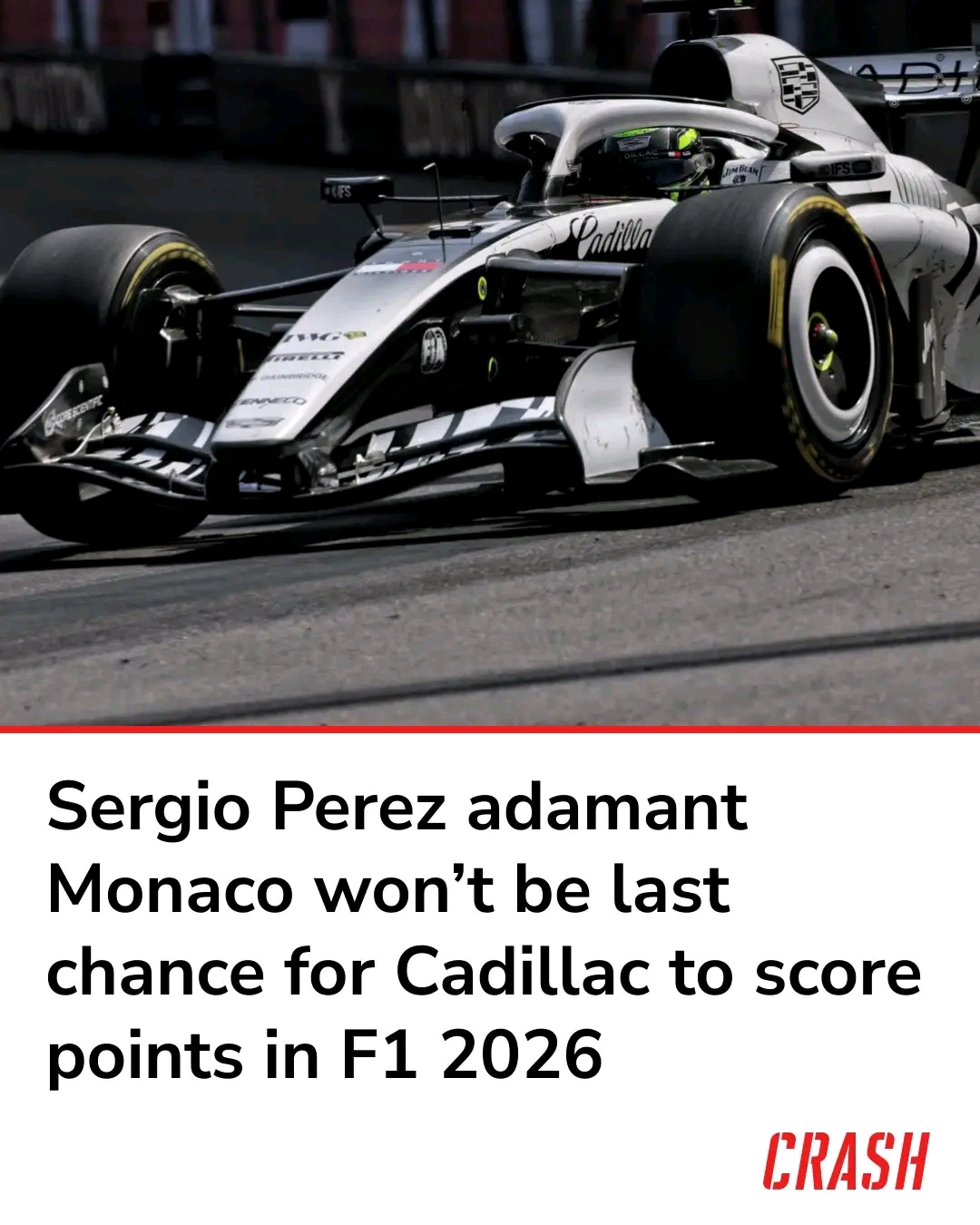
Cadillac’s first Formula 1 season in 2026 has already delivered drama, frustration, and glimpses of promise — and Sergio Perez is making one thing clear: the American team cannot rely on Monaco alone to save its season.
After a chaotic Monaco Grand Prix where Cadillac briefly celebrated its first-ever F1 point before a post-race penalty stripped it away, Perez is now urging realism and long-term thinking as the team fights to establish itself on the grid.
MONACO HEARTBREAK HIGHLIGHTS CADILLAC’S EARLY STRUGGLES
The Monaco Grand Prix looked like a breakthrough moment for Cadillac.
Perez crossed the line in 10th place in a race full of incidents and strategy chaos, initially securing what would have been the team’s first Formula 1 point. However, post-race penalties for a starting infringement dropped him to P15, erasing the milestone and promoting Fernando Alonso into the final points position instead. �
Reuters
For a new team still learning the rhythm of F1, it was a brutal reminder of how small mistakes carry massive consequences at the highest level.
Despite the disappointment, Perez maintained that the performance itself showed progress. Cadillac had, at least on track, been competitive enough to fight for the top ten.
WHY MONACO IS MISLEADING AS A PERFORMANCE BENCHMARK
Monaco is unlike any other circuit in Formula 1.
Its tight layout, low-speed corners, and near-impossible overtaking conditions often create “anomalous” results where track position matters more than outright performance. Perez, a Monaco winner in the past, understands this better than most.
That is why he is pushing back against the idea that Monaco defines Cadillac’s progress.
For a struggling new team, Monaco can act like a trap:
One safety car can shuffle the entire order
Strategy becomes more important than pace
A single incident can create “false” points opportunities
Grid penalties and race control decisions heavily influence results
Perez’s message is simple: if Cadillac relies on Monaco-like chaos for points, it is not building a sustainable foundation.
PEREZ’S MESSAGE: CONSISTENCY OVER CHAOS
Perez’s comments reflect a broader reality for new Formula 1 teams — survival is not about occasional flashes, but consistent execution across a full season.
Cadillac has endured a difficult start to 2026, with early races marked by reliability issues, low qualifying positions, and inconsistent race pace. �
Diario AS
But Perez believes the focus must shift toward:
Regular Q2 and Q3 appearances
Clean race weekends without penalties
Strong pit execution
Development gains across Europe’s faster circuits
In his view, the team must avoid overvaluing Monaco’s “opportunity window” and instead aim to build competitiveness across all circuit types.
CADILLAC’S REALITY CHECK IN ITS DEBUT SEASON
Every new Formula 1 team faces a steep learning curve, but Cadillac’s challenge is amplified by the modern F1 field’s tight competitiveness.
Even small gaps in aerodynamics or tyre management can drop a team from midfield contention to the back of the grid.
Perez and teammate Valtteri Bottas bring valuable experience, but experience alone cannot instantly close performance deficits.
Cadillac’s early objective is not podiums or miracles — it is stability.
That means:
Reducing operational mistakes
Improving qualifying consistency
Understanding tyre degradation patterns
Building reliable race finishes
Monaco may have offered a glimpse of opportunity, but the bigger picture is development.
WHY THIS MOMENT MATTERS FOR CADILLAC’S FUTURE
The significance of Perez’s message goes beyond one race.
For Cadillac, the 2026 season is about credibility.
Failing to score points consistently would reinforce the perception of a “backmarker newcomer,” while even occasional midfield finishes could shift the narrative toward a rising project.
Perez’s insistence that Monaco is not the only hope is a strategic mindset shift:
It signals that Cadillac is not chasing lucky breaks — it is trying to build a long-term Formula 1 identity.
IMPACT ON THE DRIVER LINE-UP AND TEAM DYNAMICS
Perez’s leadership role inside Cadillac is becoming increasingly important.
As a veteran race winner, he is effectively acting as both driver and development reference point. His perspective helps the team avoid emotional reactions after races like Monaco, where frustration could easily distort expectations.
For Bottas, the focus remains similar: consistency and feedback-driven progress.
Together, they represent one of the most experienced line-ups in the field, and Cadillac is relying heavily on that stability to accelerate its learning curve.
WHAT COMES NEXT FOR CADILLAC IN 2026
Looking ahead, Cadillac’s most realistic opportunities for points are likely to come from:
Street circuits (Baku, Singapore)
Variable weather races
High-degradation tracks where strategy plays a bigger role
Reliability-heavy Grands Prix where attrition reshuffles the order
However, Perez’s warning suggests the team is already shifting focus toward more conventional performance gains rather than waiting for “special” weekends.
FINAL THOUGHTS: BUILDING BEYOND MONACO MOMENTS
Monaco gave Cadillac a painful lesson: in Formula 1, almost-counting points is the same as scoring none.
Sergio Perez’s message is not about lowering expectations — it is about broadening them.
If Cadillac wants to survive and eventually compete in the midfield, it cannot rely on chaos, penalties, or street-circuit unpredictability.
It must build a car — and a mindset — capable of scoring points anywhere.
And that, more than Monaco’s brief hope, will define its 2026 season.
—