Red Bull Racing has long been regarded as one of Formula 1’s most dominant teams, but Sergio Perez has now offered one of the clearest insights yet into how the organization operated during his time alongside Max Verstappen. The Mexican driver revealed that the team’s entire structure revolved around helping Verstappen fight for world championships, while insisting he delivered more than expected despite operating under enormous pressure.
Perez’s comments have reignited one of Formula 1’s biggest debates: can any teammate truly succeed alongside Max Verstappen at Red Bull?
PEREZ REVEALS RED BULL’S PRIORITY WAS ALWAYS MAX VERSTAPPEN
Speaking openly about his years with the Milton Keynes-based outfit, Perez explained that Red Bull’s philosophy was straightforward. According to him, the team’s primary objective was winning championships with Verstappen, and every major decision reflected that goal.
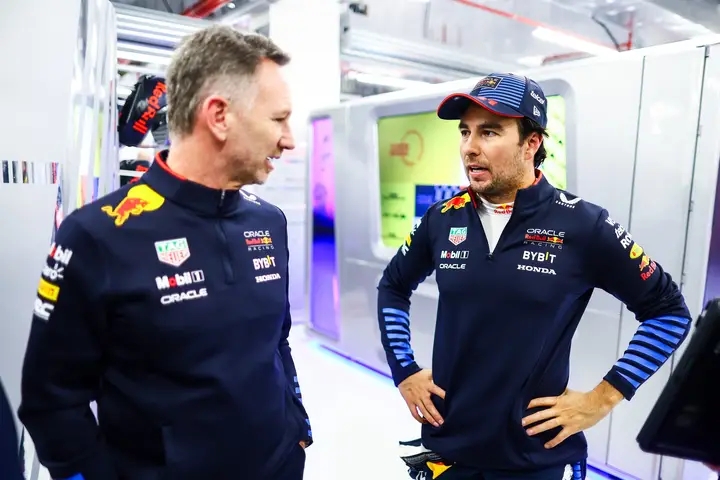
Perez recalled Christian Horner joking that Red Bull only fielded two cars because Formula 1 regulations required it, suggesting the team’s competitive focus centered almost entirely on one side of the garage.
While the remark was delivered with humor, it highlighted the reality many observers have suspected for years. Verstappen has been the undisputed leader of Red Bull’s project since becoming the team’s title contender, with the Dutchman’s driving style and feedback heavily influencing the development of the RB-series cars.
That doesn’t necessarily mean Perez received inferior machinery, but it reinforces the belief that Verstappen’s preferences shaped the team’s technical direction more than anyone else’s.
WHY PEREZ BELIEVES HE OUTPERFORMED EXPECTATIONS
Perez remains convinced that his achievements at Red Bull deserve greater recognition.
During his four-season spell with the team, he collected multiple Grand Prix victories, regularly secured podium finishes, helped Red Bull capture Constructors’ Championships, and played a key supporting role during Verstappen’s title campaigns.
Despite facing criticism whenever he struggled to match Verstappen’s pace, Perez believes he maximized every opportunity available to him.
He argued that only after his departure did people begin to appreciate how difficult the second Red Bull seat truly was. As different drivers attempted to fill the role and encountered similar challenges, Perez felt his performances were viewed in a new light.
That perspective has gained traction among many Formula 1 fans, who increasingly acknowledge that matching Verstappen over an entire season has proven to be one of the toughest tasks on the grid.
THE PRESSURE INSIDE RED BULL
Perez also described the intense internal environment that came with competing for the sport’s biggest prizes.
Success often creates even higher expectations, and Red Bull’s dominance meant every disappointing weekend attracted enormous scrutiny. Drivers were expected to perform immediately, while any gap to Verstappen became a major talking point.
Perez admitted there were particularly difficult periods toward the end of his Red Bull career, when pressure from inside and outside the team continued to build.
Such environments are common among championship-winning organizations, but Red Bull’s relentless pursuit of victories left little room for inconsistency.
WHAT THIS MEANS FOR MAX VERSTAPPEN
Verstappen’s extraordinary consistency has transformed Red Bull into one of Formula 1’s modern powerhouses.
The team naturally built around its biggest asset, ensuring the four-time world champion had everything needed to compete at the highest level. From a competitive standpoint, the strategy delivered exceptional results, including multiple Drivers’ and Constructors’ Championships.
However, Perez’s comments also raise an important question about the future.
If Red Bull continues developing its cars primarily around Verstappen’s unique driving style, the challenge for any future teammate remains enormous. History has already shown that several talented drivers have struggled to adapt to the demanding characteristics preferred by the Dutch superstar.
WHY RED BULL’S SECOND SEAT REMAINS FORMULA 1’S TOUGHEST JOB
The second Red Bull seat has become one of the most scrutinized positions in motorsport.
Every teammate is immediately compared with Verstappen, whose exceptional speed and consistency have established an incredibly high benchmark. Even experienced race winners have found it difficult to consistently match his pace over an entire campaign.
Perez’s reflections suggest that succeeding in that environment requires more than outright speed. Mental resilience, adaptability, and the ability to handle constant pressure are equally important.
His belief that his contributions were appreciated only after leaving highlights just how demanding the role had become.
PEREZ LEAVES WITHOUT REGRETS
Despite the challenges, Perez expressed gratitude toward both Red Bull and Aston Martin, emphasizing that he maintains strong relationships with people throughout both organizations.
Rather than criticizing the teams, he acknowledged that Formula 1 is ultimately a business where difficult decisions are inevitable.
He credited Racing Point—now Aston Martin—for providing a career-changing opportunity and praised Red Bull for helping elevate him to race-winning and championship-contending status.
That balanced perspective suggests Perez has moved on with respect for the people who shaped his Formula 1 journey.
WHAT HAPPENS NEXT
Perez’s latest remarks are unlikely to end discussions surrounding Red Bull’s driver philosophy. Instead, they reinforce a conversation that has followed the team throughout its dominant era.
As Red Bull continues chasing championships with Verstappen at the center of its project, the challenge of finding a teammate capable of consistently contributing at the highest level remains significant.
Whether future drivers can thrive where others have struggled will continue to shape Red Bull’s competitive future. Meanwhile, Perez’s claim that his value became clearer after his exit adds another fascinating chapter to one of Formula 1’s most debated teammate stories.