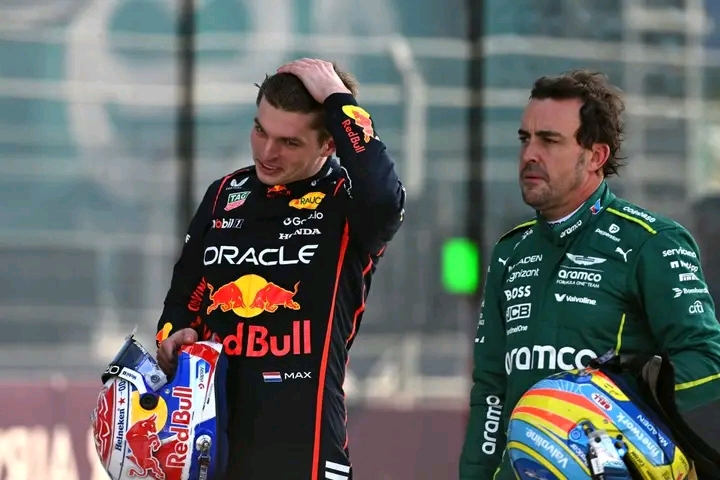
The Formula 1 driver market could be heading toward another major shake-up, with fresh speculation surrounding Max Verstappen’s future and Fernando Alonso’s position in the wider 2027 silly season conversation.
While there is no confirmed announcement that Verstappen is leaving Red Bull or that Alonso has signed with another team, the uncertainty surrounding the future of two of Formula 1’s biggest names has once again sparked intense debate among fans. With teams already looking ahead to the next phase of the sport’s new technical era, decisions made over the coming months could have a major influence on the competitive order.
Verstappen remains one of the most valuable drivers on the grid, and his long-term future is naturally linked to Red Bull’s ability to provide a championship-winning package. Alonso, meanwhile, continues to attract attention because of his experience, speed and technical feedback, making him a potentially attractive option for teams looking for leadership during a period of major change.
MAX VERSTAPPEN’S FUTURE REMAINS ONE OF F1’S BIGGEST QUESTIONS
Whenever uncertainty surrounds Max Verstappen, the entire Formula 1 paddock pays attention.
The Dutchman has established himself as one of the defining drivers of his generation, and his presence can influence the entire driver market. If Verstappen were ever to become available, rival teams would immediately have to reconsider their own plans, potentially triggering a chain reaction involving multiple drivers.
For Red Bull, keeping Verstappen is about much more than retaining a world-class driver. The team has built its recent identity around him, and losing its lead driver could force a major restructuring of its sporting and technical ambitions.
The situation is particularly interesting because modern F1 contracts can contain complex performance clauses and exit options. As a result, speculation about a driver’s future often continues even when a long-term contract is technically in place.
That does not mean a departure is inevitable. In fact, Verstappen could ultimately decide that staying with Red Bull offers him the best opportunity to fight for more championships. The team’s ability to develop its car, improve its power-unit situation and remain competitive under the current regulations will likely be central to that decision.
WHY THE 2027 DRIVER MARKET COULD BE A TURNING POINT
The 2026 regulations have introduced another major technical reset for Formula 1, making the next few seasons especially important for teams and drivers.
With new power-unit technology and significant changes to the cars, teams are effectively entering another competitive cycle. Some organizations will adapt quickly, while others may need several seasons to reach their full potential.
That makes driver decisions increasingly strategic.
A driver like Verstappen will want confidence that his team can consistently deliver a championship-caliber car. Meanwhile, rival teams will be watching closely for any opportunity to strengthen their line-ups.
This is why rumors involving Verstappen often have consequences far beyond Red Bull. A potential move could affect Mercedes, Ferrari, McLaren and Aston Martin, depending on which seats become available.
For teams, the challenge is balancing immediate performance with long-term planning. Signing a superstar can provide an instant competitive advantage, but it can also create difficult decisions regarding existing drivers and salary structures.
FERNANDO ALONSO REMAINS A KEY NAME IN THE SILLY SEASON
Fernando Alonso’s name continues to appear in discussions about the future of the F1 driver market, although any claims about a specific signing should be treated cautiously until officially confirmed.
The two-time world champion remains one of the most experienced drivers in Formula 1. His ability to extract performance from difficult machinery, combined with his technical understanding, makes him an attractive figure for ambitious teams.
However, Alonso’s situation is different from Verstappen’s.
At this stage of his career, the Spaniard is unlikely to be interested in simply being part of the grid. His motivation has always centered on competing at the highest level, and any future decision will likely depend heavily on whether he believes a team can provide a genuine opportunity to fight near the front.
That is what makes the latest speculation interesting. If Alonso were to become available, several teams could potentially view his experience as valuable during the ongoing technical transition.
WHY AN ALONSO MOVE COULD CHANGE THE GRID
A Fernando Alonso move would have a ripple effect throughout the driver market.
If one of the sport’s most experienced drivers changes teams, it could open another seat elsewhere and create opportunities for younger drivers waiting for their chance. It could also influence the decisions of established stars who are considering their own futures.
For a team entering a crucial phase of development, Alonso could provide more than race results. His feedback and ability to communicate technical weaknesses could be particularly valuable when engineers are trying to understand a new generation of cars.
At the same time, teams must consider the long-term picture. Alonso’s experience is a major strength, but younger drivers offer greater longevity. The decision between proven expertise and future potential could become one of the biggest themes of the next driver market.
THE VERSTAPPEN AND ALONSO STORIES ARE CONNECTED BY ONE BIG QUESTION
The most important factor behind these rumors is not necessarily the drivers themselves. It is the changing competitive landscape of Formula 1.
The introduction of new technical regulations has created an environment where the balance of power can shift rapidly. A team that dominates one regulatory cycle can suddenly find itself fighting for podiums rather than victories.
That creates uncertainty for elite drivers.
Verstappen must consider whether Red Bull can remain a championship contender. Alonso must decide whether his current project can finally deliver the machinery needed to compete for another title.
These are very different situations, but both highlight the same reality: in Formula 1, a driver’s future is often determined as much by the competitiveness of the car as by the contract itself.
WHAT THIS MEANS FOR RED BULL
For Red Bull, the priority should be maintaining stability.
The team needs to create an environment where Verstappen feels confident about the future. That means delivering a competitive chassis, developing its power-unit strategy and ensuring that the organization remains technically strong.
If Verstappen stays, Red Bull retains one of the biggest advantages any team can have: a driver capable of converting a competitive car into championship victories.
If he leaves, however, Red Bull would face one of the biggest challenges in its modern history.
Replacing Verstappen would not be straightforward. The team could promote a young driver, sign an established star or attempt to rebuild around a new leader. Each option would carry significant risks.
This is why Red Bull will likely be monitoring the situation carefully rather than allowing speculation to dominate its long-term planning.
ASTON MARTIN’S AMBITIONS COULD ALSO BE UNDER THE SPOTLIGHT
Fernando Alonso’s future is equally important because Aston Martin has invested heavily in becoming a serious contender.
The team’s long-term project includes significant technical resources and ambitious plans, but Formula 1 success is never guaranteed. Even with strong investment, it can take years to consistently challenge the established front-runners.
For Alonso, timing is crucial.
The Spaniard has already demonstrated that he can remain competitive at an age when many drivers have retired. However, every season that passes increases the importance of finding a championship-capable package as quickly as possible.
If Aston Martin can make a significant step forward, Alonso could have a strong reason to remain committed. If progress stalls, speculation about his next move will almost certainly continue.
OUR PREDICTION FOR THE NEXT BIG F1 DRIVER MARKET
At this stage, the safest prediction is that the driver market will remain fluid for some time.
The Verstappen situation is likely to depend heavily on Red Bull’s competitive trajectory. If the team proves it can consistently fight at the front, staying could remain the most logical option for the reigning champion. If rivals begin to dominate, the pressure surrounding his future will increase.
Alonso’s situation could be more dependent on Aston Martin’s progress. If the team emerges as a genuine title contender, there may be little reason for him to move. If not, his experience and reputation could make him a target for other ambitious projects.
The biggest mistake would be to assume that every rumor represents a completed deal. Formula 1’s silly season is famous for speculation, negotiations and strategic leaks, and many stories change dramatically before contracts are actually signed.
WHY FANS SHOULD WATCH THE DRIVER MARKET CLOSELY
The future of Max Verstappen and Fernando Alonso matters because both drivers have the potential to influence the entire Formula 1 grid.
A Verstappen decision could determine the direction of Red Bull and potentially affect the plans of Mercedes, Ferrari and other major teams. An Alonso decision could create another domino effect, particularly if a senior driver moves to a new project.
For fans, this could make the next phase of the driver market one of the most fascinating in recent F1 history.
However, until official announcements are made, the claims surrounding Verstappen’s future and any potential Alonso signing should be viewed as speculation rather than confirmed fact.
One thing is certain: Formula 1’s competitive landscape is changing rapidly, and the decisions made by its biggest stars could shape the championship battles of the years ahead.
If Verstappen finds a reason to stay at Red Bull and Alonso remains committed to Aston Martin, the grid could retain its current structure. But if either driver decides that a different project offers a better route to success, the consequences could be enormous.
The next major move may not just change one team. It could reshape the entire Formula 1 driver market.