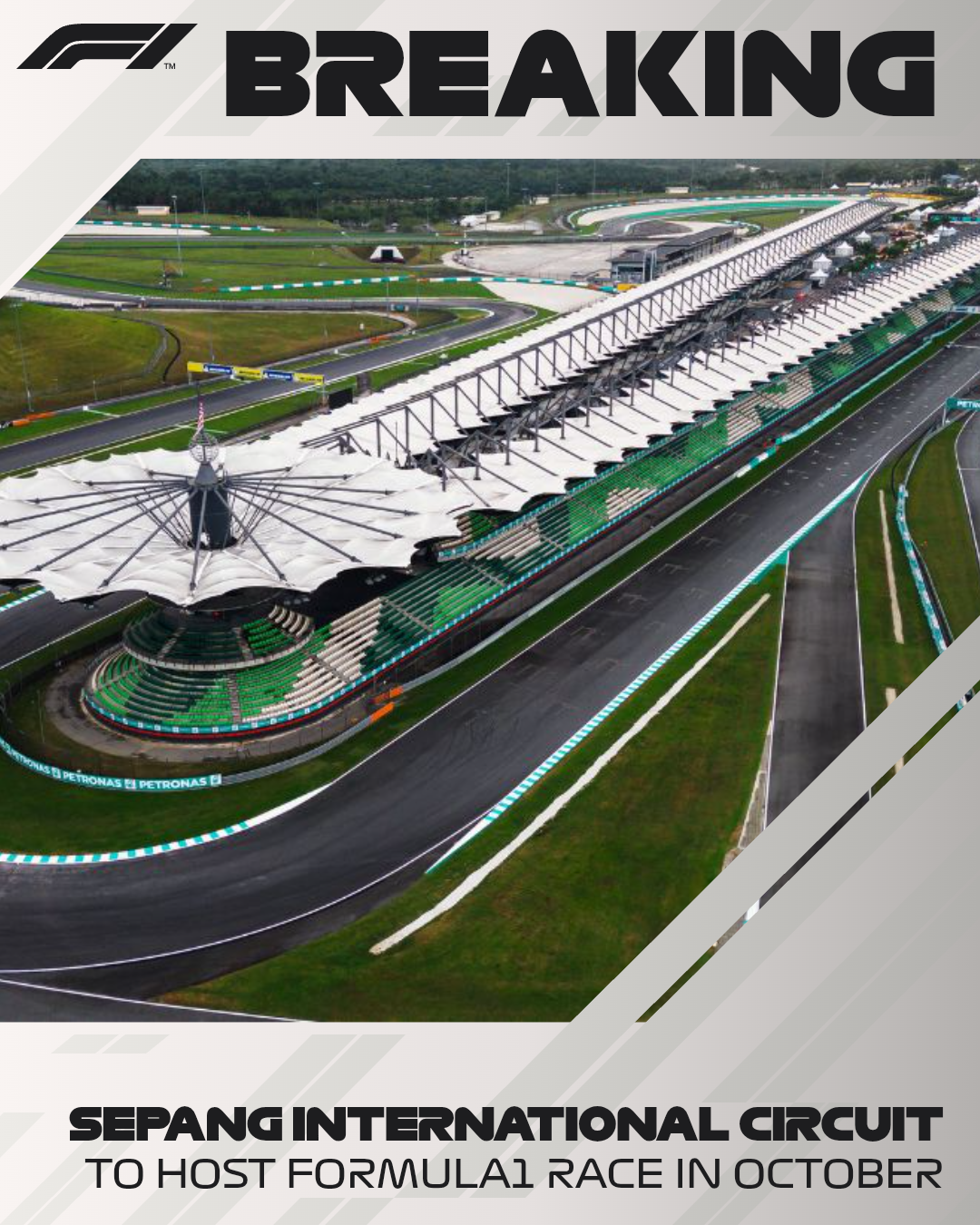
Formula 1 could be preparing for one of its most exciting calendar developments in years, with reports claiming that Malaysia’s iconic Sepang International Circuit is set to host a Grand Prix in October. While the prospect has thrilled motorsport fans across Asia and beyond, Formula 1 and the FIA have not officially confirmed the addition at the time of writing.
If the reports prove accurate, Sepang’s return would mark the end of a lengthy absence from the Formula 1 calendar and restore one of the sport’s most highly regarded circuits to championship competition. The move would also strengthen Formula 1’s growing presence in Asia at a time when the championship continues to expand its global footprint.
SEPANG HAS LONG BEEN CONSIDERED ONE OF FORMULA 1’S BEST VENUES
Few circuits have earned the respect that Sepang enjoys among drivers, engineers, and fans. The Malaysian venue hosted Formula 1 from 1999 through 2017, producing memorable races shaped by unpredictable tropical weather, technical corners, and long straights that rewarded overtaking.
Many former world champions have described Sepang as one of the most complete tests on the calendar. Drivers needed speed, tire management, physical endurance, and strategic flexibility to succeed, particularly when sudden rain showers transformed dry races into chaotic battles.
A return would bring back a circuit capable of delivering exciting racing rather than relying solely on street-track spectacle.
WHY FORMULA 1 WOULD BENEFIT FROM A MALAYSIAN RETURN
Formula 1’s popularity has exploded throughout Asia in recent years. Countries across the region continue investing heavily in motorsport infrastructure, making Malaysia an attractive destination from both sporting and commercial perspectives.
Hosting another Formula 1 race in Southeast Asia would:
Expand the championship’s reach in one of its fastest-growing fan markets.
Reintroduce an established circuit with proven racing quality.
Provide sponsors and manufacturers with greater exposure across the region.
Offer teams another venue where weather and strategy play decisive roles.
Unlike completely new venues, Sepang already possesses world-class facilities and decades of experience organizing international motorsport events.
HOW A RETURN COULD IMPACT THE CHAMPIONSHIP
An October race at Sepang would arrive during one of the most critical stages of the Formula 1 season, when both Drivers’ and Constructors’ Championship battles are typically reaching their climax.
The circuit’s demanding layout could significantly influence the title fight. High temperatures place extraordinary stress on tires, while sudden rainfall can instantly overturn race strategies.
Teams that excel in aerodynamic efficiency, tire degradation, and adaptability would likely gain an advantage. Drivers known for thriving in mixed conditions could also find themselves in contention for valuable championship points.
If the championship remains closely contested entering October, a Malaysian Grand Prix could become one of the season’s defining weekends.
LOGISTICAL CHALLENGES REMAIN
Although reports have generated excitement, integrating another race into Formula 1’s already demanding schedule presents considerable logistical challenges.
Adding a Grand Prix requires coordination between Formula 1 Management, the FIA, race promoters, broadcasters, freight operators, and all ten teams. Equipment, personnel, television infrastructure, and local operations must all align within an already packed calendar.
For that reason, any new race would only be added after extensive planning and official approval.