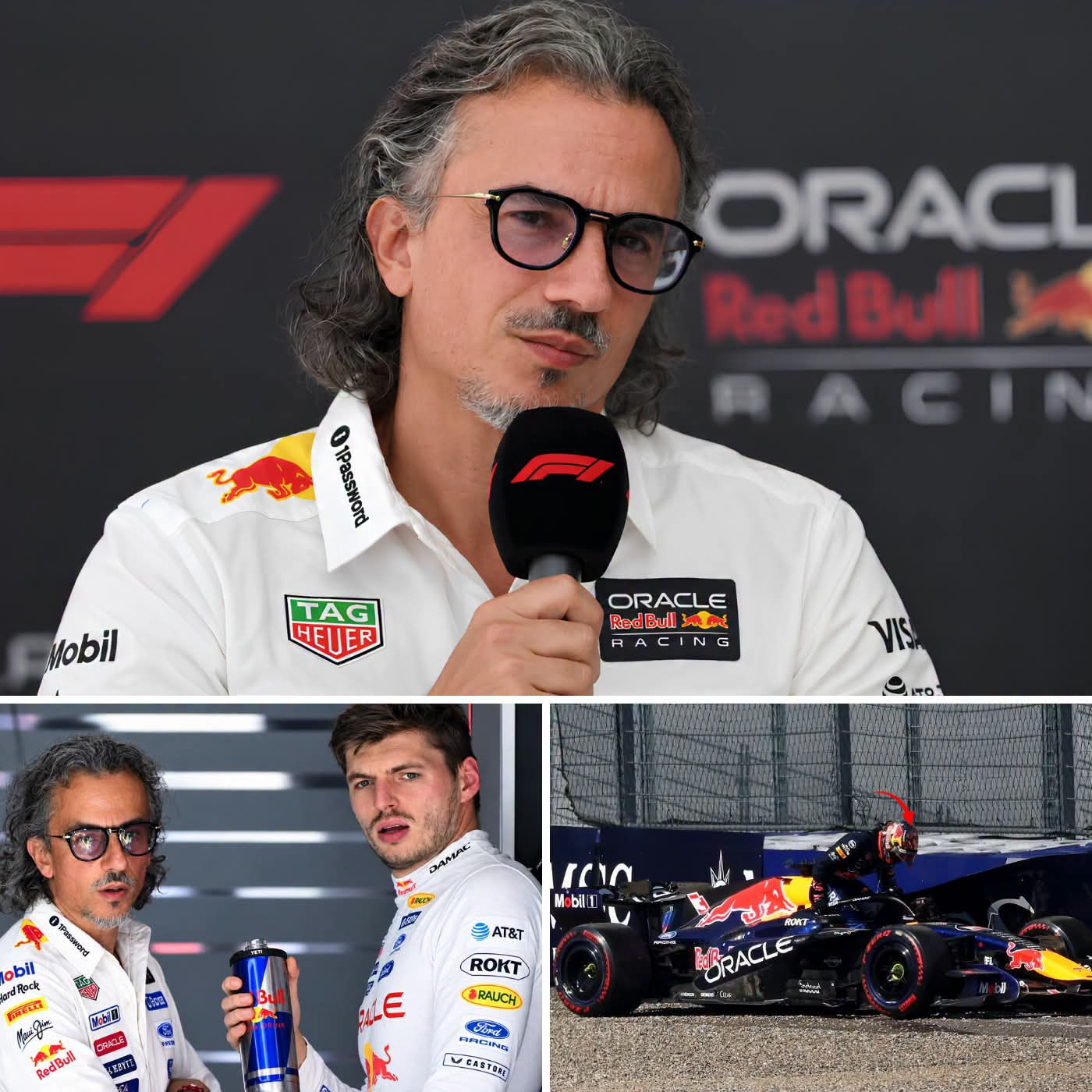
Red Bull Racing could face a significant engineering challenge heading into the 2027 Formula 1 season as questions continue to surround Max Verstappen’s race starts and the consistency of the RB22. Persistent difficulties getting away cleanly from the grid have raised concerns about whether the team can resolve the problem through routine adjustments or whether more substantial technical changes will be necessary.
For a driver competing at the highest level, a poor start can undermine an otherwise strong qualifying performance before the first corner. Verstappen has built his reputation on aggressive racecraft and the ability to convert competitive pace into results, but inconsistent launches can leave him vulnerable to rivals and force him to recover positions in traffic. With the competitive order increasingly tight, resolving any recurring weakness at the start could be crucial to Red Bull’s future ambitions.
RED BULL’S STARTING PROBLEMS RAISE QUESTIONS ABOUT THE RB22
The concerns surrounding the RB22 centre on the consistency of its launch behaviour. A Formula 1 start requires the clutch, engine, transmission and electronic control systems to work together with extreme precision. Small variations in clutch engagement or torque delivery can determine whether a driver gains positions or loses valuable ground immediately after the lights go out.
If the car fails to deliver power smoothly, excessive wheelspin or an inconsistent initial response can compromise the launch. These problems are particularly costly when rival drivers achieve clean getaways and reach the first corner with an advantage.
However, the exact engineering cause of Red Bull’s difficulties needs to be distinguished from speculation. The source article presents the issue as a potentially fundamental hardware problem, but it does not provide independently verifiable technical data establishing that the entire gearbox or starting system must be replaced.
That distinction matters because a launch problem can have several possible causes, including clutch characteristics, hydraulic control, calibration, operating temperatures and power delivery. Engineers must identify the underlying fault before deciding whether a major redesign is justified.
WHY A SIMPLE SOFTWARE FIX MAY NOT BE ENOUGH
Formula 1 teams routinely adjust their cars between races, refining settings and replacing components to improve reliability and performance. When a problem originates in the control software or the calibration of an existing system, these changes can sometimes deliver meaningful improvements without requiring a completely new design.
Hardware limitations are more complicated. If a component’s physical layout prevents engineers from achieving the desired response, software adjustments may only reduce the symptoms rather than eliminate the underlying problem.
For Red Bull, the key question is whether Verstappen’s launch difficulties stem from a manageable operational weakness or a deeper mechanical limitation. If the problem involves several interconnected systems, engineers could need to revise multiple components rather than focus on one isolated part.
Nevertheless, a complete gearbox redesign should not be treated as confirmed unless Red Bull or a reliable technical source explicitly establishes that such a programme is underway. The possibility of a major overhaul is significant, but the scale of any eventual changes remains uncertain.
MAX VERSTAPPEN CANNOT AFFORD TO KEEP LOSING GROUND AT THE START
Verstappen’s ability to recover from difficult situations has frequently been one of his biggest strengths. Yet even an exceptional driver can only do so much when a car repeatedly loses ground at the beginning of a race.
A poor launch can expose a driver to traffic, increase the risk of contact and force the team to reconsider its strategy. Passing rivals also consumes time and can place additional demands on the tyres, particularly when the driver must fight through a tightly packed group of cars.
The consequences extend beyond the opening lap. Losing track position can prevent a driver from controlling the pace, managing tyre degradation and building the gap needed to protect against pit-stop undercuts. In a race where several competitors are closely matched, those early losses can influence the final result.
For Verstappen, a reliable starting system would therefore be about more than improving the first few seconds of a Grand Prix. It would help Red Bull convert its overall pace into stronger race positions and reduce the need for recovery drives.
A MAJOR REDESIGN COULD CREATE A DIFFICULT 2027 DEVELOPMENT CHOICE
If Red Bull eventually determines that substantial hardware changes are necessary, the timing of that decision will be important. Developing a revised transmission or clutch system requires design work, manufacturing, laboratory testing and extensive validation before engineers can be confident that the new components will perform reliably on track.
Such a programme would also compete for resources with other areas of car development. Engineers must balance reliability improvements against aerodynamic efficiency, weight reduction, suspension performance and overall vehicle balance.
However, it would be misleading to suggest that a gearbox redesign automatically means Red Bull must sacrifice a specific amount of aerodynamic development. The actual impact would depend on the scope of the work, available resources and the team’s development priorities.
A successful redesign could ultimately provide a more dependable platform for future improvements. Conversely, an unsuccessful change could introduce new reliability concerns and force the team to spend additional time correcting problems during the season.
That makes the decision particularly important if Red Bull is weighing short-term fixes against a longer-term solution.
RED BULL MUST BALANCE IMMEDIATE PERFORMANCE WITH LONG-TERM RELIABILITY
The challenge for Laurent Mekies and Red Bull’s engineering department is to determine how much attention the starting problem requires without allowing it to overshadow the rest of the car’s development.
Formula 1 teams operate under strict financial and technical restrictions, meaning every major engineering project must be assessed against its expected benefits. A new mechanical design may offer substantial gains in consistency, but it must also justify the time and resources required to develop it.
The team will need to establish whether the existing system can be improved through revised procedures and component updates or whether a more comprehensive redesign offers the best long-term outcome.
Red Bull must also consider reliability. A car that launches consistently but introduces new mechanical risks would not necessarily represent an improvement over the existing package. Any proposed solution must deliver repeatable performance across different circuit layouts, temperatures and race conditions.
THE 2027 SEASON COULD TEST RED BULL’S ENGINEERING DIRECTION
The reported concerns surrounding Verstappen’s starts highlight the importance of getting the fundamentals right in modern Formula 1. Aerodynamic performance attracts much of the attention, but reliable mechanical systems are equally important when a team wants to turn qualifying pace into consistent race results.
For Red Bull, the priority is to identify the precise cause of its launch difficulties and establish a credible plan to address them. If the weakness is rooted in the hardware, a more extensive engineering programme could become necessary. If it can be corrected through smaller changes, a complete redesign may prove unnecessary.
Verstappen’s driving ability is unlikely to remove the need for a dependable car. Even the strongest drivers require machinery that responds predictably when the lights go out.
Until Red Bull confirms the technical scope of its plans, claims that the RB22 must undergo a complete gearbox and starting-system rebuild should be treated cautiously. What is clear is that consistent launches remain an important performance factor, and resolving any persistent weakness could make a meaningful difference to the team’s competitiveness in 2027.