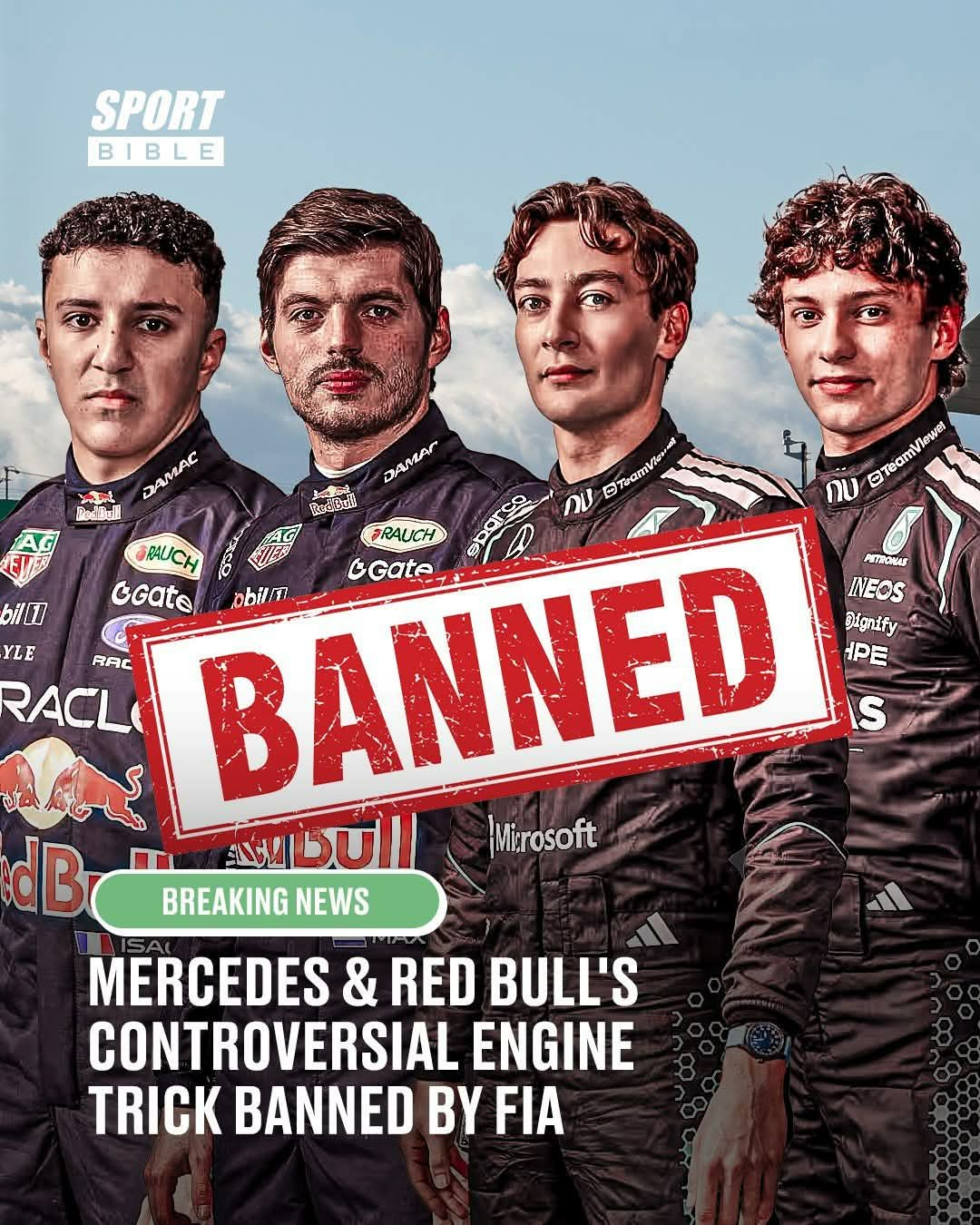
The FIA has moved to close a controversial power-unit loophole used by Mercedes- and Red Bull-powered Formula 1 teams, triggering fresh debate over how far teams can go to extract performance from the sport’s complex 2026 regulations. The intervention has put the spotlight on George Russell, Kimi Antonelli, Max Verstappen and Isack Hadjar, whose teams have been linked to the power-deployment technique at the centre of the controversy.
The issue concerns a qualifying strategy that allowed drivers to maintain electrical power deployment for longer on the run towards the finish line. According to reporting by The Race and Crash.net, the FIA acted to prevent teams from systematically using an emergency-related function to gain a performance advantage during qualifying. <Cite refs={[“turn769839search2″,”turn769839search6”]}/>
WHY THE FIA STEPPED IN
Under Formula 1’s 2026 power-unit regulations, teams must manage electrical energy deployment carefully. Cars are required to reduce power progressively in certain circumstances as they approach the end of a qualifying lap, helping prevent sudden speed differences that could create safety risks.
However, Mercedes- and Red Bull-powered teams reportedly found a way to use an emergency override function to avoid the normal power-reduction sequence temporarily. The technique could allow a car to retain an additional 50–100kW of electrical power for a short period, potentially helping drivers gain time on the run to the timing line. <Cite refs={[“turn769839search2″,”turn769839search6”]}/>
The advantage was not necessarily enormous, but qualifying margins in Formula 1 are often measured in hundredths of a second. Even a small improvement can influence grid position, particularly when several drivers are separated by very little time.
The FIA’s concern was not simply that teams had discovered a clever way to use their machinery. The key issue was whether a function intended for emergency situations was being used repeatedly as a systematic performance tool.
FOUR DRIVERS IN THE SPOTLIGHT
The controversy is particularly relevant to Mercedes and Red Bull, whose 2026 line-ups include Russell and Antonelli at Mercedes, and Verstappen and Hadjar at Red Bull.
All four drivers depend on their teams to provide competitive power-unit performance, but the reported restriction should not automatically be interpreted as a personal penalty against any of them. It is a technical and operational issue affecting how the relevant systems may be used.
Mercedes has been determined to remain competitive under the new regulations, while Red Bull is establishing itself as a power-unit manufacturer in partnership with Ford. Any change that affects qualifying energy deployment could therefore influence how both organisations approach their preparation and race-weekend strategies.
Nevertheless, the precise impact on each driver would depend on how frequently their team used the technique, the characteristics of the circuit and the performance of their rivals. There is no basis for assuming that all four will lose the same amount of lap time.
WHY EVEN A SMALL POWER ADVANTAGE MATTERS
Modern Formula 1 qualifying is an exercise in extracting performance from every available part of the car. Teams spend enormous amounts of time optimising aerodynamics, tyre preparation, braking, engine settings and electrical energy deployment.
An extra burst of power on a long straight can make a difference, especially when a driver is trying to secure a place on the front row or escape a tightly packed group in the midfield.
However, energy deployment also involves compromises. Using an override function can trigger a period during which the system cannot be used again, potentially affecting subsequent running. Teams must therefore weigh any immediate benefit against the consequences for their wider qualifying programme.
The FIA’s intervention reinforces a central principle of modern F1: performance advantages must come from methods that comply with both the technical rules and the intended operation of the systems involved.
COULD THE DECISION CHANGE THE COMPETITIVE ORDER?
The immediate question is whether closing the loophole will meaningfully change the qualifying picture. If a team previously gained an advantage from the technique, it may need to adjust its energy-management strategy and find alternative ways to maximise performance.
Mercedes and Red Bull could consequently face a different challenge when preparing for qualifying, particularly at circuits where the final straight and the approach to the timing line are especially important.
Their rivals may also benefit if the restriction reduces an advantage they believe was available to competing power-unit manufacturers. However, the change does not automatically mean that Mercedes or Red Bull will lose their overall competitiveness. Aerodynamic efficiency, tyre performance, chassis balance, driver execution and other power-unit characteristics will continue to influence the results.
It is also important to distinguish this issue from the separate controversy surrounding the compression ratio of the 2026 engines. That debate concerns how engine compression is measured under different temperature conditions, rather than the qualifying energy-deployment technique addressed in the reported intervention. <Cite refs={[“turn769839search1″,”turn769839search6”]}/>
FIA’S DECISION SENDS A MESSAGE TO EVERY TEAM
Formula 1’s technical regulations are becoming increasingly complex, particularly as electrical power plays a greater role in overall performance. Teams will continue searching for ways to interpret the rules creatively, but the governing body must ensure that those interpretations remain within the permitted boundaries.
The latest intervention demonstrates how quickly an advantage can disappear when the FIA determines that a particular operating method should no longer be used. It also gives teams another reason to examine their software, energy-management procedures and qualifying strategies carefully.
For Russell, Antonelli, Verstappen and Hadjar, the focus will be on adapting to the applicable restrictions and extracting the maximum performance from their cars through permitted methods.
The real impact will become clearer through qualifying performance and the teams’ subsequent technical adjustments. Although the decision could influence the margins between competitors, it does not guarantee a dramatic change in the championship standings.
One thing is certain: in an era when tiny performance differences can decide grid positions, even a seemingly minor FIA intervention can force Formula 1’s leading teams to rethink how they approach the fight for speed.