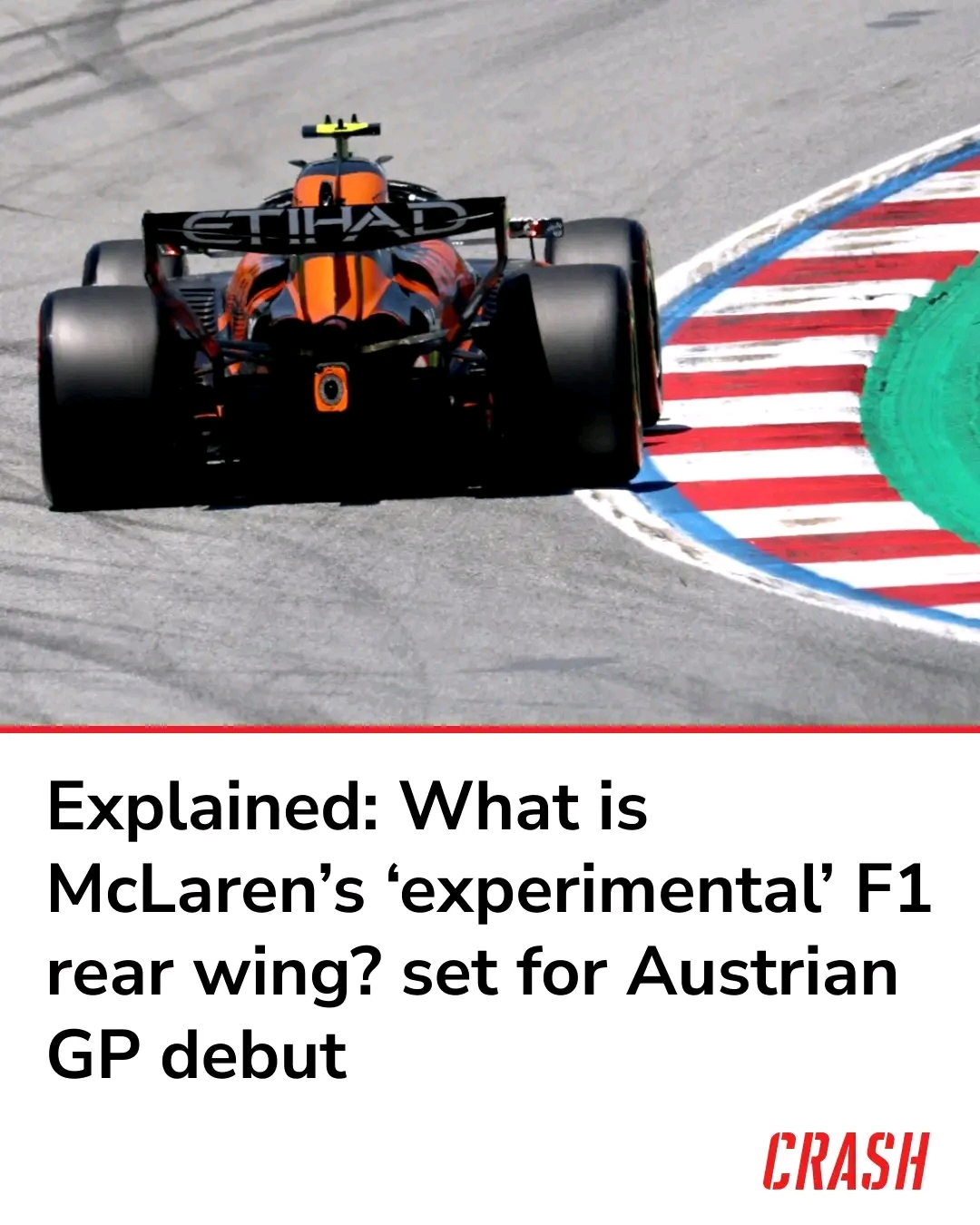
LMcLaren is preparing to take another bold step in Formula 1’s 2026 aerodynamic arms race by introducing an experimental rear wing concept during the Austrian Grand Prix weekend. The innovative design, which has earned the nickname “Macarena” in the paddock, has already attracted attention after Ferrari and Red Bull explored similar solutions earlier in the season.
With the championship battle intensifying, McLaren’s latest development could prove to be more than just a technical curiosity. It may become a key factor in determining who gains the upper hand during the second half of the season.
WHAT IS THE ‘MACARENA’ REAR WING?
The so-called “Macarena” rear wing is a radical aerodynamic concept designed to improve straight-line speed while maintaining enough downforce through corners. The upper flap rotates significantly in low-drag mode, creating an unusual appearance that inspired the nickname among engineers and observers.
Ferrari first drew attention with the design during testing, while Red Bull later developed its own interpretation. Now McLaren is set to become the latest front-running team to evaluate the concept in competitive conditions.
WHY AUSTRIA IS THE PERFECT TESTING GROUND
The Red Bull Ring offers one of the shortest laps on the calendar, but it contains several long acceleration zones where aerodynamic efficiency is critical. Cars that can reduce drag without sacrificing stability often enjoy a significant advantage when attacking or defending.
For McLaren, Austria represents an ideal opportunity to collect valuable data. The circuit rewards straight-line speed, energy management, and efficient aerodynamic balance, making it an ideal venue to determine whether the new package deserves a permanent place on the MCL40.
WHY MCLAREN’S MOVE COULD CHANGE THE TITLE FIGHT
Championship campaigns are often decided by development races rather than outright pace at the beginning of the season. A successful upgrade package can shift momentum dramatically.
McLaren’s willingness to continue pushing boundaries demonstrates the confidence within the team. While rivals are also introducing updates, finding even a few tenths of a second can transform qualifying performance and race strategy.
Lando Norris and Oscar Piastri have consistently shown they can capitalize on a competitive car. If the new rear wing delivers the expected gains, McLaren could strengthen its position against Mercedes, Ferrari, and Red Bull during a crucial phase of the championship.
LESSONS LEARNED FROM FERRARI’S EXPERIENCE
Ferrari’s early version of the “Macarena” wing generated excitement but also highlighted the risks involved. The Scuderia eventually removed the design after encountering balance and stability concerns during race weekend running.
That experience serves as a reminder that innovation in Formula 1 rarely produces instant success. Correlation between simulation data and track performance remains one of the biggest challenges for engineers.
McLaren will undoubtedly have studied Ferrari’s difficulties carefully before bringing its own solution to Spielberg.
THE TECHNICAL BATTLE IS HEATING UP
Formula 1’s 2026 regulations have opened the door for teams to experiment aggressively with active aerodynamic concepts. Engineers are constantly searching for ways to maximize speed without compromising tire management or cornering performance.
The emergence of multiple interpretations of the “Macarena” philosophy shows how quickly ideas spread throughout the paddock. What begins as one team’s innovation often evolves into an industry-wide trend if the performance gains justify the investment.
WHAT THIS MEANS FOR LANDO NORRIS AND OSCAR PIASTRI
For Norris and Piastri, every upgrade matters. Strong qualifying positions have become increasingly important in modern Formula 1, and any improvement in top speed can enhance overtaking opportunities and strategic flexibility.
A successful test could provide both drivers with another weapon in their fight for victories and valuable championship points. However, if the setup introduces instability or compromises cornering confidence, McLaren may choose to postpone its full deployment.
Friday practice in Austria will therefore carry greater significance than usual.
PREDICTION: MCLAREN COULD UNLOCK ANOTHER PERFORMANCE STEP
McLaren has established itself as one of Formula 1’s smartest development teams in recent seasons. The team has generally been cautious when introducing major changes, preferring data-driven decisions rather than rushing upgrades to the track.
That approach suggests the experimental rear wing is unlikely to appear unless simulations have shown genuine promise.
If the concept performs as expected, McLaren could emerge from Austria with another valuable advantage in an increasingly fierce championship fight. The battle between the sport’s top teams is becoming as much an engineering contest as a driving one, and the latest chapter in Formula 1’s aerodynamic revolution may be about to begin.