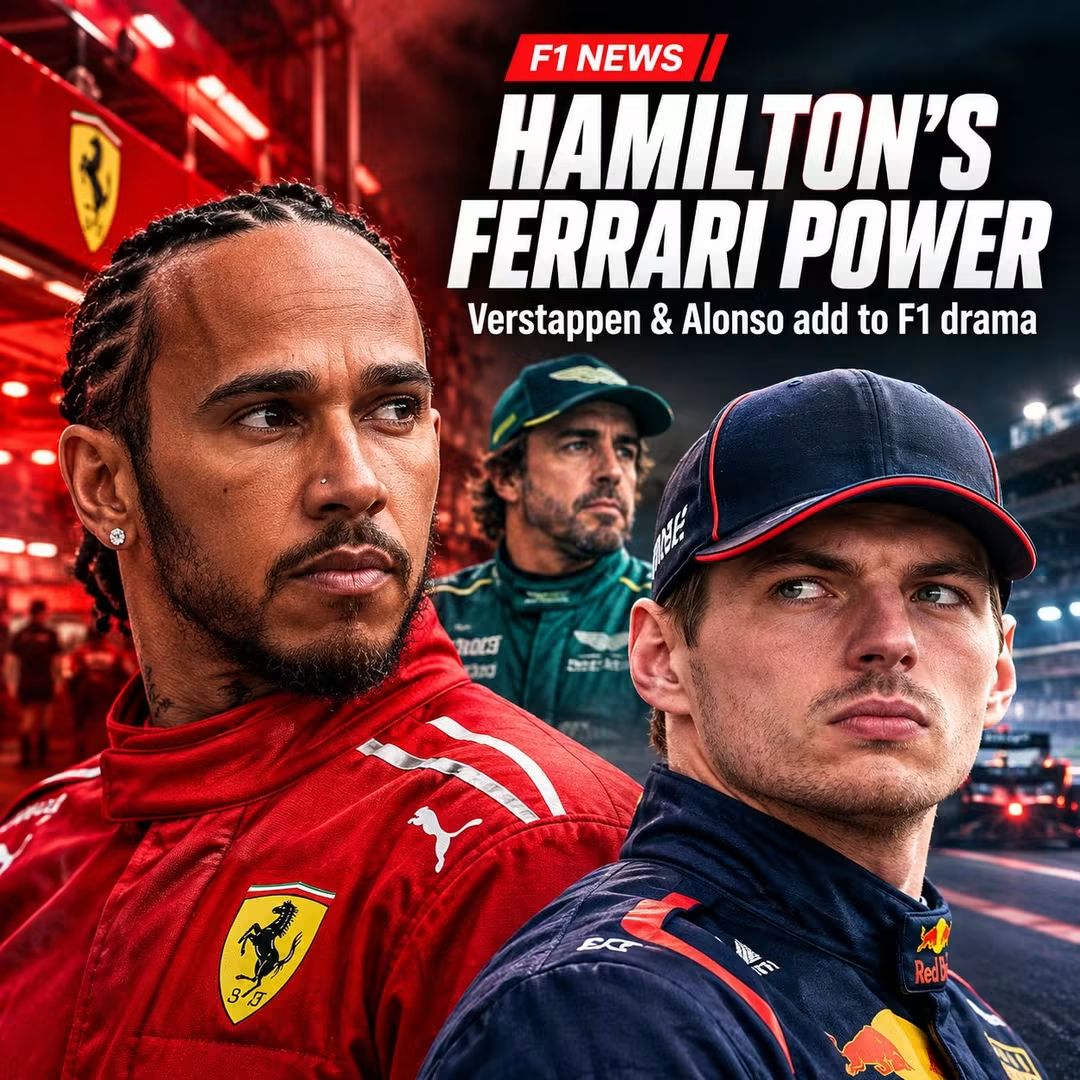
Lewis Hamilton did not arrive at Ferrari as a tourist. He arrived as a seven-time world champion with unfinished business, and the early signs from Maranello suggest that his impact is no longer limited to the cockpit. What began as a difficult first season is evolving into something more consequential: a growing influence behind the scenes that could help determine whether Ferrari finally returns to the front of the Formula 1 grid.
Reports from Italy indicate that Hamilton is steadily winning support inside the team. The 2026 campaign has already shown clearer progress than the previous year, and the tone around the seven-time champion has shifted. He is no longer just the high-profile newcomer. He is becoming a voice that matters in the garage, in debriefs, and in the broader direction of the Scuderia.
That matters more than most outsiders realise. Ferrari has spent years searching for the combination of driver leadership, technical clarity, and internal cohesion that once made it dominant. Hamilton’s presence brings all three. His experience of winning titles with different teams, his attention to detail, and his willingness to challenge processes are exactly the ingredients a high-pressure organisation needs when results have been inconsistent.
WHY HAMILTON’S GROWING INFLUENCE MATTERS FOR FERRARI
Ferrari’s recent history is littered with moments of promise that faded under pressure. Drivers have come and gone. Technical directors have rotated. The car has occasionally looked competitive only to fall away mid-season. What has often been missing is a consistent, high-level driver who can both extract the maximum from the current package and push the organisation to raise its standards.
Hamilton is doing both. His first season was never going to be straightforward. Adapting to a new car, a new team culture, and the intense scrutiny that comes with the Ferrari red was always going to take time. The improved form in 2026 is therefore significant. It suggests that the relationship is maturing, that the feedback loops are working, and that the team is starting to trust the input of its star recruit.
When a driver of Hamilton’s stature begins to shape internal conversations, the effects ripple outward. Engineers listen more carefully. Strategy discussions gain sharper edges. Junior team members see a benchmark for professionalism. Even the commercial and marketing sides of the organisation feel the lift that comes with a driver who still commands global attention.
The broader industry is watching. Ferrari’s ability to convert Hamilton’s experience into consistent race wins would change the competitive balance of the championship. It would also validate the high-stakes decision to bring him to Maranello in the first place. For a team that has not delivered a drivers’ title since 2007, every incremental step forward carries heavy symbolic weight.
MAX VERSTAPPEN SHUTS DOWN THE FERRARI SPECULATION
While Hamilton settles deeper into Ferrari life, Max Verstappen has poured cold water on the idea of ever following the same path. The four-time world champion has questioned the notion of a move to Maranello, even though he is widely regarded as one of the strongest drivers on the current grid.
Verstappen’s stance is revealing. Red Bull has built an environment around him that maximises his strengths: aggressive car development, a clear hierarchy, and a culture that rewards results above almost everything else. Leaving that for Ferrari would mean accepting a different set of pressures, politics, and expectations. Verstappen has never hidden his preference for simplicity and performance over romance. The Ferrari myth holds less power for him than it does for many others.
His comments also serve as a reminder that driver market speculation often outruns reality. The idea of Verstappen in red generates endless headlines, yet the practical barriers remain high. Contractual commitments, team loyalty, and the simple fact that Red Bull still provides him with a car capable of fighting for titles all point toward continuity rather than upheaval.
FRED VASSEUR PUSHES BACK AGAINST THE NOISE
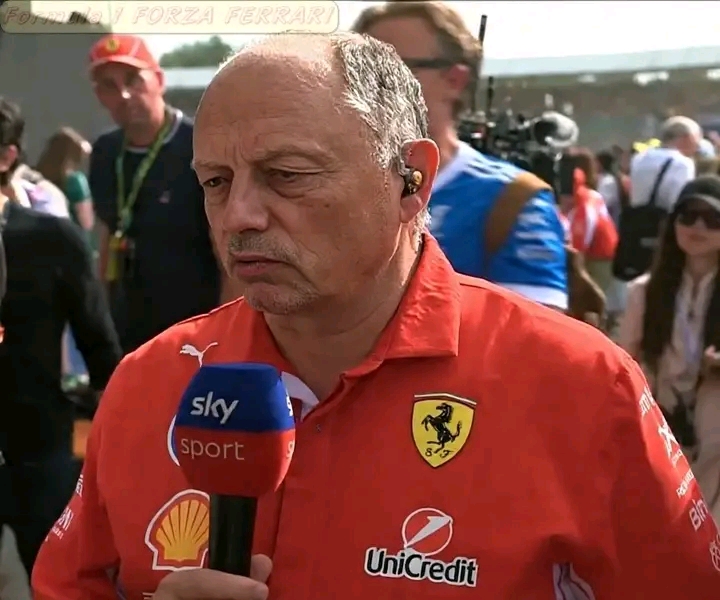
Ferrari team principal Fred Vasseur has grown tired of the criticism that has followed the team through recent seasons. His public pushback is notable. Vasseur has never been one for theatrical statements, so when he addresses the noise surrounding Ferrari, it signals that the organisation is determined to control its own narrative.
Criticism is nothing new at Maranello. The Italian media, the passionate fan base, and the global spotlight combine to create an environment where every setback is amplified. Vasseur’s response suggests a leadership style that prioritises focus over reaction. That approach aligns well with Hamilton’s own preference for substance over drama. If the two can maintain that shared discipline, Ferrari stands a better chance of turning progress into results.
FERNANDO ALONSO KEEPS ONE EYE ON THE DAKAR
Away from the Formula 1 paddock, Fernando Alonso continues to write his own rules. Despite having already committed to Aston Martin for the 2027 season, reports indicate the two-time world champion is preparing for a possible return to the Dakar Rally.
Alonso has never been defined by a single discipline. His previous forays into endurance racing and the Dakar demonstrated both his competitive hunger and his willingness to take on challenges that most Formula 1 drivers avoid. A potential return would not only add another chapter to an extraordinary career; it would also underline how modern top drivers increasingly treat their calendars as portfolios rather than single commitments.
For Aston Martin, the news is a reminder that Alonso remains a free spirit. The team will want his full focus when the 2027 campaign begins, yet they also understand that his restless ambition is part of what makes him valuable. Managing that balance will be one of the more interesting subplots of the coming seasons.
HELMUT MARKO DEFENDS VERSTAPPEN’S EARLY RECORD
Red Bull motorsport advisor Helmut Marko has also entered the fray, challenging controversial claims about Verstappen’s early years at the team. Marko has long been one of Verstappen’s strongest advocates, and his intervention reinforces the official Red Bull narrative that the Dutchman earned his opportunities through sheer performance rather than preferential treatment.
These kinds of historical debates rarely stay quiet for long in Formula 1. They surface whenever a driver’s legacy is under discussion or when rival camps seek to rewrite the past. Marko’s willingness to confront the claims head-on shows that Red Bull remains protective of its most successful era and of the driver who defined it.
THE SINGAPORE GRAND PRIX LOOMS AS THE PADDOCK HEATS UP
All of these storylines are unfolding against the backdrop of the Singapore Grand Prix, one of the most demanding and atmospheric races on the calendar. The street circuit has a habit of magnifying both strengths and weaknesses. Teams that arrive with momentum can look even stronger under the lights. Those still searching for answers often find the pressure intensifies.
For Ferrari and Hamilton, Singapore offers another opportunity to measure progress. For Verstappen and Red Bull, it is another chance to underline their continued strength. For Alonso, it is simply another stage on which to perform while keeping one eye on future adventures. And for the wider paddock, the race arrives at a moment when the political and personal undercurrents are unusually active.
WHAT THESE DEVELOPMENTS MEAN FOR THE BIGGER PICTURE
Hamilton’s growing role at Ferrari is the most significant long-term development among the current headlines. If his influence continues to expand and the car responds, the championship picture in the seasons ahead could look very different. A competitive Ferrari changes the commercial landscape, the driver market, and the psychological dynamic of every race weekend.
Verstappen’s rejection of Ferrari speculation keeps the existing power structure intact for now. Alonso’s potential Dakar interest shows that even the most experienced drivers still seek new tests. Vasseur’s defence of his team and Marko’s defence of Verstappen both illustrate how fiercely organisations protect their narratives.
Formula 1 has always thrived on these overlapping dramas. The cars matter, the results matter, but the human and organisational stories that run beneath them often decide who ultimately succeeds. Right now, the most intriguing of those stories is the one unfolding inside Ferrari. Hamilton is no longer simply driving the car. He is helping to shape the team that will decide how far that car can go.