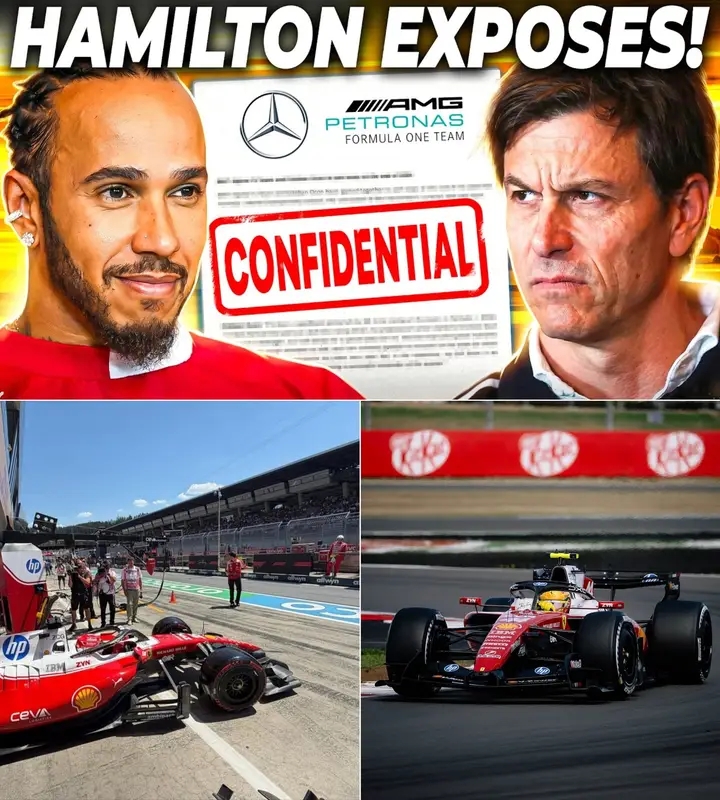
Mercedes may still sit at the top of both the Formula 1 Drivers’ and Constructors’ Championships, but Lewis Hamilton believes the team’s biggest threat may not come from a rival on track. Instead, the seven-time world champion has pointed to reliability as the issue that could ultimately shape the outcome of the 2026 title fight.
Heading into the Belgian Grand Prix at Spa-Francorchamps, concerns surrounding Mercedes’ power unit have become increasingly difficult to ignore. Recent battery-related failures have affected both factory drivers and customer teams, raising questions about whether the championship leaders can maintain their advantage through the demanding second half of the season.
MERCEDES FACING A GROWING RELIABILITY CHALLENGE
While Mercedes has consistently delivered one of the fastest cars on the grid, recent reliability problems have cast a shadow over its impressive campaign. Retirements for George Russell and rookie Kimi Antonelli, along with similar issues experienced by Mercedes-powered customer teams, suggest that the problem may be more widespread than isolated incidents.
Modern Formula 1 power units are incredibly complex, and the energy store—or battery system—is one of the most critical components. Any recurring weakness in this area can quickly become a championship-defining issue, particularly under Formula 1’s strict component allocation rules.
Hamilton’s comments reflect the growing concern within the paddock that Mercedes may be approaching a point where difficult strategic decisions become unavoidable.
WHY THE ENERGY STORE LIMIT COULD CHANGE EVERYTHING
Formula 1 regulations limit how many power unit components each driver can use during a season before automatic grid penalties are applied. If Mercedes continues to suffer battery failures, drivers may be forced to exceed those allocations.
That creates a difficult dilemma. Teams can either risk continuing with older components that may fail during races or introduce fresh parts and accept grid penalties that could cost valuable championship points.
In an exceptionally competitive title battle, losing several positions on the starting grid can be just as damaging as suffering a race retirement. A single reliability issue could undo weeks of strong performances.
SPA COULD PROVIDE THE ULTIMATE TEST
Few circuits expose mechanical weaknesses like Spa-Francorchamps. The legendary Belgian circuit combines long full-throttle sections with dramatic elevation changes, placing enormous stress on both engines and hybrid systems.
The famous Kemmel Straight demands maximum electrical deployment, while the circuit’s demanding layout tests cooling systems and battery performance throughout the race weekend.
If Mercedes has not fully resolved its energy store concerns, Spa may reveal whether the issue is under control or represents a deeper engineering challenge that could continue throughout the remainder of the season.
HAMILTON’S EXPERIENCE MAKES HIS WARNING SIGNIFICANT
Hamilton has spent years competing in championship battles where reliability has often proved just as important as outright speed. His experience gives weight to his assessment that championships are rarely won by pace alone.
History has repeatedly shown that Formula 1 titles are frequently decided by mechanical consistency. Teams capable of finishing every race often outperform faster rivals that suffer costly retirements or grid penalties.
Hamilton understands that every point becomes increasingly valuable as the season progresses. A single non-finish during the closing rounds could ultimately determine who lifts the championship trophy.
RIVALS WILL BE WATCHING CLOSELY
Mercedes’ competitors will undoubtedly be paying close attention to any signs of continued reliability concerns.
If Red Bull, Ferrari, McLaren, or other challengers believe Mercedes may soon face component penalties, they could adjust their own race strategies to maximize pressure during upcoming events. Every retirement or grid drop creates opportunities for rivals to close the championship gap.
Psychological pressure also plays a role. Drivers who know their equipment may be approaching reliability limits often have to balance pushing for maximum performance against protecting the machinery.
WHAT MERCEDES MUST DO NEXT
The priority for Mercedes is no longer simply extracting maximum performance from its car. Ensuring long-term reliability has become equally important.
The engineering team will likely spend significant time analyzing battery systems, cooling solutions, and energy management before the Belgian Grand Prix. Preventing another failure is essential if the team hopes to maintain control of both championships.
Mercedes has built its reputation on engineering excellence, and solving reliability issues quickly will be critical to preserving that image while protecting its championship ambitions.
COULD RELIABILITY DECIDE THE 2026 TITLE?
The 2026 Formula 1 season is proving that championships are about much more than raw speed. While Mercedes continues to lead the standings, Hamilton’s warning highlights how quickly fortunes can change if reliability begins to fail.
With Spa marking the start of a crucial phase of the season, every race becomes increasingly important. If Mercedes successfully resolves its battery concerns, it could strengthen its position as the favorite for both titles. However, if the problems continue, grid penalties and costly retirements could hand momentum to its closest rivals.
As Formula 1 enters one of its most demanding stretches, Mercedes faces perhaps its biggest challenge yet—not finding more speed, but ensuring the pace it already has can reliably carry both cars to the checkered flag every weekend.