Lewis Hamilton has revealed the key problem that undermined his United States Grand Prix after Ferrari’s hopes of securing a double podium in Austin fell short. The seven-time world champion believes the race was effectively lost during the opening two stints, with poor car balance and persistent understeer preventing him from challenging for the positions that ultimately mattered.
Hamilton finished fourth at the Circuit of the Americas, narrowly missing out on a podium after a late charge brought him within approximately one second of Max Verstappen. His Ferrari teammate Charles Leclerc, meanwhile, delivered a stronger finish to claim second place behind race winner Kimi Antonelli. Although Ferrari showed encouraging pace towards the end, Hamilton believes the team left too much work to do by failing to give him a competitive car balance early in the race.
HAMILTON IDENTIFIES THE PROBLEM THAT COST HIM A PODIUM
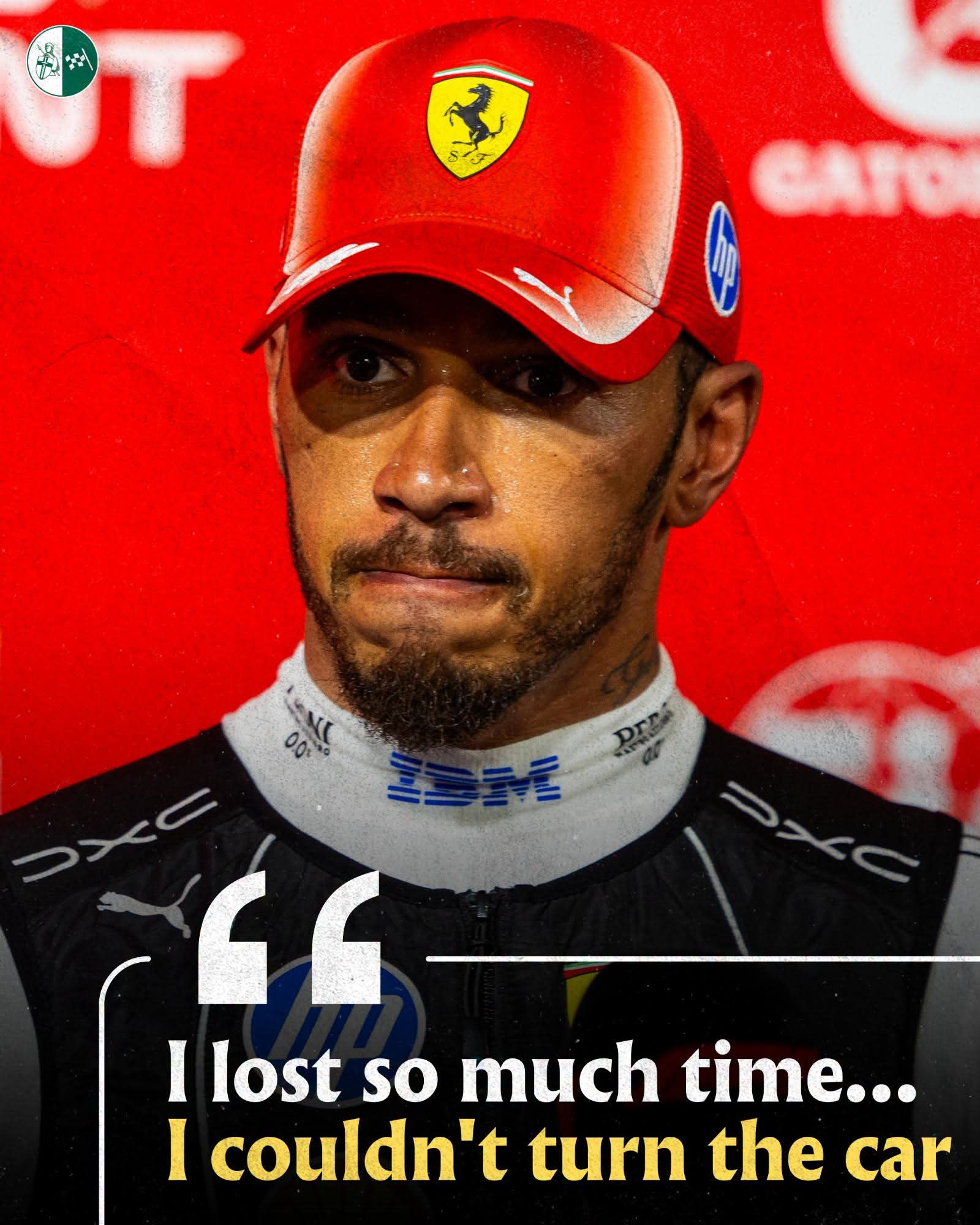
Hamilton was particularly frustrated with the handling of his Ferrari during the first half of the race. The British driver struggled to make the car turn effectively through the slower corners, allowing his rivals to gain valuable time while he fought to maintain his pace.
The problem was significant enough that Hamilton attempted to adjust his settings during the Grand Prix. However, the improvements came too late to make a decisive difference to his final position.
Reflecting on the race, Hamilton explained that the virtual safety car was not the main reason he missed the podium. Instead, he believed the decisive damage had already been done during the opening two stints.
He also highlighted the severe understeer that prevented him from carrying enough speed through the slower sections of the circuit. While the cars ahead were pulling away, Hamilton struggled to find the balance necessary to attack consistently.
By the final stint, Ferrari had moved closer to a workable setup, allowing Hamilton to demonstrate the pace he had been missing earlier. His late recovery raised an important question for the team: could a better initial balance have put him in a position to fight for the podium much earlier?
LATE VIRTUAL SAFETY CAR DENIES HAMILTON A FINAL ATTACK
Hamilton’s late charge offered Ferrari supporters a reason for optimism, but the closing stages did not unfold in his favour.
After emerging from the pit lane in sixth place, Hamilton made progress through the field, passing Isack Hadjar before getting ahead of Lando Norris. He then turned his attention towards Verstappen, who was defending third place for Red Bull.
Hamilton appeared to have an opportunity to close the remaining gap, but a virtual safety car interrupted his momentum with only four laps remaining.
The neutralisation followed a problem involving Valtteri Bottas and his Cadillac. With the field’s pace restricted, Hamilton lost the opportunity to continue applying pressure at full speed. When racing conditions resumed, there was too little time left to complete the challenge.
He eventually finished around one second behind Verstappen, making the result particularly frustrating given how competitive his Ferrari had become in the closing laps.
Verstappen also acknowledged that the virtual safety car may have helped him retain third place. Without the interruption, Hamilton could potentially have had a stronger opportunity to attack, although an overtake was never guaranteed.
The timing of the incident therefore played a role, but Hamilton’s own assessment made it clear that he did not consider it the fundamental reason for his disappointment.
CHARLES LECLERC RESCUES FERRARI’S PODIUM HOPES
While Hamilton was left wondering what might have been, Leclerc provided Ferrari with a valuable second-place finish.
The Monegasque driver benefited from Ferrari’s two-stop strategy, which gave him fresher tyres for the final part of the race. That additional grip proved especially useful as the Grand Prix approached its conclusion, allowing him to produce strong lap times and recover to second.
Leclerc had experienced a more difficult opening stint and was unable to match Antonelli’s one-stop approach. However, Ferrari’s strategy eventually gave him the opportunity to challenge for a podium position and defend against rivals with older tyres.
He also enjoyed several competitive battles during the race, including encounters with Verstappen and Norris. Leclerc had briefly moved ahead of Verstappen at the start, demonstrating Ferrari’s potential before the race settled into a longer strategic contest.
Although victory remained out of reach, Leclerc viewed the result positively. Ferrari had entered the weekend hoping to fight at the front, and his podium ensured the team did not leave Austin empty-handed in its pursuit of a stronger championship position.
Nevertheless, the contrasting fortunes of Ferrari’s two drivers highlighted how much car balance and race execution can influence the final result, even when both drivers have access to broadly similar machinery.
FERRARI MUST ADDRESS ITS BALANCE PROBLEMS
Hamilton’s comments place the spotlight on Ferrari’s preparation and its ability to establish the correct setup before the race begins.
The team had shown impressive speed during practice, raising expectations ahead of qualifying and the Grand Prix. However, translating practice performance into consistent race pace proved more complicated.
Hamilton’s struggles through the slower corners suggest that the car’s handling characteristics were not suited to the demands he faced during the early stints. Understeer can make it difficult for a driver to position the car correctly at corner entry and carry speed through the turn. The resulting loss of time can accumulate quickly over a race distance.
His eventual improvement demonstrates that Ferrari was able to move closer to the right balance, but the timing was costly. By the time Hamilton felt more comfortable, the drivers ahead had already established positions that were difficult to overturn.
Ferrari will need to examine the setup changes, tyre behaviour and feedback from both drivers to understand why Hamilton experienced such a different race from Leclerc.
The team must also determine whether the issue was specific to Hamilton’s configuration or reflected a broader weakness in the car. That distinction will be important when preparing for upcoming races, where different circuit layouts could expose similar problems.
WHAT THE US GP RESULT MEANS FOR HAMILTON AND FERRARI
Hamilton’s fourth-place finish was a mixed result. His late pace showed that he could compete with the leading drivers when the Ferrari was working more effectively, but the early loss of performance prevented him from converting that speed into a podium.
For a driver with Hamilton’s experience and ambitions, the priority will be ensuring that the team can deliver a more consistent car from the opening laps. Recovering positions late in a race is valuable, but it becomes considerably harder when rivals have already built a gap.
Leclerc’s second place also provides Ferrari with useful information. His performance suggests that the team had enough potential to fight near the front, even if the overall execution was not perfect.
The result leaves Ferrari with reasons for encouragement and concerns that require immediate attention. Its two-stop strategy helped Leclerc finish strongly, but Hamilton’s experience showed that strategy alone cannot compensate for a car that lacks the right balance.
Hamilton has made his position clear: the late virtual safety car was unfortunate, but the bigger problem came much earlier. Unless Ferrari can address those weaknesses, the team risks repeating the same pattern of losing valuable time early before attempting an increasingly difficult recovery in the final laps.
Austin could therefore become an important lesson for Ferrari. The speed was there at the end, but Hamilton needed it from the beginning.