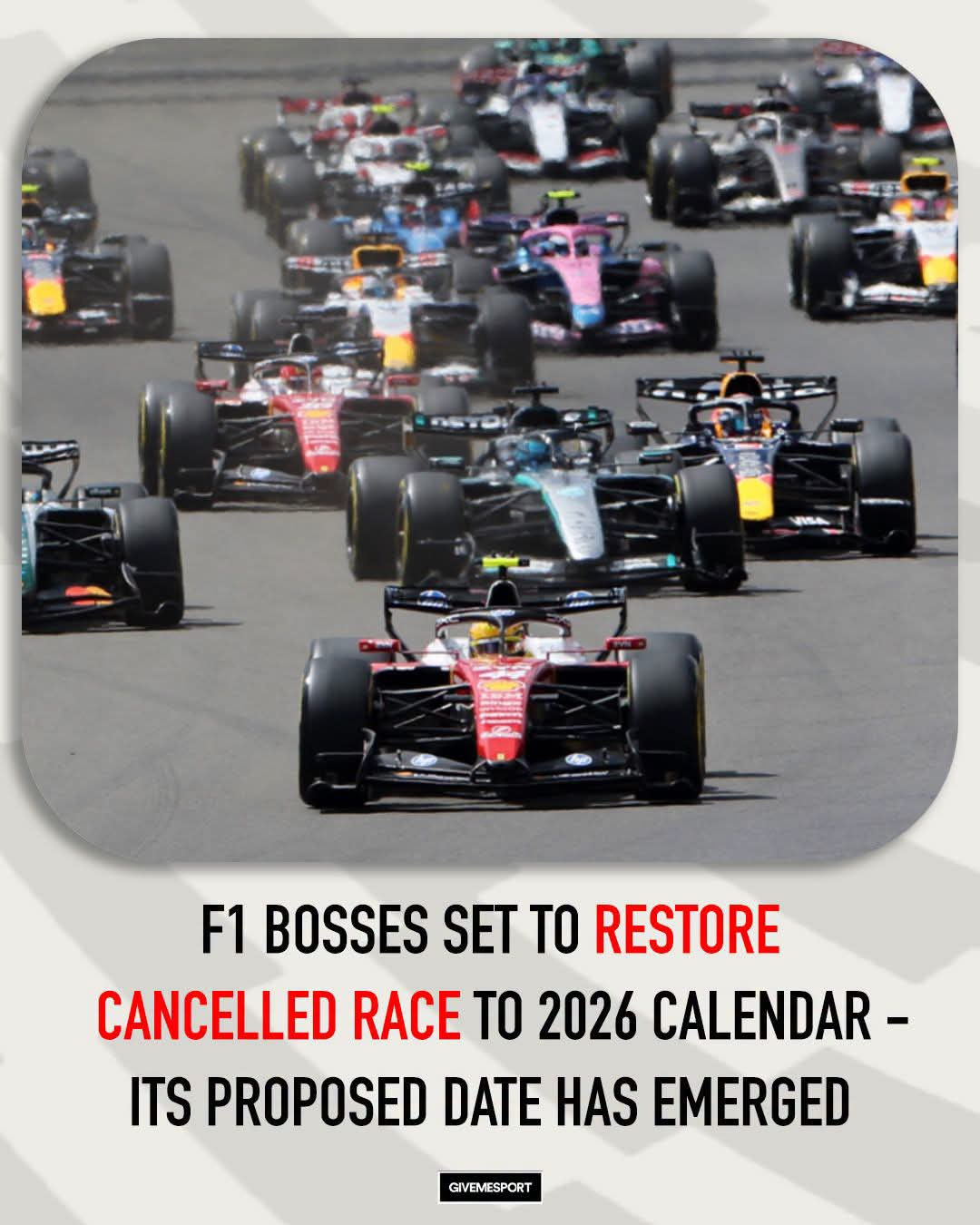
Ferrari delivered one of its smartest strategic performances of the 2026 Formula 1 season at the United States Grand Prix, with Charles Leclerc using a carefully chosen tyre strategy to defeat Max Verstappen in their battle for second place. While Kimi Antonelli controlled the race at the front, Ferrari’s decisions helped Leclerc turn a competitive opening stint into a decisive late-race advantage over the Red Bull driver.
Telemetry analysis from Austin suggests that Ferrari’s decision to switch Leclerc from soft tyres to mediums, before finishing on the hard compound, was crucial to his success. Verstappen, by comparison, spent his first two stints on soft tyres, a choice that left him struggling with declining performance before Red Bull committed to another pit stop.
Leclerc eventually passed Verstappen on lap 47 and secured second place behind Antonelli. The result was not simply a product of Ferrari having a fast car. It demonstrated how tyre management, strategic flexibility and the ability to react to changing track conditions can decide the outcome of a Grand Prix.
LECLERC AND VERSTAPPEN BEGIN THEIR STRATEGIC BATTLE
Starting fourth on the grid, Leclerc made an excellent getaway on the soft tyres and immediately put himself in contention for the leading positions. He passed Isack Hadjar and briefly moved ahead of Verstappen through the opening corners, demonstrating Ferrari’s potential to challenge Red Bull.
Verstappen soon reclaimed second place, however, establishing himself as Leclerc’s main rival for the remainder of the race. Antonelli had already begun building an advantage at the front, making the fight between Ferrari and Red Bull particularly important.
Both Leclerc and Verstappen faced a similar problem during their opening stints. The soft tyres were less durable than their teams might have hoped, forcing the drivers to manage their pace to avoid excessive degradation.
Verstappen entered the pits on lap 13, with Leclerc following two laps later. Those stops effectively committed both drivers to a two-stop race, while Antonelli was able to extend his opening stint on mediums and pursue a one-stop strategy.
That difference would become increasingly important as the race developed. Mercedes had positioned Antonelli to reach the finish with fewer stops, while Ferrari and Red Bull needed to make their additional tyre changes count.
FERRARI MAKES THE RIGHT CALL WHILE RED BULL STRUGGLES
The decisive difference emerged during the second stint.
After his first stop, Verstappen returned to the soft compound, while Ferrari selected medium tyres for Leclerc. The choice gave the Monegasque driver a more versatile tyre that allowed him to maintain a stronger and more consistent pace over a longer period.
Telemetry comparisons indicated that Leclerc was generally quicker during this phase, once the time spent overtaking Hadjar was taken into account. Verstappen’s lap times deteriorated as his soft tyres lost performance, eventually forcing him back into the pits.
Red Bull’s decision to use soft tyres for two consecutive stints proved costly. Although the compound could offer strong immediate grip, its declining performance made it difficult for Verstappen to sustain competitive lap times.
Ferrari, meanwhile, had more flexibility. Rather than simply copying Red Bull’s decisions, the team allowed Leclerc to continue on the mediums while assessing how the other cars performed on their respective compounds.
That patience was crucial. A strategy is not necessarily successful because it produces the fastest lap immediately after a pit stop. What matters is how consistently a driver can maintain speed over the full stint and how much performance remains available for the final phase of the race.
Leclerc’s medium-tyre stint gave Ferrari the information and flexibility it needed to make the next decision.
THE HARD TYRES PROVIDE THE BREAKTHROUGH
Ferrari’s final tyre selection proved to be the defining moment in Leclerc’s race.
The team had encouraging evidence that the hard compound was performing particularly well in Austin. Lando Norris demonstrated strong pace on hard tyres, while Antonelli’s switch to the same compound provided another indication that it could deliver the consistency required over a long stint.
Ferrari responded by putting Leclerc on hard tyres for the final phase of the race. The decision gave him the opportunity to attack Verstappen, whose own strategy had left him struggling to maintain the same level of performance.
Leclerc made the most of the advantage. As the race approached its closing stages, the Ferrari driver began closing the gap and eventually overtook Verstappen on lap 47 to take second place.
The move was the culmination of a strategy that had allowed Leclerc to preserve his competitiveness while Red Bull’s tyre choice became increasingly difficult to manage.
Ferrari deserves credit for recognising the changing tyre picture and adapting instead of committing blindly to a plan that was no longer producing the best results. In a race where Antonelli’s one-stop strategy had already put pressure on the two-stop runners, making the right compound choices became essential to securing the strongest possible finish.
COULD CHARLES LECLERC HAVE WON THE UNITED STATES GP?
Although Ferrari’s strategy helped Leclerc beat Verstappen, a victory over Antonelli would have been considerably more difficult.
Leclerc briefly occupied second place during the opening lap, but Verstappen recovered the position shortly afterwards. Maintaining that advantage might have changed the way Leclerc approached the race, particularly when deciding whether to cover Red Bull’s first pit stop.
However, track position alone would not necessarily have been enough to challenge Antonelli. Mercedes had successfully extended the Italian’s opening stint on medium tyres before switching to hard tyres, allowing him to complete the race with one stop.
Leclerc was already committed to a two-stop strategy after starting on soft tyres. Even if he had retained second place, Ferrari would still have needed to manage the strategic threat posed by Verstappen while finding a way to overcome Antonelli’s advantage.
The available evidence therefore suggests that Ferrari’s strategy was highly effective in the fight for second, but it does not establish that Leclerc had a realistic route to victory under the circumstances.
A stronger qualifying position, a different starting tyre and a cleaner opening phase might have created more opportunities. Those possibilities, however, depend on several variables that did not materialise in Austin.
Antonelli’s pace and strategic execution made him a formidable opponent, and Ferrari’s strongest achievement was ensuring that Leclerc finished ahead of Verstappen rather than allowing the Red Bull driver to control the battle.
FERRARI’S UPDATED SF-26 SHOWS PROMISING POTENTIAL
Ferrari’s performance also raised encouraging questions about the effectiveness of its latest aerodynamic package.
The SF-26 appeared competitive over the long stints, with its ability to manage tyre degradation becoming a major advantage during the race. A car that is gentle on its tyres can preserve grip for longer, reduce the loss of performance as a stint progresses and give the strategy team more options.
That characteristic was particularly valuable at the Circuit of the Americas, where the combination of technical corners and demanding changes of direction places considerable pressure on tyres.
Ferrari’s earlier difficulties with tyre warm-up during qualifying had raised concerns, but the race demonstrated that the car could perform more consistently over longer distances.
The new aerodynamic package also appeared to work effectively under the circuit’s demanding conditions. While one race cannot establish that every upgrade has delivered a lasting improvement, the Austin result offered Ferrari encouraging evidence that its development direction may be producing useful gains.
The next challenge will be demonstrating that the performance can be repeated at other circuits. Different track surfaces, temperatures and corner configurations can change how a car behaves, meaning Ferrari must continue to evaluate whether its improvements translate into consistent results.
HAMILTON’S MISSED PODIUM ADDS TO FERRARI’S MIXED RESULT
While Leclerc celebrated second place, Lewis Hamilton’s fourth-place finish left Ferrari wondering what might have been.
Hamilton also benefited from a two-stop approach and showed strong pace late in the race. He overtook rivals during his recovery and eventually finished approximately one second behind Verstappen.
However, a virtual safety car triggered by a problem involving Valtteri Bottas’s Cadillac disrupted Hamilton’s late charge. The interruption reduced the time available for him to attack Verstappen and potentially secure another position.
Hamilton also identified car-balance problems during the opening two stints, particularly understeer through slower corners. He believed that the time lost early in the race was more significant than the late virtual safety car.
His comments underline an important distinction between Ferrari’s two performances. Leclerc’s strategy and race pace combined to deliver a podium, while Hamilton’s difficulties with balance prevented him from fully capitalising on the team’s tyre approach.
Ferrari’s overall result was strong, but the possibility of a double podium will leave the team considering whether better execution could have delivered even more.
THE FIGHT FOR SECOND PLACE IN THE CHAMPIONSHIP HEATS UP
The Austin Grand Prix has added another dimension to the battle behind Antonelli, with Leclerc’s podium strengthening his position in a competitive group of drivers fighting for second place in the championship.
Verstappen remains a formidable opponent, particularly given his recent form, but Red Bull’s strategic difficulties in Austin demonstrated how quickly an advantage can disappear when tyre performance and race execution do not align.
Ferrari, meanwhile, has reasons to be optimistic. Leclerc showed that the team can make effective decisions under pressure, while the performance of the updated SF-26 suggests that its race pace deserves serious attention.
The next round in Mexico will provide another test of whether Ferrari can maintain that progress. The team must prove that its tyre management and strategic flexibility were not limited to the conditions in Austin.
For now, the United States Grand Prix offers a clear lesson: Ferrari did not need to beat Antonelli to demonstrate strategic excellence. By choosing the right compounds, reading the developing race and allowing Leclerc to exploit his tyre advantage, the team won the battle that mattered most against Verstappen.
The result could prove important as the season progresses. If Ferrari continues to combine competitive car performance with decisions as effective as those made in Austin, Leclerc may have further opportunities to challenge for podiums and strengthen his championship position.