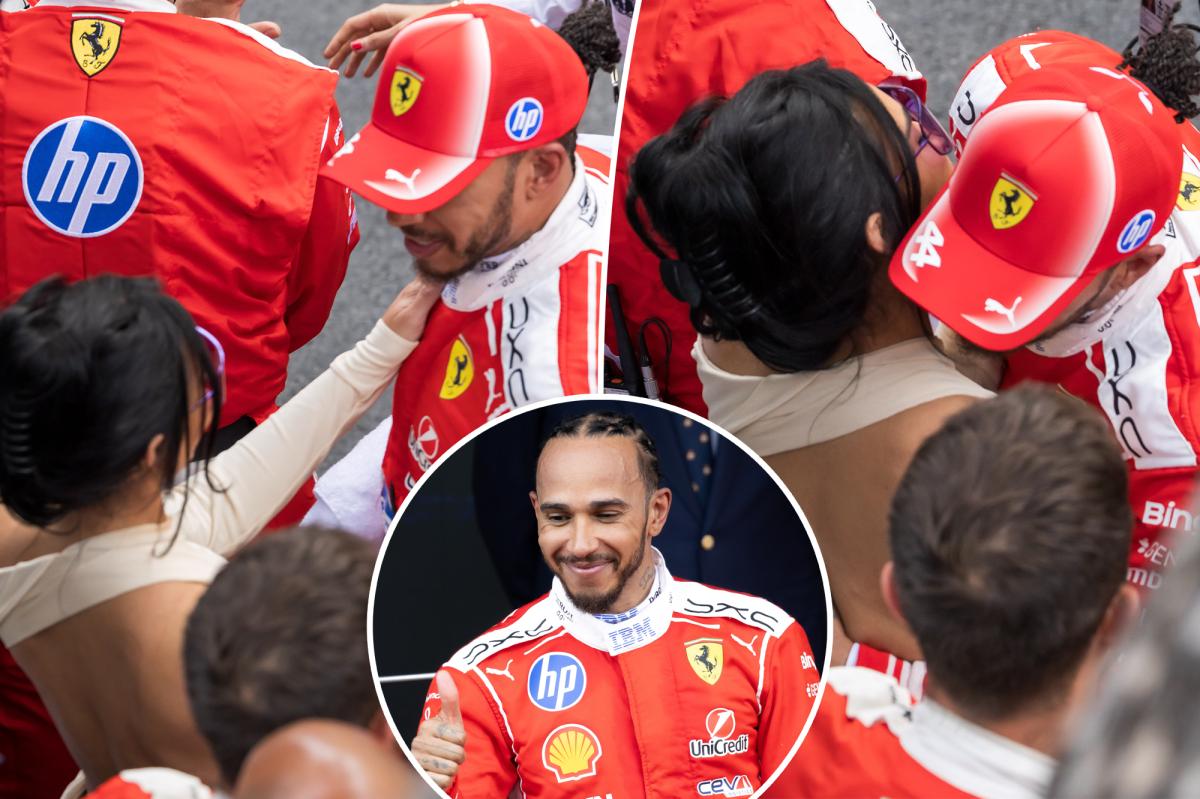
Lewis Hamilton has never been one to stay silent when something feels off. In recent days the seven-time Formula 1 world champion has once again brought Ferrari’s race strategy under the microscope, revisiting concerns he first raised months earlier. The comments come with a pointed reminder that he flagged the same issues before, only to feel they went unheard. Behind the public statements, sources close to the team describe growing friction over how decisions are made on the pit wall and how the two drivers are managed relative to each other.
What started as isolated radio frustrations has evolved into a broader conversation about culture, communication, and whether Ferrari is truly ready to operate like a championship-winning outfit in the modern era.
WHY HAMILTON KEEPS RETURNING TO THE STRATEGY QUESTION
Hamilton’s latest remarks follow a pattern established across 2025 and into 2026. Early in his Ferrari tenure he made clear he was not content simply to start and finish in the positions the team deemed “safe.” After the Austrian Grand Prix in 2025 he told media he had already discussed wanting more aggressive, differentiated strategies rather than mirroring his teammate. He preferred offset tyre sequences that could create overtaking opportunities or protect against late safety cars. The team, he said, preferred securing solid points finishes.
Similar themes resurfaced in 2026. At Zandvoort, Hamilton was left circulating behind Charles Leclerc on older rubber while the pit wall deliberated. His radio messages turned sharp: comments about wasted time and being treated like a “guinea pig.” After the race he acknowledged the heat-of-the-moment tone was not his best self, yet the underlying complaint remained. He wanted faster, clearer decisions and a greater willingness to prioritise the driver better placed in the championship.
The phrase circulating in fan discussions and certain reports — that he had “said this before and no one wanted to listen” — captures the cumulative frustration. Hamilton has repeatedly described himself as vocal by nature. When he sees processes that slow the team or leave performance on the table, he pushes. In his view, that pressure is part of the job description for a driver chasing an eighth title.
THE BEHIND-THE-SCENES DETAIL FUELLING THE FRICTION
The more sensitive element is not any single radio exchange. It is the absence of clear, written rules of engagement between the two Ferrari drivers. Hamilton has contrasted this with his Mercedes years, where protocols existed for when one car should yield to the other. At Ferrari, he has suggested, those boundaries remain undefined. The result is hesitation on the pit wall, delayed calls, and moments where the drivers effectively negotiate live on track.
Team principal Fred Vasseur has publicly framed many of these moments as learning curves. Communication between Hamilton and his engineers has improved since the early, sometimes awkward exchanges of 2025. Personnel adjustments, including a change in race engineer for Hamilton, were made. Technical requests — brake material preferences, suspension feedback, development priorities — have been heard and, in several cases, actioned. Hamilton himself has credited Vasseur with enabling changes that required significant internal effort inside a historically conservative organisation.
Yet the gap between listening and fully embedding a more decisive, driver-centric culture remains visible. Ferrari’s Italian identity, its weight of history, and the intense external pressure that comes with the red cars all shape decision-making under race conditions. Analysts who have worked inside the team in previous eras have pointed to external influences and the fear of making the “wrong” call as factors that can slow the pit wall even when the data is clear.
IMPACT ON THE DRIVERS, THE TEAM AND THE CHAMPIONSHIP PICTURE
For Hamilton the stakes are personal and professional. At this stage of his career every race matters. Lost seconds while waiting for a team order or a conservative tyre call are not abstract; they are points that may never return. His championship deficit to the leaders has grown large enough that recovery already looked steep before the latest strategic frustrations. Continued uncertainty risks eroding the belief he has worked hard to rebuild after a difficult 2025.
Charles Leclerc sits in a different position. As the longer-serving Ferrari driver he has lived through previous strategy controversies. Equal treatment protects team harmony and his own future contract discussions, but it can leave the higher-placed driver feeling unsupported when the title fight is still mathematically alive. The tension is not personal animosity; both men have shown respect for each other. It is structural.
Ferrari as an organisation faces the classic challenge of integrating a high-profile, high-demand superstar without losing the cohesion that has kept it competitive. The 2026 car has shown genuine progress. Hamilton has spoken positively about finally having many of the characteristics he requested. Innovation appears more present. Yet championships are won on Sundays through precise execution as much as through car performance. If strategy and team orders remain a recurring soft spot, the technical gains risk being undermined.
Across the wider Formula 1 paddock the situation is closely watched. Mercedes has demonstrated slicker internal management of its two drivers this season. Other teams note that Ferrari’s willingness to evolve under Hamilton’s influence could either accelerate its return to title contention or create another cycle of internal friction that previous star drivers ultimately could not overcome.
WHAT THIS MEANS FOR THE REST OF 2026 AND BEYOND
The remaining races will test whether the latest round of discussions produces tangible procedural changes. Clearer protocols for when the drivers race each other freely and when one yields could remove ambiguity. Faster decision loops on the pit wall, even if the calls are sometimes imperfect, would reduce the sense that time is being wasted. Hamilton has described cultural change at Ferrari as a long-term process. That is realistic. Deep organisational habits do not shift in a single season.
Optimistic scenarios see the team using the current friction as fuel. Hamilton’s relentless feedback, combined with Vasseur’s openness to structural adjustments, has already delivered a more competitive package than many expected after 2025. If the operational side catches up, Ferrari could still play a meaningful role in the constructors’ battle and give Hamilton realistic chances of race wins that keep his title dream faintly alive.
More cautious forecasts point to the risk of repeated public airings of grievances. Modern F1 media cycles amplify every radio message. Sustained tension can affect morale, sponsor confidence, and the drivers’ ability to extract maximum performance. History shows Ferrari has sometimes struggled to fully absorb the demands of its biggest stars. The difference this time is that Hamilton arrived with both a clear mandate for change and a team principal willing to listen.
The coming weeks will reveal whether the latest strategy conversation becomes another chapter of frustration or the moment the Scuderia finally closes the remaining gaps between ambition and execution. Hamilton has made his position plain once more. The question is no longer whether anyone is listening. It is whether the organisation can translate those words into decisions that win races when the pressure is highest.