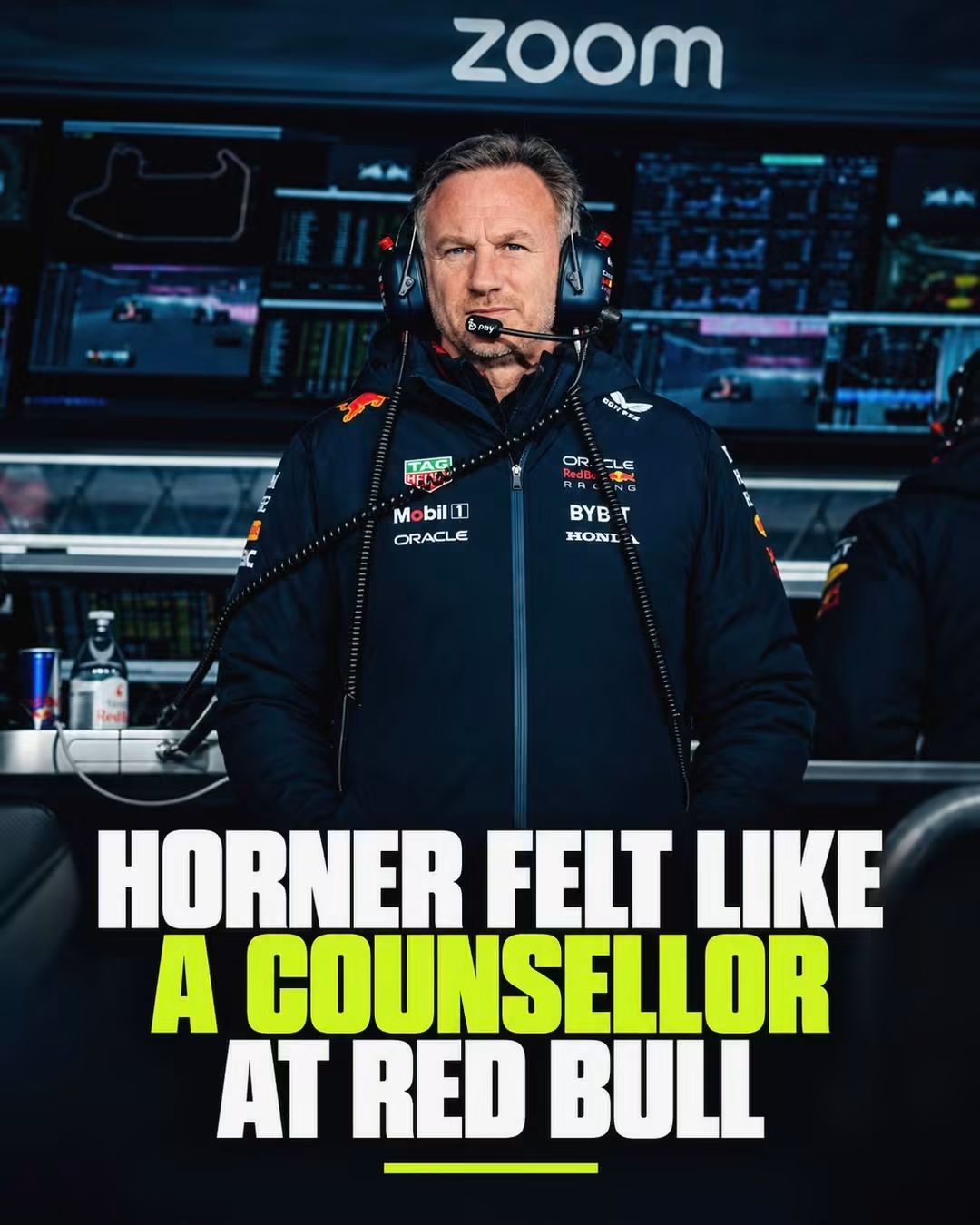
Former Red Bull team principal Christian Horner has lifted the lid on one of the least glamorous parts of leading a Formula 1 powerhouse. In a recent wide-ranging conversation, the man who guided the team through two dominant eras admitted that managing the squad sometimes felt less like commanding a high-performance racing outfit and more like operating a counselling clinic. His job, he explained, involved constantly balancing fiercely competitive personalities, strong differences of opinion, and the delicate alchemy required to keep everyone pointed in the same direction.
The revelation comes as Horner reflects on two decades at the helm following his departure from the team in 2025. It offers a rare glimpse behind the pit wall into the human dynamics that underpin success in the world’s most demanding motorsport series.
THE UNSEEN ALCHEMY OF AN F1 TEAM PRINCIPAL
Horner described the daily reality of life at Red Bull’s Milton Keynes base. From early morning, people would be waiting outside his office with problems. The organisation was packed with highly driven, talented individuals whose competitive instincts and strong views created inevitable friction. The challenge was never simply technical or strategic. It was interpersonal.
He framed it as the “great unseen alchemy” of running a Formula 1 team. Genius-level engineers, designers, and drivers do not always slot together neatly. Their intensity, which produces championship-winning cars, can also generate tension. Horner’s role was to keep those competing forces aligned around one shared goal: the performance of the car on Sunday afternoon. That common purpose, he said, was what ultimately united everyone and generated huge collective pride.
This is not the version of team principal life that appears in highlight reels or Netflix series. Viewers see the radio messages, the strategy calls, and the podium celebrations. They rarely see the quiet conversations required to keep a high-functioning but high-ego environment from fracturing.
WHY PERSONALITY MANAGEMENT MATTERS MORE THAN EVER IN FORMULA 1
Modern Formula 1 demands extreme specialisation. Cost caps, complex regulations, and the need for ultra-specific expertise have made it harder to find the kind of multi-talented figures who once dominated the sport. Yet the human element remains decisive. Teams still rely on strong characters who push boundaries, challenge assumptions, and refuse to settle for second best.
Horner’s comments highlight a universal truth in elite sport: talent alone is not enough. The ability to extract the best from that talent while managing the friction it creates separates the good teams from the great ones. Red Bull’s success under his leadership, spanning the Sebastian Vettel era of four consecutive titles and the Max Verstappen era of further dominance, was built as much on people management as on aerodynamics or engine power.
The same dynamics appear across the paddock. Every competitive team principal spends significant time on culture, communication, and conflict resolution. The difference is that few discuss it as openly as Horner has now done.
THE IMPACT ON ATHLETES, TEAMS, AND THE WIDER INDUSTRY
For drivers and engineers, a stable and well-managed environment is essential. When personalities clash without effective mediation, performance suffers. Focus shifts from the car to internal politics. Trust erodes. Results follow.
Horner’s approach appears to have prioritised alignment around shared performance goals. By treating interpersonal challenges as part of the job rather than an inconvenience, he helped sustain a high-output culture for many years. That culture delivered multiple world championships and established Red Bull as a genuine force capable of challenging and then overtaking more established manufacturers.
The broader industry can take lessons here. As Formula 1 continues to expand commercially and attract new talent and investment, the soft skills of leadership grow more important. Technical excellence remains non-negotiable, but the ability to hold together a diverse group of ambitious people under intense pressure is what turns potential into sustained success.
LOOKING AHEAD: LEADERSHIP LESSONS FOR THE NEXT GENERATION
Horner’s reflections arrive at an interesting moment. With his book *Drive* set for publication and ongoing conversations about the future of the sport, his candour adds valuable texture to discussions about what it really takes to run a top team.
Future team principals will face similar challenges, possibly in even more complex environments shaped by new regulations, sustainability targets, and evolving commercial pressures. The counselling clinic analogy may prove useful. Success will still require technical brilliance and sharp strategy, but it will also demand emotional intelligence, patience, and the willingness to address human issues before they escalate.
Horner’s willingness to describe the less visible side of the role humanises a position often portrayed as purely ruthless or political. It reminds observers that even at the highest level, Formula 1 remains a people business. The cars are extraordinary machines, but the people who design, build, and race them are still human beings with egos, insecurities, and competing priorities.
Managing those realities without losing sight of the ultimate goal—performance on Sunday—is the real alchemy. For two decades at Red Bull, Christian Horner made it look relatively straightforward. His latest comments suggest it was anything but.