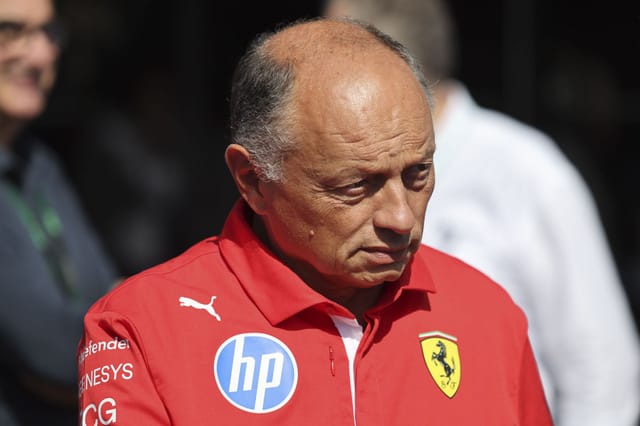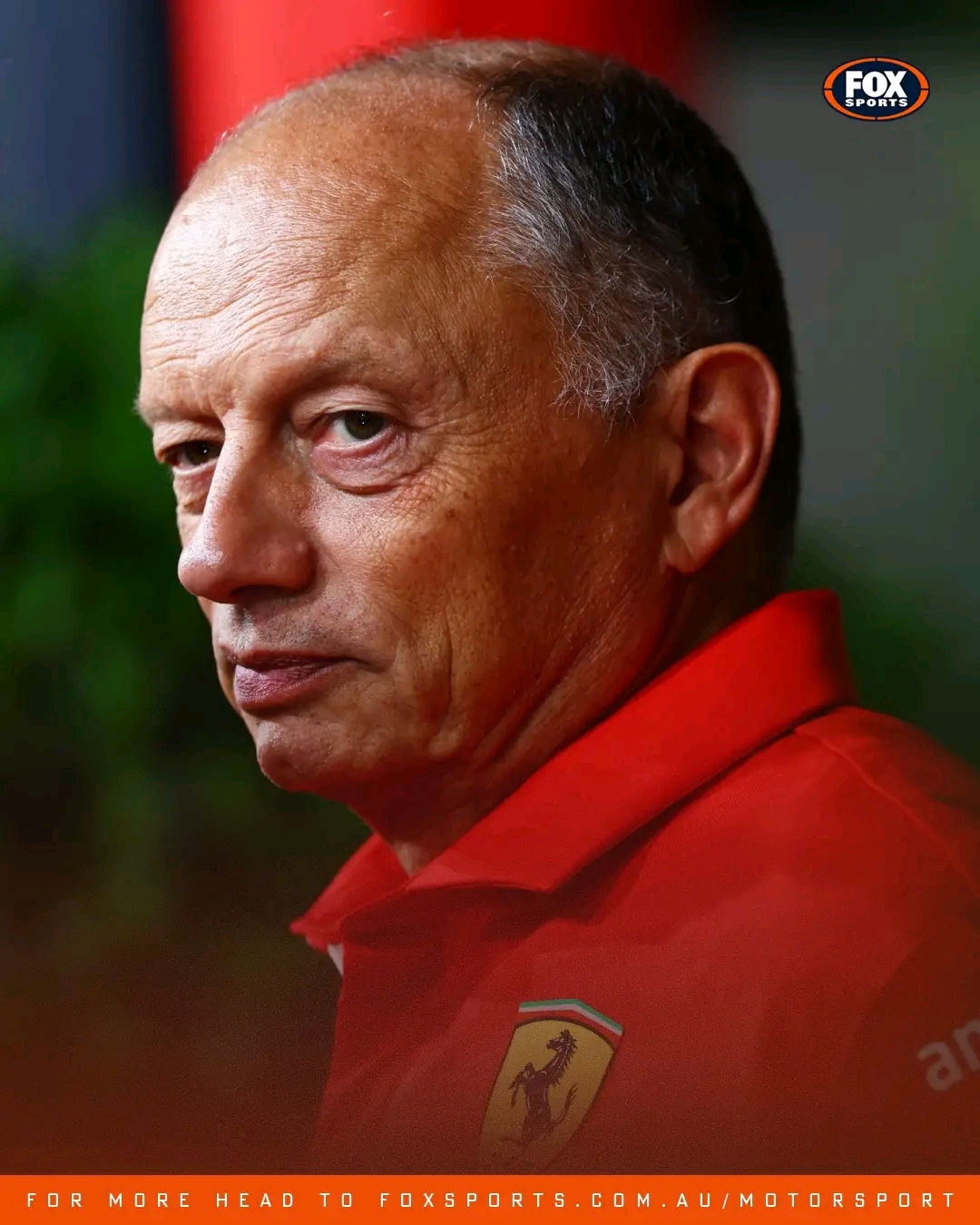
After months of swirling speculation, Scuderia Ferrari has drawn a clear line in the sand. Team principal Fred Vasseur now has the public, full backing of the Ferrari board. The statement came through chief communications officer Maria Conti, who spoke on behalf of chairman John Elkann and CEO Benedetto Vigna. The message was unambiguous: the team has confidence in Vasseur and his group, and that confidence continues.
Yet in Formula 1, and especially at Ferrari, a public vote of confidence rarely feels like pure relief. The question hanging over Maranello is simple and sharp. Has this endorsement released some of the pressure — or has it ramped it up considerably?
WHY THE RUMOURS REFUSED TO DIE
Vasseur arrived at Ferrari at the start of 2023. He inherited a team still searching for its first constructors’ title since 2008 and its first drivers’ crown since Kimi Räikkönen’s in 2007. He stabilised the operation, helped land Lewis Hamilton from Mercedes for 2025, and guided the squad into a competitive second place in the 2026 constructors’ championship.
That progress has not been enough to silence the noise. Italian media has long treated the Ferrari team principal’s job as the sport’s ultimate pressure cooker. Recent form dips, tactical questions, and the inevitable friction that arises when two high-profile drivers share a garage have kept the rumour mill turning. Comments from former Red Bull boss Christian Horner about Ferrari being a “dream” role added fuel. Suddenly the story refused to fade after the Azerbaijan Grand Prix, prompting Ferrari’s unusual step of a media briefing to shut it down.
Ferrari does not normally feed the speculation machine. The decision to speak publicly signalled how disruptive the noise had become. Vasseur himself later admitted the team needed serenity and that the constant questions were preventing focus.
THE DOUBLE-EDGED SWORD OF A PUBLIC BACKING
In sport, the phrase “full backing of the board” carries baggage. Football managers know it well. It can steady the ship — or mark the beginning of the end. At Ferrari the history is even more brutal. Team principals rarely leave on their own terms when results stagnate.
Vasseur’s situation is different in one important respect. He already signed a multi-year extension in 2025. The board is not starting from a position of short-term doubt. Conti’s statement stressed continuity and the need for the team to stay united and focused on the work ahead. Both Hamilton and Charles Leclerc have publicly backed their boss. Williams team principal James Vowles even praised Ferrari’s progress under Vasseur, noting the team is in a stronger championship position than it has been for some time.
Still, the timing matters. Ferrari began 2026 with genuine title aspirations under the new regulations. Two wins arrived. Then the podium drought and tactical frustrations returned. With only a handful of races left, the constructors’ battle is largely settled in Mercedes’ favour, but the narrative around Maranello is already shifting toward 2027. That season carries huge expectations. A high-pressure campaign next year could define whether Vasseur’s tenure is remembered as the stabilising chapter or another incomplete recovery.
WHAT THIS MEANS FOR THE DRIVERS, THE TEAM AND THE WIDER PADDOCK
For Hamilton and Leclerc the endorsement should, in theory, reduce one distraction. Both drivers have spoken about the need for clear direction and internal calm. Hamilton has called Vasseur the right man to take the team forward while also noting that responsibility sits above the team principal as well. Leclerc has stressed collective effort over individual finger-pointing. A unified message from the top helps them concentrate on extracting performance from the car rather than answering questions about the boss’s future every Thursday.
Inside the factory the impact is subtler but real. Ferrari employs more than a thousand people who feel the weight of every negative headline. Vasseur has spoken about protecting their focus and motivation. Constant external questioning chips away at that. A clear board statement gives middle management and engineers permission to ignore the noise and keep developing the 2027 project.
Across the paddock the story reinforces Ferrari’s unique status. No other team generates this level of daily scrutiny. Christian Horner’s comments, whether calculated or casual, showed how quickly external voices can amplify internal pressure. Other team principals watching from a safer distance understand the lesson: at Ferrari, even solid progress is never enough if the media temperature rises.
LOOKING AHEAD TO 2027 AND THE REAL TEST OF STABILITY
The true measure of this backing will arrive next season. Ferrari has improved its organisational rhythm under Vasseur. The car has shown competitive windows. The driver pairing remains one of the strongest on the grid. Yet the championship drought stretches on, and the Italian public’s patience is never infinite.
If Ferrari starts 2027 as a genuine title contender and sustains that form, the September 2026 statement will look like smart crisis management. If early struggles return and the same rumours resurface, the public support will be remembered as the moment the clock started ticking louder.
Vasseur has described the Ferrari job as the best in the world while acknowledging the intensity that comes with it. He has asked for serenity so the team can work. The board has given him that public space. Now the results must match the rhetoric.
In Formula 1 the pressure never truly disappears. At Ferrari it simply changes shape. Fred Vasseur has the full backing of the board. Whether that lightens the load or raises the stakes is a question only the remaining races of 2026 and the opening rounds of 2027 can answer. The Scuderia’s next chapter depends on how well the team converts that stated confidence into consistent performance when it matters most.