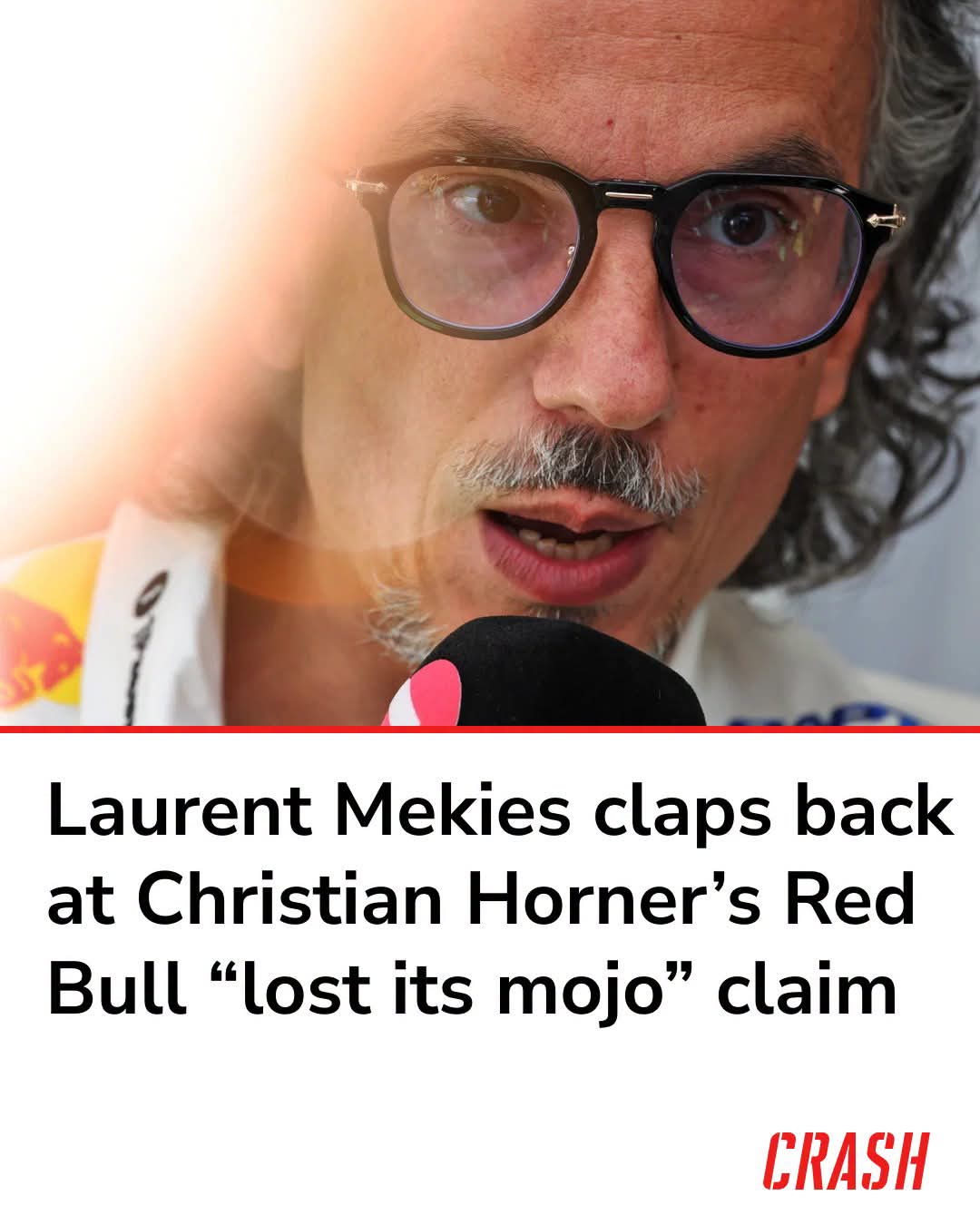
The rivalry between Christian Horner and Red Bull Racing has taken another interesting turn after Laurent Mekies publicly rejected the former team principal’s suggestion that the organisation has lost its identity since his departure.
Horner, who spent nearly two decades leading Red Bull, believes the team has lost some of the energy, influence and atmosphere that once made it one of Formula 1’s most powerful organisations. However, his successor has delivered a very different assessment, insisting that the team is united, motivated and moving in the right direction.
The disagreement is particularly significant because Red Bull is still working to rebuild its competitive strength following a difficult period. While Horner’s departure in July 2025 marked the end of a major chapter in the team’s history, Mekies has been tasked with restoring stability and ensuring Red Bull remains a championship contender.
HORNER QUESTIONS RED BULL’S IDENTITY AFTER HIS DEPARTURE
During an interview with The Times, Horner suggested that Red Bull had lost something important since he was removed from his leadership position.
The former team principal claimed the organisation had lost its “mojo, its presence, it’s vibe,” comments that appeared to question not only its competitive condition but also the atmosphere behind the scenes.
Horner’s departure followed a turbulent period at Red Bull, involving internal power struggles and a noticeable decline in performance. After approximately two decades at the helm, he was replaced by Mekies, who inherited the responsibility of managing a team facing significant sporting and organisational challenges.
Horner’s comments also highlight how difficult it can be for a long-serving leader to separate his personal legacy from the organisation he once controlled. Red Bull was built into a dominant Formula 1 force during his tenure, making his departure an important moment in the team’s history.
However, the organisation has continued without him, and Mekies appears determined to establish his own leadership identity rather than constantly compare the present with the Horner era.
MEKIES DELIVERS A STRONG RESPONSE
Asked about Horner’s remarks during Friday’s press conference at the Mexico City Grand Prix, Mekies remained respectful but made it clear that he disagreed.
“Look, first of all, Christian is entitled to his opinion. He obviously has spent a lot of time in this team and I respect his point of view,” Mekies explained.
The Frenchman then offered a different picture of the atmosphere inside Milton Keynes, pointing to the unity demonstrated by employees during Red Bull’s difficult period.
“We certainly feel extremely differently about the vibe in the team,” he added.
Mekies believes one of Red Bull’s biggest strengths in recent months has been the ability of its workforce to remain together despite pressure from disappointing performances and technical difficulties.
He also made an important distinction between maintaining team spirit while winning and demonstrating the same commitment when results are not going in the right direction.
According to Mekies, Red Bull’s employees continued pushing for improvements even when the team faced serious challenges on both the chassis and power-unit sides.
That response, rather than the atmosphere described by Horner, is what the current team principal considers the true identity of Red Bull Racing.
RED BULL’S RECOVERY IS THE BIGGER STORY
Mekies’ defence is not simply about rejecting criticism from his predecessor. It also reflects the progress Red Bull believes it has made since experiencing a difficult start to the season.
Formula 1 teams are often judged by their results, but recovering from a technical and performance crisis requires much more than finding additional speed.
Engineers must identify weaknesses, drivers must provide useful feedback, and departments working on different aspects of the car must coordinate their efforts. Any lack of unity can make an already difficult situation considerably worse.
Mekies specifically praised the way Red Bull’s Milton Keynes operation responded to the challenge, highlighting the commitment shown by employees and the willingness to confront problems honestly.
He also acknowledged the importance of the drivers’ brutally honest feedback, suggesting that the team has been prepared to recognise its weaknesses rather than hide behind excuses.
That approach could prove important as Red Bull continues developing its car and preparing for the next stage of Formula 1’s technical evolution.
The recovery has also given Mekies an opportunity to demonstrate that he can lead the organisation through adversity, rather than simply benefit from the structure established during Horner’s successful years.
THIRD PLACE IS NOT GOOD ENOUGH FOR RED BULL
Despite the progress, Mekies was careful not to suggest that Red Bull has already achieved its objectives.
At the time of the Mexico City Grand Prix, the team occupied third position in the constructors’ championship, level on points with McLaren but ahead on countback, with five races remaining.
That position represents a complicated situation for an organisation accustomed to fighting for victories and world championships.
Mekies acknowledged that the team had received a deserved reward for its turnaround, but insisted that occasional race victories would not be enough to satisfy Red Bull’s ambitions.
“The target is not to win one race or two races; the target is to be back to world titles, and until we are there, nobody will feel we have achieved anything,” he stated.
Those comments reveal the scale of the challenge facing the current leadership.
Red Bull does not simply want to become competitive again. It wants to return to the position where winning races and fighting for championships are realistic expectations rather than occasional achievements.
For Max Verstappen, that ambition is especially important. A driver of his ability expects a car capable of consistently challenging at the front, and the team’s long-term success will depend on delivering that level of performance.
A QUIET POWER STRUGGLE OVER RED BULL’S LEGACY?
The exchange between Horner and Mekies also raises an interesting question about how Red Bull’s history will be remembered.
Horner played a central role in transforming the team into a championship-winning operation, overseeing multiple periods of dominance and helping establish its reputation as one of Formula 1’s most successful organisations.
His contribution cannot simply be erased because he is no longer in charge.
However, Mekies is now responsible for the team’s future, and he will ultimately be judged by what happens under his leadership rather than by how closely he resembles his predecessor.
There is also a difference between the public perception of a team and the atmosphere experienced by the people working inside it. Horner may believe Red Bull has lost some of its former presence, but Mekies argues that the internal unity remains strong.
The most convincing evidence will come from the circuit.
If Red Bull continues improving, challenges for victories and eventually returns to championship contention, Mekies’ confidence will gain credibility. If the team struggles to close the gap to its rivals, questions about its leadership and identity are likely to become louder.
For now, the Frenchman has made his position clear: Red Bull has not lost its fighting spirit, and its employees remain committed to restoring the team to the top of Formula 1.
Horner may have his own view of what changed after his departure, but Mekies is determined to make the next chapter of Red Bull’s history about results rather than nostalgia.