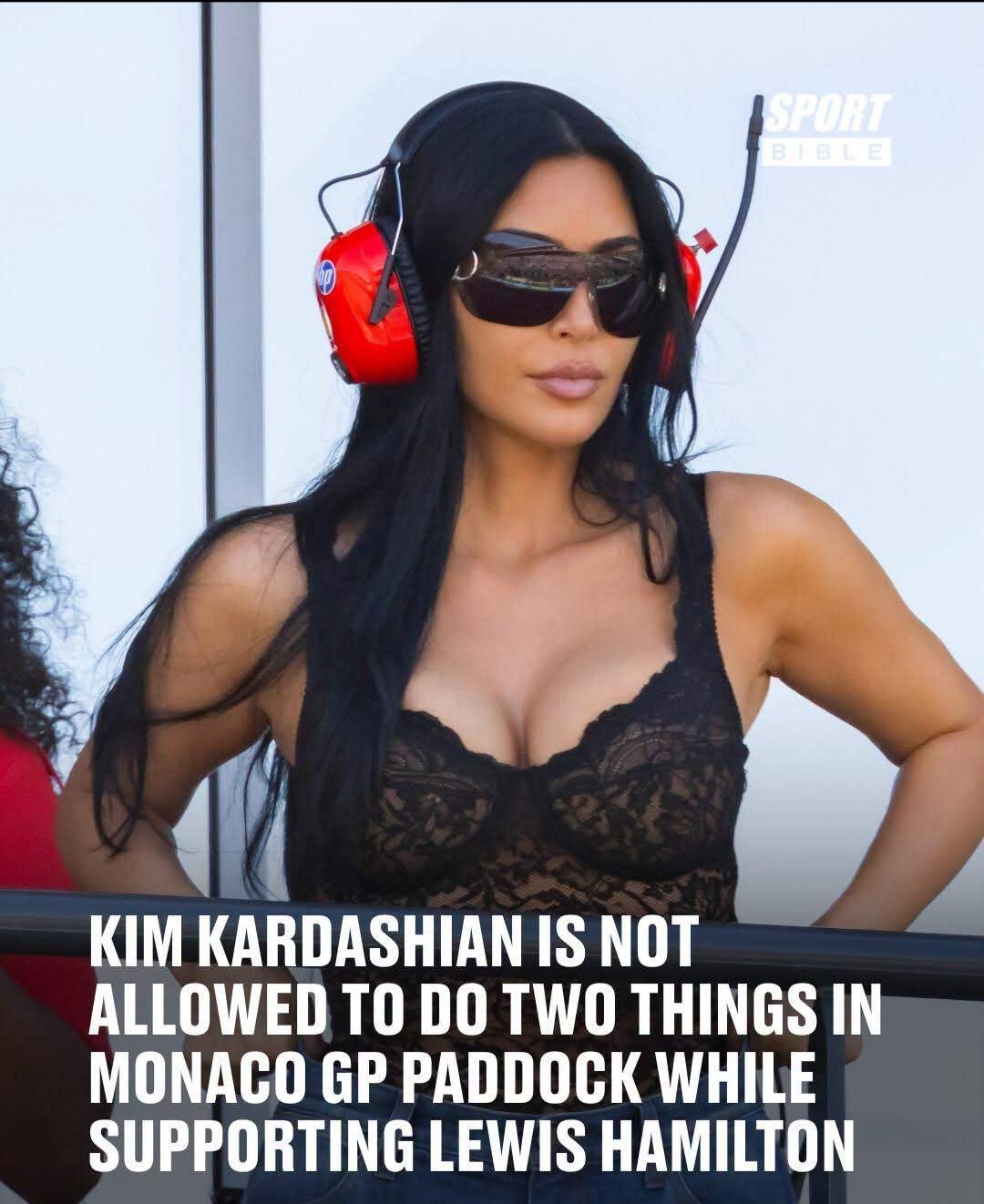
Kim Kardashian Faces Two Restrictions in the Monaco GP Paddock While Supporting Lewis Hamilton and…Kim Kardashian Faces Two Restrictions in the Monaco GP Paddock While Supporting Lewis Hamilton
Kim Kardashian’s appearance at the Monaco Grand Prix attracted plenty of attention as the reality television star and entrepreneur joined the Formula 1 paddock to support Ferrari driver Lewis Hamilton. Her presence highlighted the growing connection between Formula 1 and global entertainment, while reports about restrictions placed on her paddock access added another layer of interest to the weekend.
The Monaco Grand Prix is traditionally one of the most glamorous events on the Formula 1 calendar. The narrow streets of Monte Carlo attract world-famous athletes, actors, musicians, business leaders and other celebrities, making the race weekend as much a social occasion as a sporting event.
Kardashian’s appearance fitted naturally into that atmosphere.
The entrepreneur has developed a large global following through television, fashion and business, and her presence at a Formula 1 event inevitably generated attention beyond the racing itself. Her visit was particularly notable because of her connection with Hamilton, one of the most recognisable drivers in the sport.
Supporting Lewis Hamilton
Hamilton’s move to Ferrari has been one of the biggest stories in modern Formula 1. After a long career with Mercedes, the seven-time world champion joined the Italian team, creating enormous international interest in his first races wearing Ferrari colours.
Kardashian has previously shown interest in Formula 1 and has been photographed alongside Hamilton, making her appearance at the Monaco race another example of the sport’s expanding celebrity audience.
The Monaco paddock provides an especially high-profile setting for such appearances. Unlike many conventional sporting venues, the event takes place around the streets, harbour and luxury locations of Monte Carlo. This creates an environment where sporting and entertainment personalities regularly cross paths.
For Formula 1, that visibility is significant. The sport has worked for years to expand its audience internationally, and celebrity involvement can introduce the championship to people who may not traditionally follow motorsport.
Why the paddock has restrictions
Despite its glamorous reputation, the Formula 1 paddock is also a highly controlled working environment.
Drivers, engineers, mechanics, team executives and media professionals use the paddock throughout a race weekend. Teams are constantly preparing cars, analysing data and communicating with drivers, meaning unrestricted access would create practical and security concerns.
As a result, guests and celebrities visiting the paddock are subject to various rules.
Reports surrounding Kardashian’s Monaco appearance focused on two things she was reportedly not permitted to do while in the paddock. Such restrictions are not necessarily unusual or directed specifically at her. Access rules can apply to visitors generally, particularly in areas where teams are working or where confidential technical information could potentially be visible.
The precise conditions attached to individual guest passes can vary depending on the area being accessed, the team involved and the organiser’s security requirements.
The first restriction: respecting restricted areas
One of the most important principles in the Formula 1 paddock is that not every area is open to every guest.
Team garages contain expensive equipment, sensitive technology and large groups of staff working under intense time pressure. Guests therefore cannot simply move wherever they wish.
For a celebrity visiting to support a driver, that can mean staying within designated areas and following instructions from team personnel.
The restriction may appear minor to spectators watching from outside, but controlling movement inside the paddock is an important part of maintaining a professional environment.
During a Grand Prix weekend, even a short interruption can affect preparation for qualifying or the race.
The second restriction: photography and filming
Another common concern in elite motorsport environments is photography and filming.
The modern Formula 1 paddock is filled with cameras, smartphones and social-media content. While teams actively use digital media to promote themselves, there are situations where unrestricted photography or video recording can create problems.
Teams may want to protect technical details, operational procedures or private conversations. Drivers and staff may also need areas where they can work without being continuously filmed.
For high-profile visitors such as Kardashian, this becomes particularly relevant because almost anything they do can quickly attract online attention.
A casual photograph in the wrong location could potentially reveal information that a team does not want publicly circulated.
It is therefore important to distinguish between general celebrity-access restrictions and claims that a particular visitor was singled out. Unless officially confirmed, reports about specific rules should be treated as descriptions of the event rather than evidence of unusual treatment.
Monaco’s unique celebrity culture
The Monaco Grand Prix has long occupied a special position within Formula 1.
The circuit runs through Monte Carlo, passing luxury hotels, restaurants, apartments and the famous harbour. The race attracts wealthy guests and celebrities who can watch the event from hospitality areas, yachts and private residences.
That atmosphere has helped turn Monaco into one of Formula 1’s most recognisable races.
For drivers, however, the weekend remains an extremely demanding sporting competition. The circuit is famously narrow, with limited opportunities for overtaking. Qualifying is therefore particularly important, while concentration and precision are essential.
The contrast between the glamour surrounding the event and the intensity inside the teams is one of the defining features of the Monaco Grand Prix.
Formula 1’s expanding entertainment appeal
Kardashian’s presence also reflects the changing image of Formula 1.
The championship has experienced significant growth in global popularity, particularly among younger audiences and in markets outside traditional motorsport territories.
Social media has played an important role in that expansion. Drivers have become major public figures, while teams have increasingly embraced entertainment, fashion and lifestyle content.
High-profile celebrity appearances can contribute to this broader cultural reach.
For established fans, however, the celebrity attention remains secondary to the sporting competition. The cars, drivers and championship remain the central attraction, even as the paddock becomes increasingly connected to the wider entertainment industry.
Hamilton’s Ferrari chapter
For Hamilton, the Monaco weekend also represented another chapter in his Ferrari career.
His arrival at Ferrari generated enormous attention before the season even began. The team is arguably the most famous name in Formula 1, while Hamilton arrived with a record of seven world championships and numerous Grand Prix victories.
Every race therefore carries substantial interest.
Having prominent supporters such as Kardashian in the paddock adds to the visibility surrounding Hamilton and Ferrari, but the driver’s ultimate focus remains performance on the circuit.
The Monaco Grand Prix demands particular precision, and success depends heavily on qualifying position, strategy, tyre management and avoiding mistakes around the barriers.
A celebrity visit under the spotlight
Kardashian’s appearance demonstrated how closely Formula 1 now intersects with popular culture.
Her visit generated attention not only because of her celebrity status but also because of her association with Hamilton and the Ferrari team. At the same time, the reported paddock restrictions illustrate that the glamorous surroundings of Monaco do not mean normal sporting protocols disappear.
Behind the photographs, luxury hospitality and celebrity appearances is a tightly managed sporting operation.
Teams have championships to fight for, drivers have races to prepare for and hundreds of staff members have responsibilities that require concentration.
That balance between entertainment and competition is particularly visible in Monaco.
As Formula 1 continues to expand its global audience, celebrity appearances are likely to remain part of the championship’s modern identity. Kardashian’s visit provided another example of that trend, while the reported paddock rules served as a reminder that even the most famous guests must operate within the boundaries of a professional Formula 1 environment.