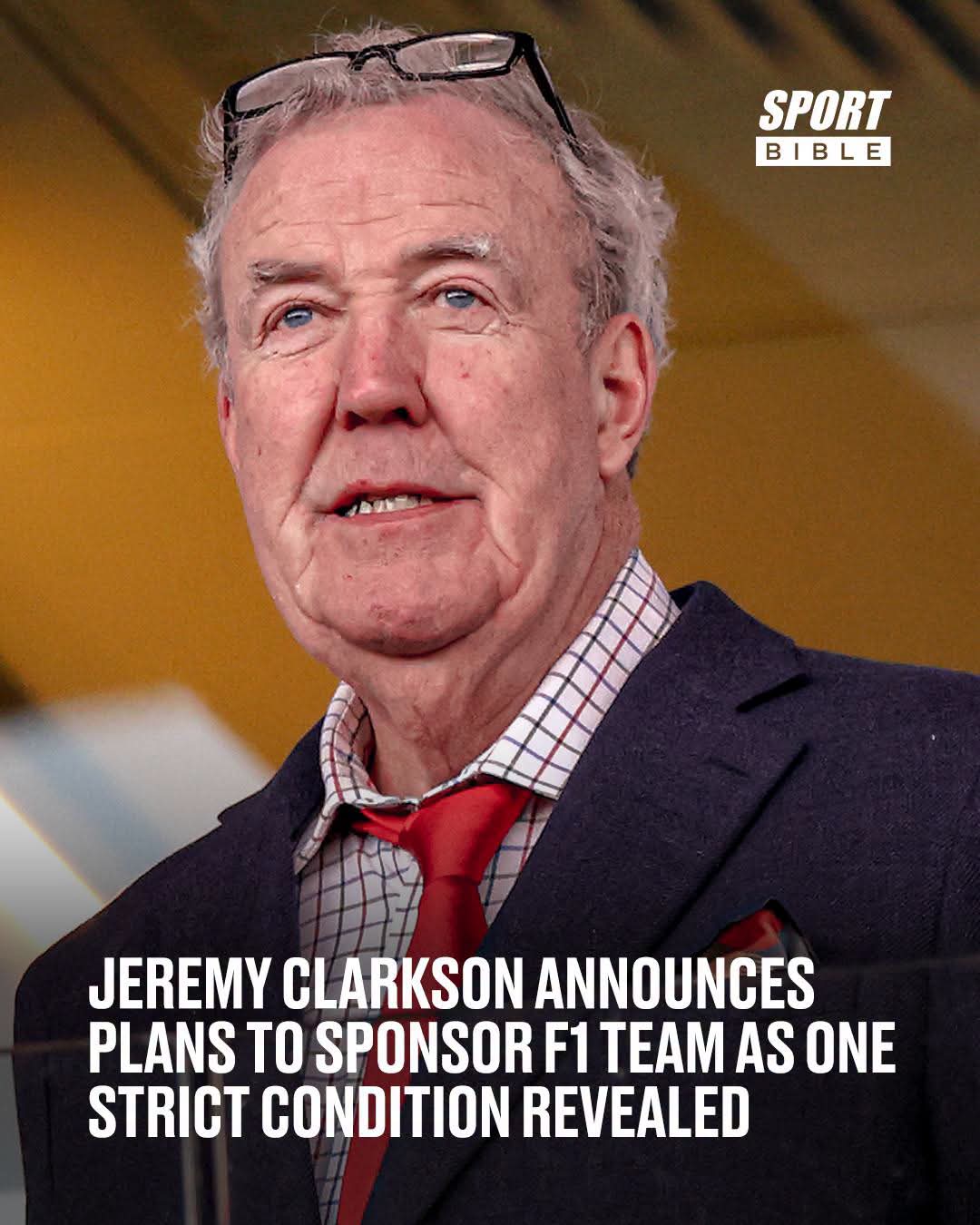
Formula 1’s growing commercial appeal continues to attract brands from every corner of the business world, and now one of motorsport’s most recognizable personalities has hinted at joining the action. Former Top Gear host and lifelong Formula 1 enthusiast Jeremy Clarkson has revealed his ambition to one day see his beer brand, Hawkstone, sponsoring an F1 team.
While the comment may have been made with Clarkson’s trademark humor, it raises an interesting question about the future of brand partnerships in Formula 1 and whether Hawkstone could eventually become part of the sport’s rapidly expanding commercial ecosystem.
CLARKSON CELEBRATES BRITISH SUCCESS IN BARCELONA
The discussion emerged following a memorable Spanish Grand Prix weekend in Barcelona, where Lewis Hamilton secured his long-awaited first victory as a Ferrari driver. Hamilton’s triumph, combined with George Russell’s second-place finish and Lando Norris completing the podium, delivered Formula 1’s first all-British top three since 1968.
Clarkson was among many fans celebrating the achievement. However, his attention quickly shifted toward Ferrari’s sponsorship portfolio, jokingly expressing disappointment that the winning Ferrari carried branding from an Italian beer company rather than his own product.
The light-hearted remark quickly evolved into a bigger conversation when Clarkson publicly stated his hope that Hawkstone could eventually become large enough to sponsor a Formula 1 team.
WHY FORMULA 1 SPONSORSHIP IS MORE COMPLEX THAN IT LOOKS
While many fans may assume sponsorship is simply a matter of writing a large cheque, Formula 1 operates under a unique set of global advertising regulations.
Unlike domestic sporting competitions, Formula 1 travels across multiple continents and jurisdictions throughout a season. What is legal advertising in one country may be restricted or completely prohibited in another.
Alcohol sponsorship presents a particular challenge. Several countries on the F1 calendar enforce strict rules regarding alcohol promotion, forcing beverage companies to adapt their marketing strategies to maintain visibility throughout the championship.
This is why many beer brands associated with Formula 1 focus heavily on alcohol-free or zero-alcohol products rather than their traditional beverages.
THE BIG OBSTACLE HAWKSTONE MUST OVERCOME
If Clarkson seriously wants Hawkstone branding on an F1 car, the company would likely need to follow a path already established by other successful sponsors.
Many beer manufacturers currently involved in Formula 1 promote non-alcoholic variants to ensure compliance with international advertising standards. This approach allows brands to maintain a consistent global presence without facing restrictions in key markets.
For Hawkstone, that could mean expanding beyond its current offerings and developing a non-alcoholic product line capable of serving as the face of any potential Formula 1 partnership.
Without such a move, sponsorship opportunities could remain limited due to regulatory complications across the championship’s increasingly diverse calendar.
FORMULA 1’S COMMERCIAL BOOM CREATES NEW OPPORTUNITIES
Clarkson’s comments arrive at a time when Formula 1 has never been more commercially attractive.
The sport’s global audience continues to grow, television ratings remain strong, and social media engagement has exploded over the last several years. Teams are actively searching for new sponsors capable of contributing significant investment while helping expand their brand presence worldwide.
Recent seasons have demonstrated that companies no longer need decades of motorsport history to secure a place in Formula 1. Brands from technology, finance, entertainment, fashion, and consumer products have all entered the paddock seeking exposure.
Hawkstone could potentially benefit from that trend if its growth trajectory continues upward.
WHICH TEAM WOULD BE THE BEST FIT?
If Clarkson’s dream ever becomes reality, the obvious question is which team would be the most logical destination.
A British connection could naturally point toward Mercedes, McLaren, Williams, or Aston Martin. Clarkson’s public profile and popularity in the United Kingdom would create an immediate marketing synergy with any of those organizations.
However, Formula 1 sponsorship decisions are rarely driven by nationality alone. Teams evaluate global reach, financial value, and long-term business partnerships before committing to commercial agreements.
As a result, Hawkstone’s future involvement—if it happens at all—would likely depend more on business growth than personal preference.
WHAT THIS COULD MEAN FOR FORMULA 1’S FUTURE
The story highlights a broader trend shaping modern Formula 1. The championship is becoming increasingly attractive to lifestyle brands, entertainment figures, and entrepreneurs who view the sport as one of the most powerful marketing platforms in the world.
Jeremy Clarkson’s interest demonstrates how Formula 1 continues to transcend motorsport itself. Whether it is technology companies, luxury brands, celebrities, or beverage manufacturers, everyone wants a piece of the exposure that comes with the sport’s global audience.
While Hawkstone sponsoring an F1 team remains a distant possibility today, the idea is no longer as unrealistic as it might have seemed a few years ago.
COULD CLARKSON’S F1 DREAM ACTUALLY HAPPEN?
For now, Clarkson’s comments remain more aspiration than reality. Yet Formula 1’s commercial landscape changes rapidly, and successful brands can grow into major players surprisingly quickly.
If Hawkstone continues expanding and eventually introduces a non-alcoholic product capable of meeting Formula 1’s advertising requirements, the door to sponsorship opportunities could open.
With Formula 1 entering a new era of commercial growth and global popularity, Clarkson’s ambitious vision may not be as far-fetched as it first appears. What began as a playful social media remark could eventually evolve into one of the sport’s more unexpected sponsorship stories.