The Formula 1 paddock arrives at the Circuit de Barcelona-Catalunya under classic conditions that teams know all too well: hot, dry, and brutally demanding on both car and driver. With clear skies and temperatures expected to reach the high 20s Celsius across the weekend, the Spanish circuit is once again set to become a true performance benchmark for the 2026 season.
But beyond the weather, this weekend carries far greater weight. Barcelona is not just another stop on the calendar. It is the place where upgrades are tested, where championship trends begin to harden, and where weaknesses in top contenders are often exposed.
WHY BARCELONA IS THE ULTIMATE F1 CAR TEST
The Circuit de Barcelona-Catalunya is widely regarded as one of the most complete tests in Formula 1. Its layout combines high-speed corners, technical low-speed sections, and a long main straight, forcing teams to find a near-perfect balance between downforce and straight-line speed.
This makes it the ideal “truth circuit.”
Unlike street tracks such as Monaco, where confidence and precision dominate, Barcelona exposes raw car performance. If a car is fast here, it is usually fast everywhere.
Teams often bring significant upgrade packages to Spain for this reason. The data collected here helps define development direction for the rest of the season. That is why engineers treat Friday practice almost like a rolling laboratory rather than a traditional race weekend session.
HOT WEATHER ADDS AN EXTRA STRATEGIC LAYER
The forecast of hot, dry conditions and track temperatures climbing above 27°C introduces another major variable: tyre degradation.
In these conditions, tyre management becomes just as important as outright pace. Expect teams to struggle with:
Front-left tyre wear through long right-handers
Thermal degradation in extended high-speed corners
Increased pit stop sensitivity due to overheating compounds
This could open the door for unexpected strategies, especially for midfield teams willing to gamble on undercuts or extended stints.
Historically, Barcelona has not been the easiest circuit for overtaking, which means strategy and qualifying position often decide the race outcome.
CHAMPIONSHIP PRESSURE STARTS TO BUILD
As the 2026 season enters its seventh round, the championship picture is already beginning to take shape. Mercedes has set a strong early benchmark, with the team leading both the Drivers’ and Constructors’ standings, while rivals are being forced to respond quickly with upgrades.
All eyes are now on whether Red Bull, Ferrari, and McLaren can close the gap on a circuit that demands a complete aerodynamic package.
Recent sessions have already hinted at a tightly packed field, with Mercedes and McLaren showing strong one-lap pace in practice running, while Ferrari continues to search for consistency across long runs.
Barcelona will likely amplify these differences.
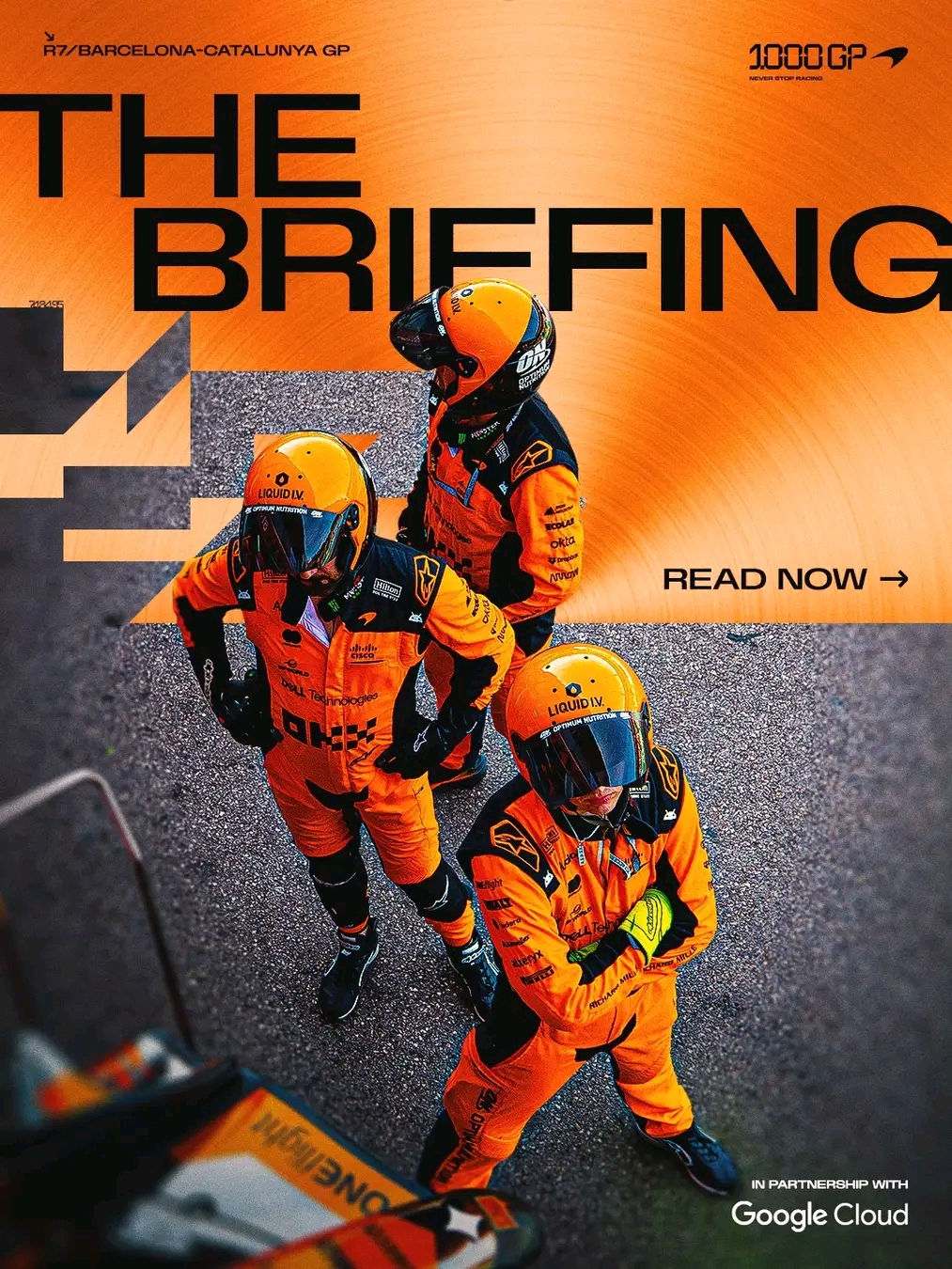
MCLAREN’S BIG TEST WEEKEND
For McLaren, Barcelona represents more than just another race. It is a critical checkpoint in their development arc for the 2026 car.
The team is expected to use Friday heavily for aerodynamic validation, especially in medium- and high-speed cornering performance. After mixed results in Monaco, the expectation is a stronger showing here, where car balance and airflow efficiency matter more than mechanical grip alone.
If McLaren can deliver a clean weekend here, it could signal a genuine step forward in their championship fight.
DRIVERS UNDER THE MICROSCOPE
This weekend is also a key moment for several drivers:
Championship leader Kimi Antonelli enters Barcelona with momentum and pressure, chasing yet another win and potentially extending a historic run of form.
Oscar Piastri and Lando Norris will be looking to convert strong pace into a decisive result on a track that traditionally rewards McLaren strength.
Max Verstappen remains a threat despite inconsistent recent performances, especially if Red Bull unlocks better balance in medium-speed corners.
Charles Leclerc and Lewis Hamilton face increasing pressure to deliver strong Ferrari results as development continues mid-season.
Barcelona often separates title contenders from midfield disruptors, making it a crucial psychological weekend as much as a technical one.
STRATEGY AND OVERTAKING: THE REAL CHALLENGE
One of Barcelona’s defining traits is how difficult it is to overtake. Despite modern DRS zones, track position remains king.
This puts qualifying under the spotlight:
Front-row starts significantly increase win probability
Undercut timing becomes critical due to tyre wear
Safety cars or weather changes often become the only race disruptors
Without external interruptions, expect a race shaped more by pit wall decisions than on-track battles.
WHAT TO EXPECT ON RACE DAY
If current trends continue, the Barcelona Grand Prix will likely deliver:
A tightly controlled strategic race
High tyre degradation affecting late stints
Minimal overtaking outside DRS-assisted zones
A potential battle between Mercedes and McLaren at the front
But Barcelona has a habit of surprising teams that misjudge tyre life or aerodynamic balance.
FINAL OUTLOOK: A TRUE MID-SEASON REALITY CHECK
The Barcelona-Catalunya Grand Prix is not just another race on the calendar. It is a reality check weekend.
Teams leave this circuit with answers:
Are your upgrades working?
Is your car balanced across all corner types?
Can you manage tyres under pressure?
With hot weather amplifying every weakness, this weekend could quietly reshape the trajectory of the 2026 championship fight.
One thing is certain: after Barcelona, the pecking order will look a lot clearer.
—