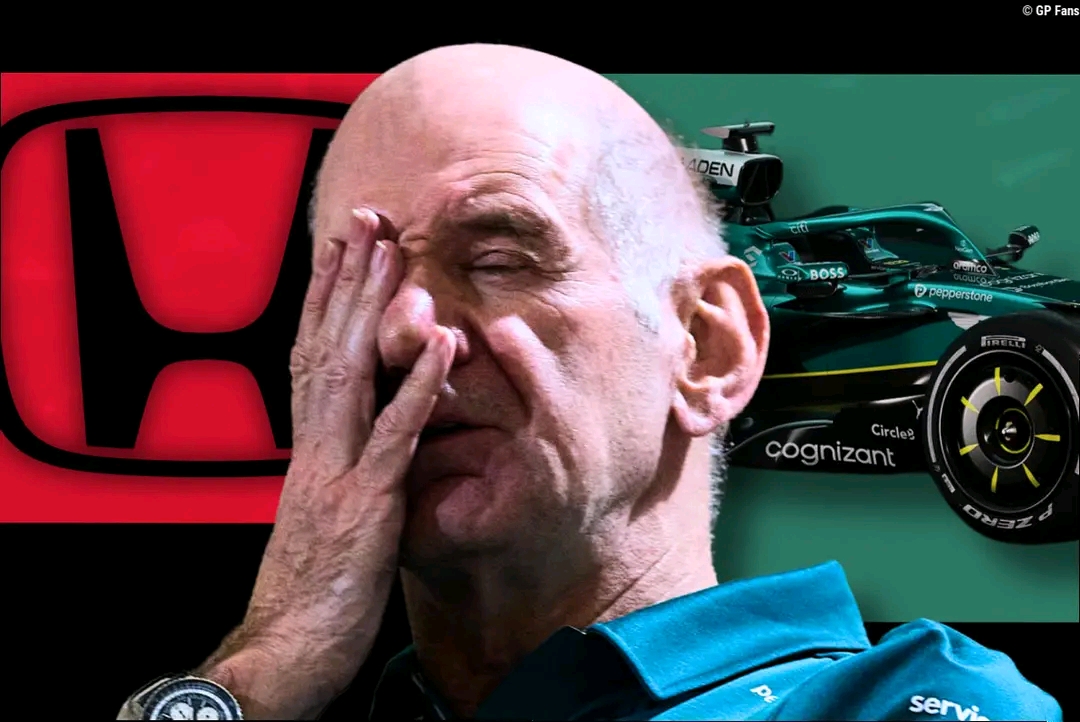
Honda has acknowledged that both it and Aston Martin are far from satisfied with the progress of their Formula 1 project, with the Japanese manufacturer urging patience as the new partnership battles through a difficult start to the 2026 season.
Honda Racing Corporation president Koji Watanabe openly admitted that expectations have not been met, revealing that Aston Martin owner Lawrence Stroll and the Honda leadership remain frustrated with the team’s current situation. However, both sides remain committed to the long-term vision and believe improvements will come with time. �
GPFans +1
ASTON MARTIN’S BIG BET HAS YET TO DELIVER
Aston Martin entered the 2026 campaign with enormous expectations.
The Silverstone-based team invested heavily in state-of-the-art facilities, recruited legendary designer Adrian Newey, and began a full works partnership with Honda. On paper, the ingredients appeared capable of turning Aston Martin into a championship contender.
Instead, the season has been much tougher than anticipated.
The team has struggled with reliability issues, power unit integration, and overall performance. Despite flashes of promise from Fernando Alonso and Lance Stroll, Aston Martin has frequently found itself battling near the back of the grid rather than competing with Formula 1’s elite. �
Formula 1® – The Official F1® Website +1
HONDA CALLS FOR PATIENCE
Speaking about the situation, Watanabe admitted that neither Aston Martin nor Honda are happy with where the project currently stands.
That honesty highlights just how serious the challenge has become.
Honda reportedly held important meetings with Aston Martin during the Spanish Grand Prix weekend to discuss the direction of development and ensure both organizations remain aligned. The Japanese manufacturer believes solutions will take time rather than arriving through a single miracle upgrade. �
PlanetF1 +1
The message from Honda is clear: patience is required.
WHY THE 2026 REGULATIONS HAVE CREATED A HUGE CHALLENGE
Formula 1’s 2026 regulations represent one of the biggest technical changes in modern history.
The new power units feature:
Increased electrical power.
Removal of the MGU-H system.
Greater emphasis on sustainable fuels.
Completely new packaging requirements.
These changes have created difficulties for several manufacturers, but Aston Martin and Honda appear to have suffered more than most during the transition.
Integrating a brand-new engine with a new chassis philosophy while simultaneously developing an entirely new gearbox package was always going to be risky. Those risks are now becoming visible on track. �
Wikipedia +1
LAWRENCE STROLL’S PRESSURE IS UNDERSTANDABLE
Lawrence Stroll has invested hundreds of millions into transforming Aston Martin into a championship-winning organization.
He recruited top engineers, expanded the team’s facilities, and secured Honda as a works partner.
Naturally, expectations rose.
Being stuck outside the front-running battle was never part of the plan.
Still, frustration should not be mistaken for panic.
Formula 1 history shows that successful manufacturer partnerships often require time to mature. Mercedes needed years before dominating the hybrid era, while Honda itself endured painful seasons with McLaren before eventually becoming a championship-winning supplier alongside Red Bull.
ADRIAN NEWEY’S LONG-TERM IMPACT COULD CHANGE EVERYTHING
One reason Aston Martin remains optimistic is Adrian Newey.
Widely regarded as one of Formula 1’s greatest designers, Newey’s influence is expected to grow throughout the season and into 2027.
His expertise could prove crucial in helping Aston Martin maximize the potential of the Honda power unit while improving aerodynamic efficiency.
The current struggles may simply represent growing pains rather than evidence that the project itself is flawed.
WHAT THIS MEANS FOR FERNANDO ALONSO
Fernando Alonso joined Aston Martin with dreams of fighting for a third world championship.
At 44 years old, time is becoming increasingly precious for the Spanish veteran.
Although Alonso has continued to extract impressive performances from difficult machinery, the lack of competitiveness raises questions about whether Aston Martin can deliver a title-contending car before his career reaches its final chapter.
For Alonso, every season matters.
If significant progress does not arrive soon, pressure could mount on both the team and its veteran star.
CAN HONDA RECOVER AGAIN?
Anyone writing off Honda should remember the company’s recent history.
After a disastrous start with McLaren in 2015, Honda eventually developed one of Formula 1’s strongest power units and helped Max Verstappen secure world championships with Red Bull.
That comeback demonstrated Honda’s ability to solve complex engineering problems.
The current difficulties with Aston Martin may simply represent another rebuilding phase rather than a permanent setback.
WHY THIS STORY MATTERS FOR THE F1 TITLE RACE
A competitive Aston Martin would add another major player to Formula 1’s battle at the front.
More competition means greater pressure on established powers like Mercedes, Ferrari, McLaren, and Red Bull.
If Honda and Aston Martin eventually unlock their potential, the championship landscape could become even more unpredictable in the coming seasons.
For now, however, the focus remains on survival, development, and patience.
PREDICTION: ASTON MARTIN’S REAL TARGET MAY BE 2027
While fans naturally expect immediate success, the reality is that 2026 may become a learning year.
Incremental upgrades should improve performance during the second half of the season, but a complete transformation appears unlikely overnight.
The true payoff of the Aston Martin-Honda alliance may not arrive until 2027, when the team fully understands its package and Adrian Newey’s influence becomes more deeply embedded.
Championship dreams remain alive, but the road toward Formula 1 glory is proving far more difficult than either Aston Martin or Honda expected.