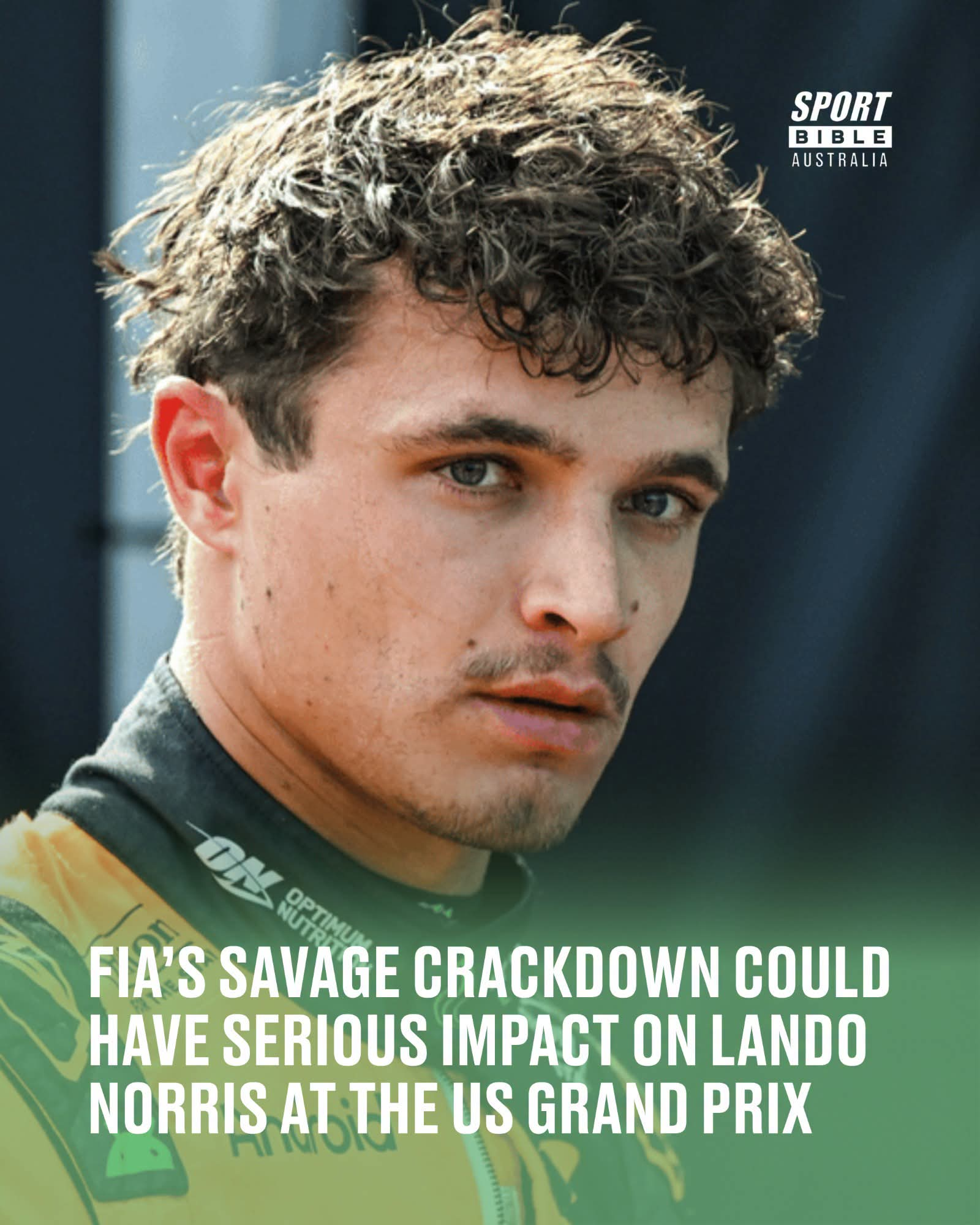
Lando Norris faces an additional challenge at the United States Grand Prix after a fierce FIA crackdown on track limits produced a remarkable 207 deleted lap times across the opening practice sessions at the Circuit of the Americas. The McLaren driver was among the worst affected, losing 18 timed laps, raising concerns that the same issue could hinder his efforts to disrupt Kimi Antonelli’s path to the 2026 title.
With Antonelli in a position to seal the championship this weekend under the right circumstances, every point and every position carries heightened importance.
### A STAGGERING NUMBER OF DELETIONS
The Circuit of the Americas has long been sensitive to track-limits policing, but the scale of deletions on Friday was exceptional. Norris’s 18 removed laps stood out, while Lewis Hamilton lost 14 and Charles Leclerc 15. Even championship leader Antonelli had 13 times deleted. By contrast, Max Verstappen recorded only three, suggesting some drivers adapted more quickly to the available grip and the precise location of the white lines.
The combination of elevation changes, gusty winds and generous runoff areas has made the limit difficult to judge. Several corners offer inviting tarmac beyond the official boundary, and the high grip of the painted and green zones encourages drivers to push further than the rules allow.
### WHY NORRIS IS UNDER PARTICULAR PRESSURE
Norris remains one of the drivers who could, in theory, delay Antonelli’s coronation by scoring heavily while the Mercedes driver fails to win. That task becomes significantly harder if track-limits violations continue into qualifying and the race. In practice and qualifying, any infringement results in the deletion of the lap time. If the breach occurs at the final corner, the following lap can also be scrubbed if an advantage is judged to have been gained.
In the race the system is more progressive: two warnings are followed by a black-and-white flag on the third offence, with a five-second time penalty triggered by a fourth. For a driver fighting for every point, those five seconds can easily translate into lost positions or a missed opportunity to attack.
### ANTONELLI ACKNOWLEDGES THE DIFFICULTY
The championship leader himself accepted that staying within the lines is far from straightforward. “It is not easy – it is a difficult track with a lot of elevation changes and also the wind in some corners is quite odd,” Antonelli said. “The track limits mainly come from mistakes. You just lock up a little and then you go long.
“In some corners we have so much tarmac, and the green bit on some of the exits is very grippy, so that also pushes you to use even more track. That is why in FP3 it is going to be important to find the limit and understand how much you can push in a corner without doing track limits.”
### THE WIDER IMPLICATIONS FOR THE WEEKEND
The FIA’s strict approach is designed to maintain consistency and prevent drivers from gaining lasting advantage by running wide. At a circuit where the margins between the top teams are fine, and where the championship could be decided, those deleted laps and potential race penalties take on extra significance.
Norris has already shown the speed to challenge at the front of the midfield and beyond. Converting that speed into a clean qualifying lap and a disciplined race will be essential if he is to play any meaningful role in the title equation this weekend. The same applies to Hamilton and Leclerc, both of whom also lost a high number of practice times.
### A TEST OF ADAPTATION
Formula 1 drivers are accustomed to adjusting their approach when track limits are tightly policed. The question in Austin is how quickly the field can recalibrate after such a high volume of deletions. Those who find the correct compromise between commitment and compliance will hold a clear advantage.
For Norris, the task is clear: reduce the violations, deliver a representative qualifying lap, and stay on the right side of the stewards across the race distance. With Antonelli closing in on the title, the reigning champion can ill afford to gift away performance through avoidable infringements. The FIA’s crackdown has made that challenge steeper than usual.

