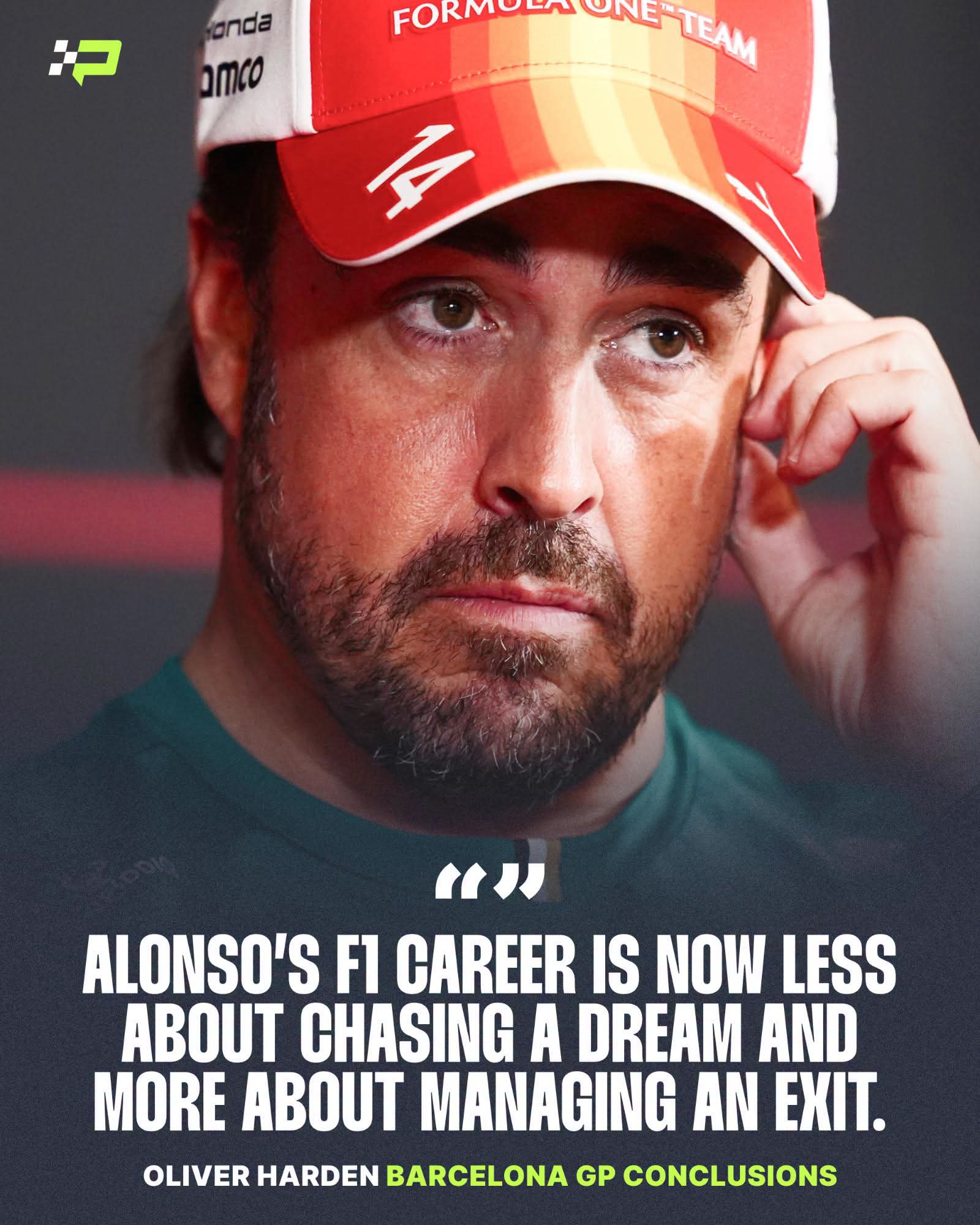
Fernando Alonso and Alpine. It is a partnership that has defined multiple chapters of Formula 1 history, delivered world championships, and repeatedly resurfaced whenever the Spaniard’s career reached a crossroads. Now, as speculation grows about Alonso’s future beyond 2026, the possibility of a sensational return to Alpine is once again becoming one of the paddock’s most intriguing storylines.
At first glance, leaving Aston Martin after years of commitment to Lawrence Stroll’s ambitious project might seem unlikely. Yet Formula 1 is a results-driven business, and Alonso may be approaching a point where time matters more than promises. With Alpine showing encouraging signs of progress and Aston Martin still searching for consistency, a return to Enstone is no longer as far-fetched as it once appeared.
The question is simple: would moving back to Alpine be a desperate gamble, or Alonso’s last realistic opportunity to compete near the front before retirement?
ASTON MARTIN’S PROJECT IS RUNNING AGAINST THE CLOCK
When Alonso joined Aston Martin, the vision was clear. The team was building a state-of-the-art factory, investing heavily in infrastructure, attracting top engineering talent, and positioning itself as a future championship contender.
For a while, that vision appeared realistic.
Alonso enjoyed a remarkable 2023 campaign, collecting podium finishes and proving he remained one of the fastest drivers on the grid despite entering his forties. The arrival of Adrian Newey and the long-term Honda partnership further strengthened belief that Aston Martin could eventually challenge Formula 1’s elite.
The problem is timing.
Developing a championship-winning organization takes years, and Formula 1 rarely rewards impatience. Alonso will turn 45 next month, and while his performance level remains impressively high, no driver can escape the reality of time forever.
Every season spent waiting is one fewer season available to chase another victory or championship challenge.
WHY ALPINE SUDDENLY LOOKS MORE ATTRACTIVE
For much of the past decade, Alpine struggled to establish itself as a genuine front-running force. Despite flashes of competitiveness, the team often found itself trapped in Formula 1’s crowded midfield.
That narrative may finally be changing.
Recent performances suggest Alpine is beginning to move in the right direction. The team has demonstrated improved pace, stronger operational execution, and a clearer development path than it showed during previous seasons.
Just as importantly, Alpine’s Mercedes power unit partnership has the potential to accelerate its progress significantly.
For Alonso, this matters enormously.
Rather than waiting years for Aston Martin’s long-term vision to fully materialize, Alpine could offer a shorter route back toward regular podium contention.
At this stage of his career, immediate competitiveness may carry far greater value than future potential.
THE EMOTIONAL CONNECTION CANNOT BE IGNORED
Formula 1 decisions are often driven by performance, but emotions still play a role.
Few teams are more closely linked to Alonso’s legacy than Enstone.
It was there that he won his two world championships, defeated Michael Schumacher’s Ferrari dynasty, and established himself as one of the most complete drivers of his generation.
Throughout his career, Alonso has repeatedly returned to familiar environments when searching for stability or opportunity. His relationship with key figures connected to Alpine remains strong, and the organization understands exactly how to maximize his abilities.
A return would not simply be another transfer.
It would represent a full-circle moment for one of Formula 1’s greatest careers.
WOULD LEAVING ASTON MARTIN DAMAGE HIS LEGACY?
Some critics may argue that walking away from Aston Martin before the project reaches maturity could damage Alonso’s reputation.
However, Formula 1 history is filled with examples of drivers making difficult decisions based on competitiveness rather than loyalty.
Ultimately, legacies are defined by results.
If Alonso believes Alpine offers a better chance of fighting near the front over the next two seasons, few would blame him for pursuing that opportunity.
In fact, many fans would likely admire the decision.
The Spanish veteran has never hidden his competitive instincts. He remains in Formula 1 because he believes he can still compete against the very best. Choosing performance over sentiment would be entirely consistent with the mentality that made him a champion.
WHAT THIS COULD MEAN FOR THE DRIVER MARKET
An Alonso move would send shockwaves throughout Formula 1.
Driver markets operate like dominoes. One significant transfer often triggers several others.
If Alpine were to sign Alonso, questions would immediately emerge regarding the futures of its current drivers. Aston Martin would then face the challenge of finding a replacement capable of matching Alonso’s experience, feedback, and racecraft.
Such a move could influence multiple teams simultaneously and reshape the competitive landscape heading into Formula 1’s next phase.
Given the growing uncertainty surrounding several driver contracts across the grid, Alonso’s decision could become one of the defining stories of the upcoming transfer season.
PREDICTION: THIS STORY IS FAR FROM OVER
At the moment, there is no official indication that Alonso is preparing to leave Aston Martin. However, the logic behind an Alpine return is becoming increasingly difficult to ignore.
Aston Martin remains a project focused on the future.
Alpine may offer a faster path toward meaningful results.
For a driver nearing the final chapter of a legendary career, that distinction could prove decisive.
Whether Alonso ultimately chooses loyalty or opportunity remains to be seen. But if Alpine continues its upward trajectory and Aston Martin struggles to deliver immediate progress, Formula 1 fans should not be surprised if one of the sport’s most famous partnerships is reunited once again.
And if that happens, it could become the final great gamble of Fernando Alonso’s extraordinary career.