The 2026 Monaco Grand Prix has taken a dramatic turn off-track after Ferrari’s Ferrari driver Charles Leclerc crashed out in the closing stages and claimed a major brake failure, triggering a rare public response from supplier Brembo.
What should have been a strong home podium finish for Leclerc instead became one of the most controversial talking points of the race weekend, raising questions about reliability, communication, and pressure inside Ferrari’s 2026 campaign.
LECLERC’S MONACO DISASTER: WHAT HAPPENED ON TRACK
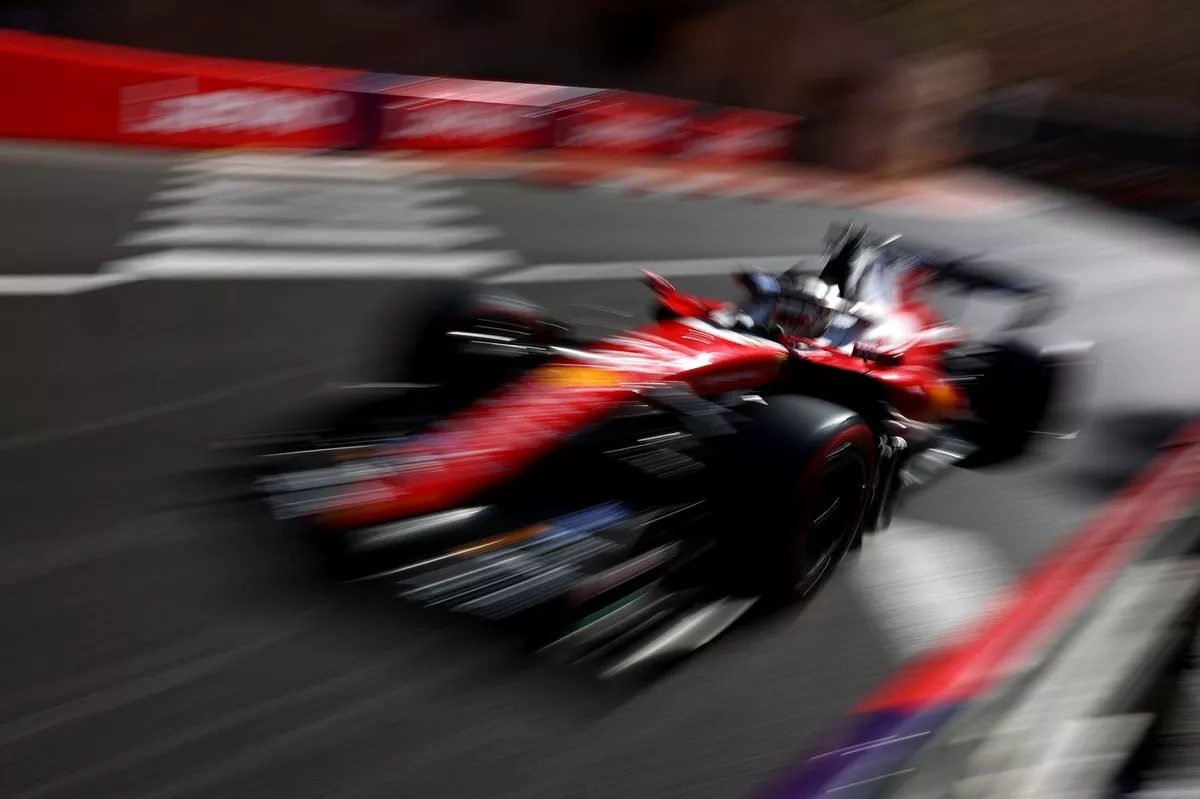
Leclerc was running in a solid position for third place behind his teammate Lewis Hamilton when the incident occurred during a late safety car restart.
As he approached the famous Antony Noghès corner, Leclerc lost control and crashed, ending his race just laps from the finish.
Immediately after the incident, he expressed frustration over team radio, suggesting something had gone seriously wrong with his braking system.
Later, he doubled down in post-race interviews, claiming that multiple brake components were not functioning properly, leaving him unable to slow the car normally during crucial moments.
This explanation shocked both fans and the paddock, especially given how rare complete brake system issues are in modern Formula 1 machinery.
BREMBO RESPONDS: “GREAT ASTONISHMENT” AT CLAIMS
The situation escalated further when Brembo publicly responded to Leclerc’s comments.
The company expressed “great astonishment” at the suggestion that its braking components failed in such a severe way, stating that it had no prior indication of a systemic issue and had not seen data confirming a total brake malfunction.
Brembo emphasized that any technical failure must be reviewed alongside Ferrari engineers and telemetry data before conclusions can be made.
This rare public pushback highlights how sensitive supplier relationships are in Formula 1, especially when safety-critical systems like brakes are involved.
THE TECHNICAL QUESTION: WHAT COULD HAVE GONE WRONG?
While Leclerc described a near-total loss of braking performance, experts suggest several possible scenarios that could explain the incident without pointing to full hardware failure.
Possible contributing factors include:
Brake temperature imbalance after the safety car period
Brake-by-wire system inconsistency under low-temperature conditions
Hydraulic pressure fluctuations during restart preparation
Driver confidence issues after earlier braking complaints in the season
Modern F1 braking systems are highly complex, combining mechanical, hydraulic, and electronic components. A partial failure or sensor miscommunication can sometimes feel like total brake loss from the cockpit, even if the system is not completely broken.
This is why teams typically rely heavily on telemetry before confirming any catastrophic failure.
FERRARI UNDER PRESSURE AGAIN
For Ferrari, the incident adds another layer of tension in an already demanding season.
The team had been on track for a strong double points finish, with Hamilton leading the charge and Leclerc comfortably in podium position before the crash.
Now, questions are being asked internally about:
Whether the issue was mechanical or operational
How communication was handled during the safety car phase
Whether setup changes could have contributed to instability
Team principal Fred Vasseur and senior engineers reportedly reviewed data immediately after the race, with Ferrari insisting the issue is already understood and a solution is being prepared for the next round in Spain.
CHAMPIONSHIP IMPACT: LOST POINTS THAT COULD MATTER LATER
Although Monaco is a unique circuit where overtaking is difficult, every point counts in a tight championship battle.
Leclerc’s retirement means:
Ferrari lost a potential podium finish
Valuable constructors’ points were dropped
Momentum was interrupted at a critical stage of the season
With rivals like Red Bull and McLaren consistently scoring, Ferrari cannot afford repeated reliability concerns if they want to stay in contention.
LEWIS HAMILTON’S ROLE AND INTERNAL DYNAMICS
Interestingly, Leclerc also revealed he would likely switch to a different brake configuration moving forward, similar to that used by teammate Lewis Hamilton.
There have also been paddock discussions suggesting Hamilton’s experience with different braking suppliers during his Mercedes era could influence Ferrari’s future direction.
If true, this could signal a gradual shift inside Ferrari toward standardizing braking feedback across both cars to avoid inconsistency issues.
WHAT HAPPENS NEXT IN BARCELONA?
Looking ahead to the Spanish Grand Prix in Barcelona, Ferrari has already indicated that adjustments will be made before the next race.
Key expectations include:
Revised brake configuration for Leclerc
Full telemetry review with Brembo engineers
Possible setup changes to improve stability under safety car conditions
Barcelona will be a crucial test. If Ferrari performs cleanly, the Monaco incident may be written off as a one-off anomaly. If not, deeper concerns about system reliability could resurface.
FINAL THOUGHTS: A TECHNICAL DISPUTE WITH BIG IMPLICATIONS
The Monaco brake controversy is more than just a race incident. It highlights the fine margins in modern Formula 1 where driver feedback, supplier trust, and telemetry data must align perfectly.
For Leclerc, it is another painful Monaco moment in front of his home crowd. For Ferrari, it is a reminder that performance is not just about speed, but reliability under pressure.
And for Brembo, it is a reputational moment that demands clarity backed by data.
One thing is certain: until full technical analysis is complete, the debate over what really happened in Monaco will continue to dominate the F1 paddock.