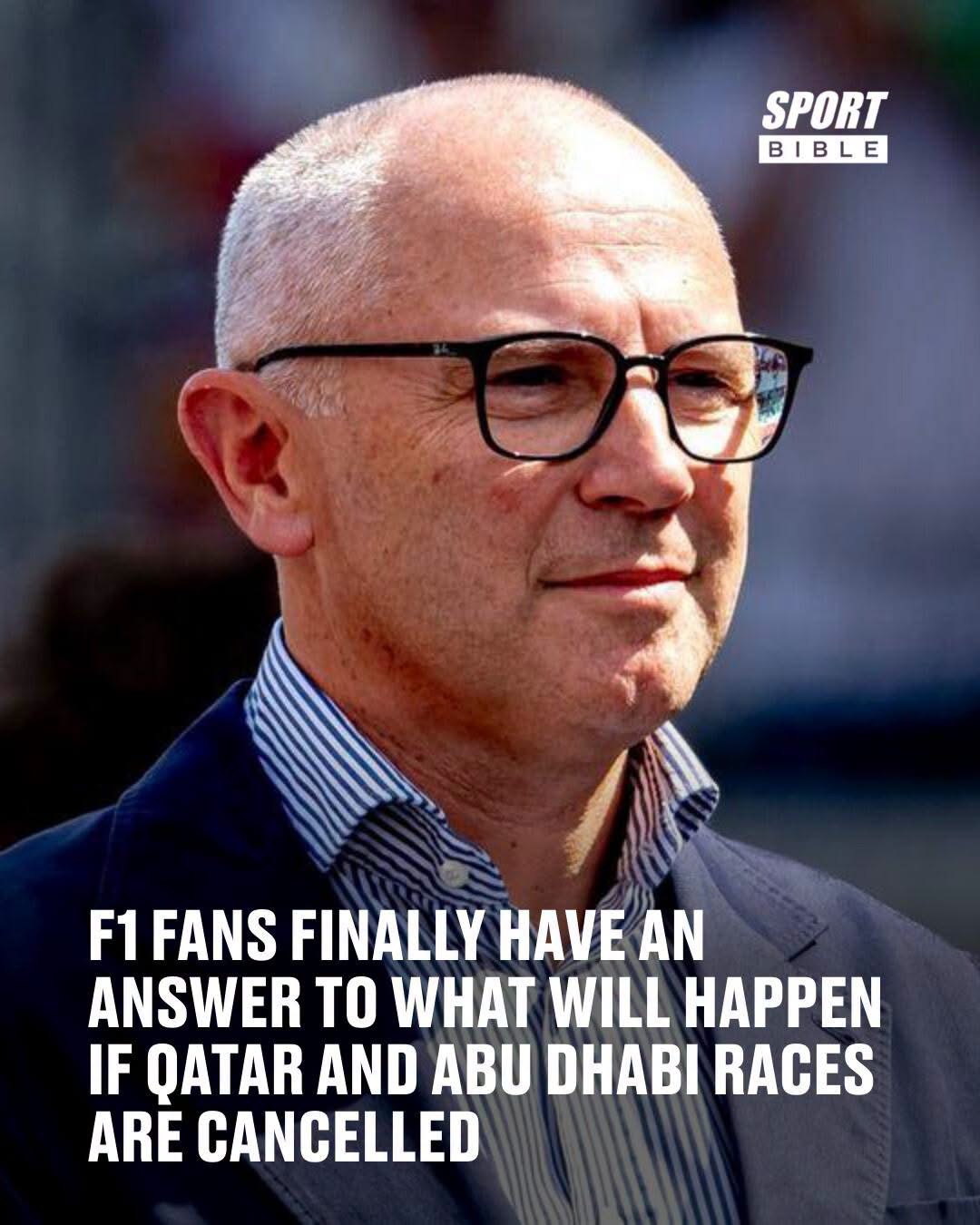
Formula 1 has confirmed that contingency plans are already in place should the Qatar and Abu Dhabi Grands Prix become impossible to stage later this season, with CEO Stefano Domenicali making it clear that the championship is prepared to act if geopolitical tensions continue to disrupt the racing calendar.
The uncertainty comes after earlier disruptions forced major changes to the 2026 Formula 1 schedule. While both Qatar and Abu Dhabi remain officially listed on the calendar, the sport is carefully monitoring the evolving situation in the Middle East before making any final decisions. Rather than rushing into a replacement plan, Formula 1 intends to wait until September before determining whether changes are necessary.
FORMULA 1 PREPARES FOR EVERY SCENARIO
The 2026 season has already demonstrated how quickly global events can reshape even the most carefully planned sporting calendar. Earlier this year, the Bahrain and Saudi Arabian Grands Prix were affected by regional instability, prompting Formula 1 to revise its schedule.
Now attention has shifted to the season finale. Qatar and Abu Dhabi are traditionally among the most important events on the calendar, with Abu Dhabi regularly hosting the championship-deciding race. Losing either event would be a significant challenge for the sport, but Formula 1 insists it has contingency measures ready.
Speaking about the situation, Stefano Domenicali explained that discussions remain ongoing with organizers and other international motorsport championships. He emphasized that, as things currently stand, both races are still scheduled to go ahead, but a final assessment will be made around the middle of September if conditions remain uncertain.
EUROPEAN CIRCUITS COULD STEP IN
Should the Middle East races become impossible to stage, reports suggest Formula 1 could temporarily relocate the events to Europe instead of cancelling them outright.
Several established circuits have already been linked with the possibility of hosting replacement races. Portugal’s Algarve International Circuit and Italy’s Imola have emerged as leading candidates due to their FIA Grade 1 status and previous experience hosting Formula 1 events.
A European alternative would allow Formula 1 to preserve the number of championship races while minimizing logistical disruption. Many teams are already based in Europe, making such a switch more manageable than organizing an entirely new overseas event at short notice.
Although no replacement venues have been officially confirmed, the existence of backup options highlights how much the sport has learned from the scheduling challenges experienced in recent years.
WHY THE DECISION WON’T BE MADE UNTIL SEPTEMBER
Rather than making an early call, Formula 1 is giving itself as much flexibility as possible.
Domenicali explained that waiting until mid-September provides valuable time to monitor developments while maintaining the possibility that the original races can still proceed safely. This cautious approach also gives promoters, governments, broadcasters, sponsors, and teams enough notice to adjust logistics if necessary.
The World Endurance Championship has already altered parts of its own schedule due to similar concerns, showing that motorsport organizations are actively preparing for multiple scenarios instead of relying on optimistic assumptions.
For Formula 1, safety remains the top priority, but preserving the integrity of the championship is equally important. Relocating races would ensure that teams and drivers still compete for the same number of available points.
WHAT IT COULD MEAN FOR THE CHAMPIONSHIP BATTLE
The timing of these races makes any potential relocation particularly significant.
Qatar and Abu Dhabi usually host decisive rounds when championship pressure reaches its peak. A move to European circuits could dramatically alter competitive dynamics, as weather conditions, circuit characteristics, and tire strategies would differ considerably from the high-temperature desert venues teams normally prepare for.
Drivers who traditionally perform well on flowing European tracks could benefit from the change, while teams that excel in hotter conditions might need to rethink their setups entirely. Even small differences in track surface, temperatures, and aerodynamic demands can influence championship outcomes during such a closely contested season.
If replacement races become necessary, teams will have very little time to adapt, making engineering flexibility and operational efficiency even more valuable.
FORMULA 1 REMAINS CONFIDENT DESPITE THE UNCERTAINTY
Despite growing speculation, Formula 1 continues to treat Qatar and Abu Dhabi as confirmed events for now. The championship has no intention of making premature decisions and remains hopeful the original calendar can be completed as planned.
However, the existence of well-developed contingency plans reflects Formula 1’s increasingly resilient approach to global challenges. Recent seasons have proven that the championship can adapt quickly without sacrificing the quality of competition.
Whether the season concludes under the lights in the Middle East or shifts unexpectedly to Europe, one thing appears certain: Formula 1 is determined to ensure the 2026 championship reaches its conclusion with a complete and competitive calendar.