The 2026 Monaco Grand Prix was supposed to be remembered for Kimi Antonelli’s remarkable fifth consecutive victory and Lewis Hamilton’s impressive charge to another podium finish. Instead, one of the biggest talking points of the weekend had nothing to do with lap times, strategy calls, or championship battles.
It involved celebrity superstar Kim Kardashian, veteran broadcaster Martin Brundle, and a brief paddock encounter that quickly exploded into one of Formula 1’s most debated off-track stories of the season.
As social media dissected every second of the interaction, questions emerged about whether Kardashian intentionally ignored Brundle, whether she was following instructions from her team, and why the incident generated such a strong reaction across the Formula 1 community.
THE MOMENT THAT SPARKED THE CONTROVERSY
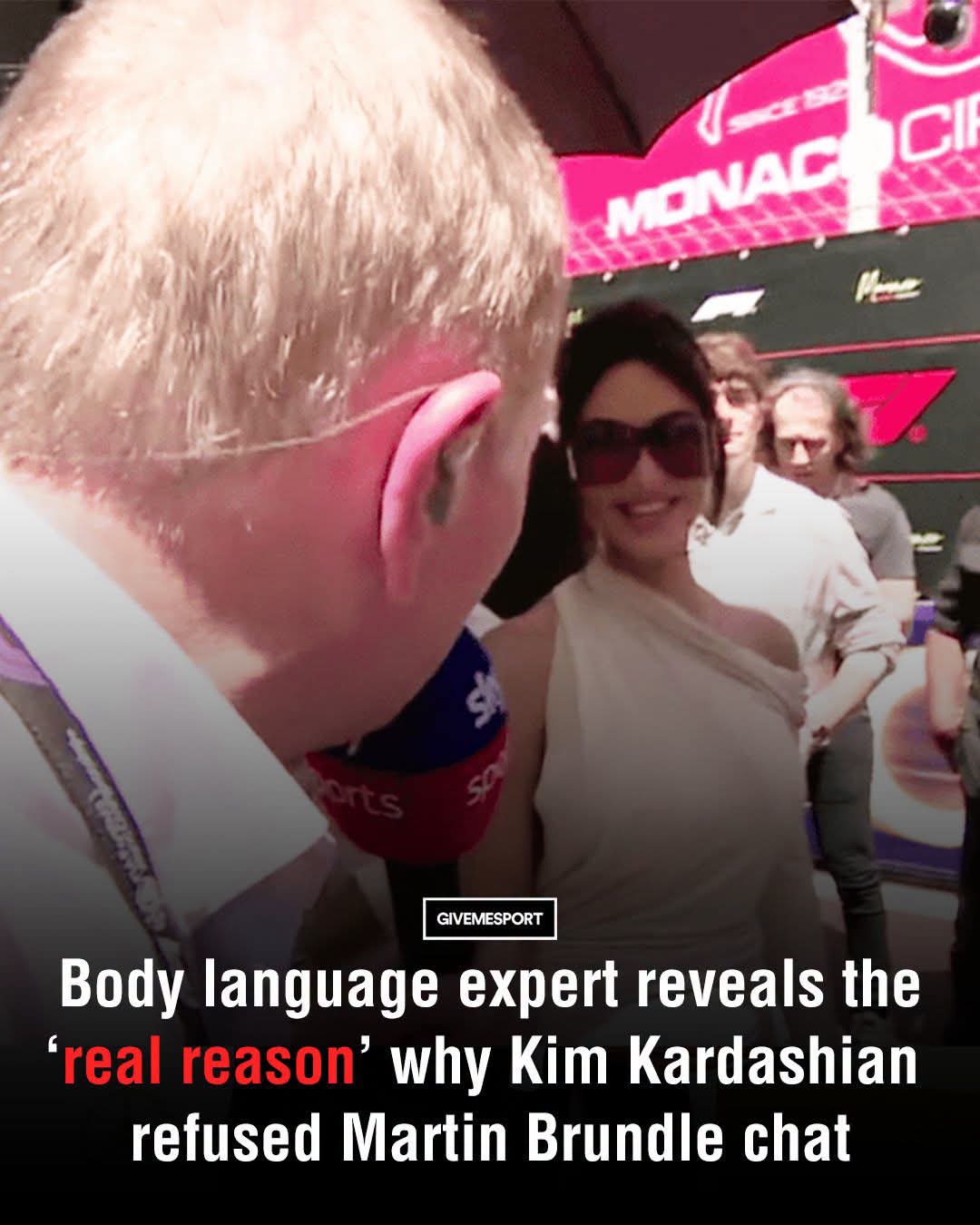
Before the Monaco Grand Prix began, Martin Brundle was conducting his traditional grid walk, one of Formula 1’s most recognizable pre-race features.
Over the years, Brundle has built a reputation for approaching celebrities, athletes, politicians, and drivers regardless of status. His willingness to ask direct questions has become part of Formula 1 culture, creating countless memorable moments.
When Brundle approached Kardashian, she appeared to acknowledge him with a smile and wave. However, no interview followed. Instead, she continued walking as a member of her entourage appeared to communicate with her.
The interaction lasted only a few seconds, but it immediately triggered debate online. Some fans viewed it as a deliberate snub, while others believed there was more happening behind the scenes.
WHY MARTIN BRUNDLE MATTERS IN FORMULA 1
To understand why the incident attracted so much attention, it helps to understand Brundle’s status within Formula 1.
For longtime fans, Brundle is far more than a television presenter. The former Formula 1 driver has become one of the sport’s most respected broadcasters, and his grid walk has evolved into a unique tradition that blends journalism, entertainment, and unpredictability.
Many celebrities who attend races are unfamiliar with Formula 1’s customs. However, regular followers of the sport recognize that speaking briefly with Brundle is often viewed as part of the race-day experience.
That cultural significance explains why some fans interpreted Kardashian’s decision not to engage as disrespectful, even though refusing media interviews is hardly unusual for high-profile public figures.
THE THEORY BEHIND KARDASHIAN’S DECISION
A different interpretation emerged after body language experts and commentators reviewed the footage.
Some observers suggested Kardashian initially appeared willing to engage before someone within her group advised her against speaking. According to that view, the decision may not have been personal toward Brundle at all.
Celebrity management teams frequently limit unscheduled media interactions, especially during major public appearances. Monaco is one of the most heavily covered sporting events in the world, with cameras capturing virtually every movement around the paddock.
If Kardashian was instructed not to participate in spontaneous interviews, her actions may have reflected a communications strategy rather than a dismissal of Brundle himself.
That explanation aligns with how many global celebrities manage public appearances, particularly when they are attending an event as a guest rather than a featured participant.
LEWIS HAMILTON’S GROWING SPOTLIGHT
The incident also highlights an interesting challenge for Lewis Hamilton.
Hamilton remains one of Formula 1’s biggest stars, but his relationship with Kardashian has introduced an entirely new level of mainstream attention.
The seven-time world champion’s move to Ferrari already guaranteed enormous media coverage. Adding one of the world’s most recognizable celebrities to the story has expanded Formula 1’s reach far beyond its traditional audience.
While that increased exposure benefits the sport commercially, it can also create distractions. Monaco demonstrated how quickly conversations can shift from racing performance to celebrity headlines.
Despite finishing second and strengthening his position in the championship standings, Hamilton’s weekend became partially overshadowed by discussions surrounding Kardashian’s presence.
WHY THIS STORY RESONATED WITH FANS
Formula 1 fans are passionate about preserving the sport’s traditions.
Many supporters felt protective of Brundle because he represents a connection between Formula 1’s past and present. For those fans, the perceived snub was less about Kardashian herself and more about respecting someone who has become an institution within the paddock.
Others viewed the reaction as overblown.
From their perspective, no celebrity should be obligated to give an interview simply because they are approached by a broadcaster. They argue that declining media interaction is a personal choice, not an act of disrespect.
The divide reflects a broader tension within modern Formula 1 as the sport attracts increasingly diverse audiences through social media, streaming platforms, and celebrity involvement.
WHAT IT MEANS FOR FORMULA 1’S FUTURE
Incidents like this illustrate Formula 1’s evolution into a global entertainment product.
The sport is no longer consumed solely by hardcore motorsport enthusiasts. Celebrities, influencers, fashion brands, and entertainment figures now play a significant role in shaping public attention around race weekends.
While some traditionalists resist that change, Formula 1’s recent growth has been driven in part by its ability to appeal to audiences beyond racing.
The challenge for the sport will be balancing that mainstream appeal with the traditions and personalities that longtime fans cherish.
Monaco offered a perfect example of that balancing act. A few seconds of interaction between a celebrity and a broadcaster generated almost as much discussion as some of the racing action itself.
WHAT HAPPENS NEXT?
The controversy is unlikely to have any lasting impact on either Kardashian or Brundle.
Brundle has experienced similar situations countless times throughout his broadcasting career, while Kardashian remains one of the most photographed and discussed celebrities in the world.
However, the story may influence how future celebrity appearances are managed in the Formula 1 paddock. Teams, sponsors, and personal representatives may become more cautious about unscripted media interactions during race weekends.
As for Hamilton, attention will quickly return to his championship pursuit. With Kimi Antonelli holding a commanding 66-point lead heading into Barcelona, Ferrari needs every strong result it can get.
Yet Monaco demonstrated that wherever Hamilton and Kardashian appear together, the spotlight will extend far beyond the racetrack.
THE BIGGER PICTURE
Whether Kim Kardashian intentionally ignored Martin Brundle or simply followed advice from her entourage, the reaction reveals how passionate Formula 1 fans remain about the personalities and traditions that define the sport.
The Monaco incident was ultimately a brief moment magnified by social media, celebrity culture, and Formula 1’s ever-growing global audience.
What is certain is that the discussion reflects Formula 1’s transformation into a sport where racing excellence, celebrity influence, and media attention increasingly intersect—and where even a few seconds on a crowded grid can become a headline around the world.