Charles Leclerc set the pace in the opening practice session for the Hungarian Grand Prix, giving Ferrari an encouraging start to a weekend that could have major implications for the 2026 Formula 1 championship battle.
The Monegasque driver finished at the top of the timing sheets ahead of Max Verstappen, while Ferrari teammate Lewis Hamilton completed the top three. However, the session was far from straightforward, with new upgrades across much of the grid, an Aston Martin suspension failure, a red flag, and a late issue for Leclerc himself adding plenty of uncertainty to the opening hour of running.
With as many as 10 teams bringing upgrades to the Hungaroring—and Aston Martin introducing a significant B-specification version of its car—the first practice session offered the first real glimpse of how the latest technical developments could influence the competitive order.
LECLERC SETS THE EARLY BENCHMARK
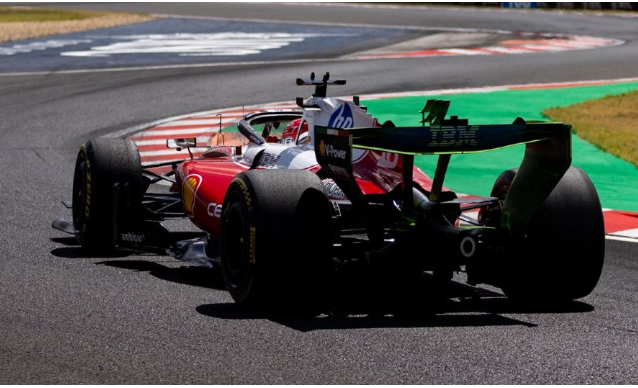
Ferrari immediately showed promising pace as Leclerc established the first benchmark on medium tires with a 1:22.705 lap.
The Ferrari driver continued to improve as the session progressed, eventually setting a 1:20.287 before the teams began shifting their focus toward faster tire compounds and qualifying-style runs.
The biggest statement came later when the soft tires were introduced. George Russell briefly moved to the top of the timing sheets, only for Verstappen to respond with a significantly faster lap. The Red Bull driver posted a 1:19.559, but his advantage lasted only briefly.
Leclerc quickly responded with a 1:19.075, reclaiming the top position and demonstrating that Ferrari appeared to have strong one-lap speed around the Hungaroring.
By the checkered flag, Leclerc remained fastest, with Verstappen second and Hamilton third.
FERRARI SENDS AN EARLY WARNING TO ITS RIVALS
The most encouraging aspect of the session for Ferrari was not simply Leclerc’s position at the top of the standings. Having Hamilton immediately behind him in third suggested that the Scuderia may have brought a competitive package to Budapest.
Ferrari’s performance will undoubtedly attract attention from Red Bull and Mercedes, particularly because the Hungaroring is a circuit where aerodynamic efficiency, mechanical grip, and tire management are crucial.
Unlike circuits dominated by long straights and heavy braking zones, Budapest places greater emphasis on cornering performance. That could make the Hungarian Grand Prix an important test of whether Ferrari’s latest development direction is genuinely improving the car or whether its FP1 advantage was influenced by individual run plans.
The bigger picture will only become clear after qualifying simulations and long-run data are analyzed.
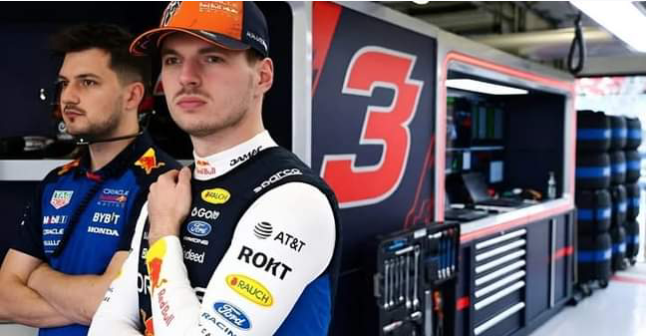
VERSTAPPEN REPORTS POWERTRAIN AND PORPOISING CONCERNS
While Verstappen finished second, his session was not entirely trouble-free.
The Red Bull driver reported concerns involving the driveshaft as well as bouncing from the car. Those issues will be closely monitored by the Red Bull engineering team because any persistent instability could affect the car’s performance through Budapest’s sequence of demanding corners.
The Hungaroring’s layout leaves little room for drivers to hide weaknesses. A car that struggles with balance or bouncing can quickly lose performance through multiple corners, making setup optimization particularly important.
Verstappen’s ability to finish just behind Leclerc despite those concerns, however, could be viewed as an encouraging sign for Red Bull. If the team can resolve the issues before qualifying, the four-time world champion could potentially close the gap to Ferrari.
ASTON MARTIN’S MAJOR UPGRADE PACKAGE SUFFERS A SETBACK
One of the biggest stories of the session came from Aston Martin.
The team arrived in Hungary with a heavily revised AMR26, making the weekend particularly important as engineers attempt to extract more performance from the car.
However, the introduction of the new package was immediately complicated by a major incident involving Lance Stroll.
During the session, Stroll lost control and spun several times before coming to a stop. Early indications suggested that the rear suspension may have suffered a failure, bringing out the red flag and interrupting the session.
The timing could hardly have been worse for Aston Martin. With a major aerodynamic and technical package being evaluated, every minute of track time is valuable. Losing running because of a mechanical problem reduces the amount of data engineers can collect and potentially complicates the team’s understanding of how the upgraded car behaves.
The team will now be under pressure to determine exactly what happened and ensure the issue does not compromise the remainder of the weekend.
THE RED FLAG DISRUPTS THE RUNNING
Stroll’s incident brought the session to a halt during the 38th minute, forcing teams to adjust their programs.
The interruption was particularly inconvenient because drivers were beginning to move into more representative performance runs. Track conditions were evolving, and teams were preparing to gather important data on the soft tires.
When the session resumed, the focus quickly shifted between qualifying simulations and long-run work. This created an interesting mix of data, with some drivers concentrating on outright lap time while others focused on race preparation.
That means the final FP1 classification should not be interpreted as a definitive prediction of the weekend’s competitive order.
SAINZ ADDS ANOTHER INTERRUPTION
Carlos Sainz caused another brief disruption when he ran wide after carrying too much speed into a corner, resulting in a yellow flag.
The incident forced several drivers to abandon or compromise their laps, further reducing the opportunity for clean qualifying simulations.
In a session already affected by Stroll’s red flag and multiple changes in tire strategy, the interruptions made it difficult to establish a perfect comparison between all the leading contenders.
That uncertainty could work in Ferrari’s favor, but it also means Leclerc’s advantage should be viewed with some caution.
LATE PROBLEM FOR LECLERC CREATES A QUESTION MARK
Just as Ferrari appeared to be enjoying a highly successful opening session, Leclerc encountered a late problem.
With approximately six minutes remaining, the Ferrari driver reported that something was wrong with the car. He subsequently stopped near the weighing area and exited the vehicle.
While Leclerc still finished the session fastest, the incident will give Ferrari engineers something to investigate before the next practice session.
The key question is whether the issue was minor or something that could potentially affect the reliability of the Ferrari over the rest of the weekend. A mechanical problem during Friday practice is never ideal, particularly when a team is evaluating upgrades and trying to maximize its preparation for qualifying and the race.
WHAT THE FP1 RESULTS COULD MEAN FOR THE HUNGARIAN GP
Leclerc’s fastest time provides Ferrari with an early boost, but the real competitive picture remains difficult to predict.
Verstappen’s second-place finish suggests Red Bull is firmly in the fight, while Hamilton’s third position gives Ferrari further reason for optimism. Mercedes, meanwhile, will be looking closely at Russell’s pace after the British driver briefly topped the session on soft tires.
The biggest unknown may be the long-run performance.
The Hungaroring is notoriously demanding when it comes to tire management and track position. A driver can be exceptionally quick over one lap but struggle to maintain performance over a full race stint. For that reason, Friday’s long-run data could ultimately prove more valuable than the FP1 classification.
THE CHAMPIONSHIP IMPLICATIONS COULD BE SIGNIFICANT
With the 2026 season reaching another critical stage, every competitive advantage matters.
If Ferrari can maintain its pace throughout the weekend, Leclerc and Hamilton could potentially put pressure on Verstappen and Red Bull. A strong qualifying performance would be particularly valuable at a circuit where overtaking can be difficult and track position often plays a major role.
For Verstappen, the priority will be eliminating the driveshaft and bouncing concerns while extracting more performance from the Red Bull package.
For Ferrari, the immediate objective is to understand why Leclerc’s car developed a late issue and determine whether it poses any reliability concerns.
Meanwhile, Aston Martin faces a different challenge altogether. Its ambitious upgrade package needs to deliver performance, but the team must first ensure the car is reliable enough to complete the necessary testing.
PREDICTION FOR THE REST OF THE WEEKEND
Based on the opening practice session alone, Ferrari appears to have made the strongest early impression, with Leclerc leading Verstappen and Hamilton.
However, it would be premature to declare Ferrari the favorite for qualifying or Sunday’s race.
Red Bull has demonstrated repeatedly that it can transform its performance as the weekend progresses, while Mercedes could also become a serious threat if its setup continues to improve. The true hierarchy will likely become clearer once every driver completes a clean soft-tire run and the teams reveal more of their performance potential.
Leclerc’s early pace nevertheless sends an important warning to his rivals. Ferrari looks competitive, Hamilton is immediately in the mix, and Verstappen is close enough to strike.
If the opening practice session is any indication, the Hungarian Grand Prix could develop into a fascinating three-way battle between Ferrari, Red Bull, and Mercedes.
For now, Leclerc has the advantage but the real fight is only just beginning.