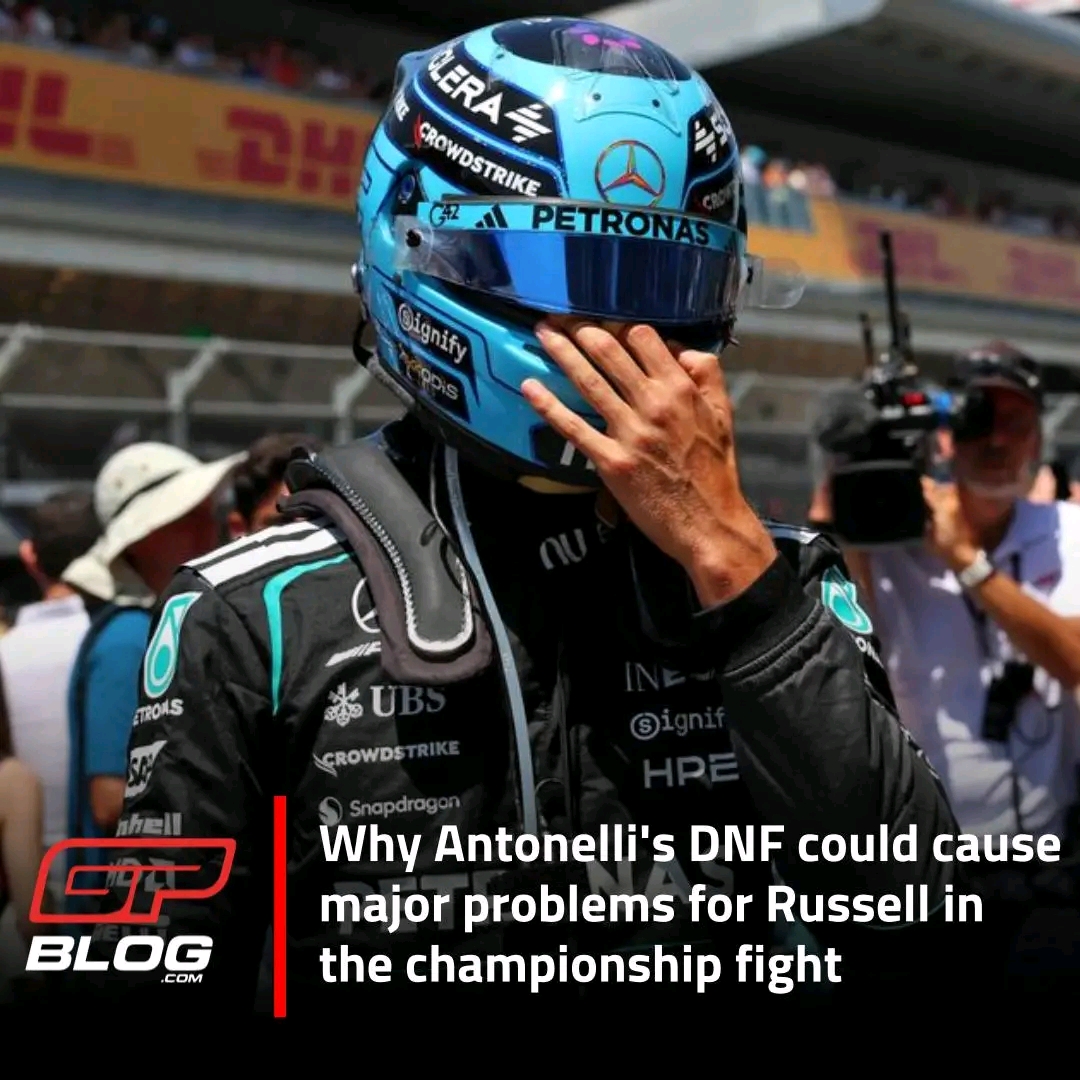
In the cutthroat environment of Formula 1, results are often measured in cold, hard championship points. When George Russell finished ahead of his teammate Kimi Antonelli following the latter’s DNF, the narrative on the surface seemed simple: a necessary recovery for the British driver. But look closer at the weekend in Barcelona, and it becomes clear that Russell’s performance was not a triumphant return to form, but rather a mask for deeper, systemic issues that continue to plague his side of the Mercedes garage.
THE ILLUSION OF THE SCOREBOARD
It is easy to point to the standings and argue that Russell capitalized where he needed to. However, relying on a teammate’s mechanical failure or off-track error to secure one’s own standing is a dangerous game. For a driver of Russell’s caliber, who is ostensibly fighting for a championship, the reliance on external “lifelines” is a stark admission of a lack of control over his own destiny.
While Antonelli’s DNF provided the statistical gap Russell desperately needed, it failed to resolve the ongoing setup frustrations that have hampered the Briton throughout this season. If Mercedes is to truly challenge for the Constructors’ Championship, they cannot afford to have one driver banking on the misfortune of their partner. Consistency must come from technical precision, not from the gaps left by a teammate’s bad luck.
THE SETUP CONUNDRUM: A RECURRING THEME
The issues Russell encountered in Barcelona were not isolated incidents; they were a continuation of a troubling trend. Whether it is a fundamental misunderstanding of the car’s balance in qualifying or a setup gamble that fails to pay off in race trim, the frequency of these errors is alarming.
When a team as technically gifted as Mercedes struggles to provide a consistent platform for a driver, it breeds doubt. Russell’s public frustration—and his candid questioning of whether he is truly allowed to compete for the championship—is the direct result of this cycle. The team must address whether these recurring setup errors are born from a lack of car understanding or, perhaps more concerningly, a breakdown in communication between the pit wall and the driver’s cockpit.
IMPACT ON THE CHAMPIONSHIP DYNAMICS
The championship is won by the team that makes the fewest mistakes. Right now, the internal tension at Mercedes is creating an environment where those mistakes are becoming more likely, not less. When drivers are forced to publicly call out the team, it signals that the harmony required for a title push is fraying.
For Russell, the pressure is mounting. He is at a point in his career where he needs to prove he is the clear lead driver capable of carrying a team through a title defense or a revival. If he cannot overcome these technical setbacks, the team may begin to shift its focus—and its resources—toward the next generation, regardless of the current hierarchy.
PREDICTIONS: CAN THE TIDE BE TURNED?
Looking at the remainder of the season, Mercedes faces a critical juncture. They have the technical resources to solve the setup issues, but they need to overhaul the process by which they arrive at their weekend configurations.
My prediction? Unless Mercedes adopts a more conservative, data-driven approach to Russell’s setup—prioritizing consistency over “hero” adjustments—these issues will persist. If Russell continues to fall victim to these technical discrepancies, we may see him reach a boiling point that could lead to a permanent shift in team dynamics for 2027. The clock is ticking, and the grace period for “learning” the car is officially over.
Ultimately, Antonelli’s DNF was a lucky break, but relying on luck is the strategy of a team that has lost its way. Mercedes needs to stop looking for lifelines and start building a car that performs for both drivers, every single weekend. If they fail to do so, the championship dream will remain just that—a dream.