ALPINE CONDEMNS ONLINE ABUSE AFTER FRANCO COLAPINTO AND LANDO NORRIS CRASH
Alpine has spoken out against online hate and abuse following the dramatic Azerbaijan Grand Prix crash involving Franco Colapinto, Pierre Gasly and Lando Norris.
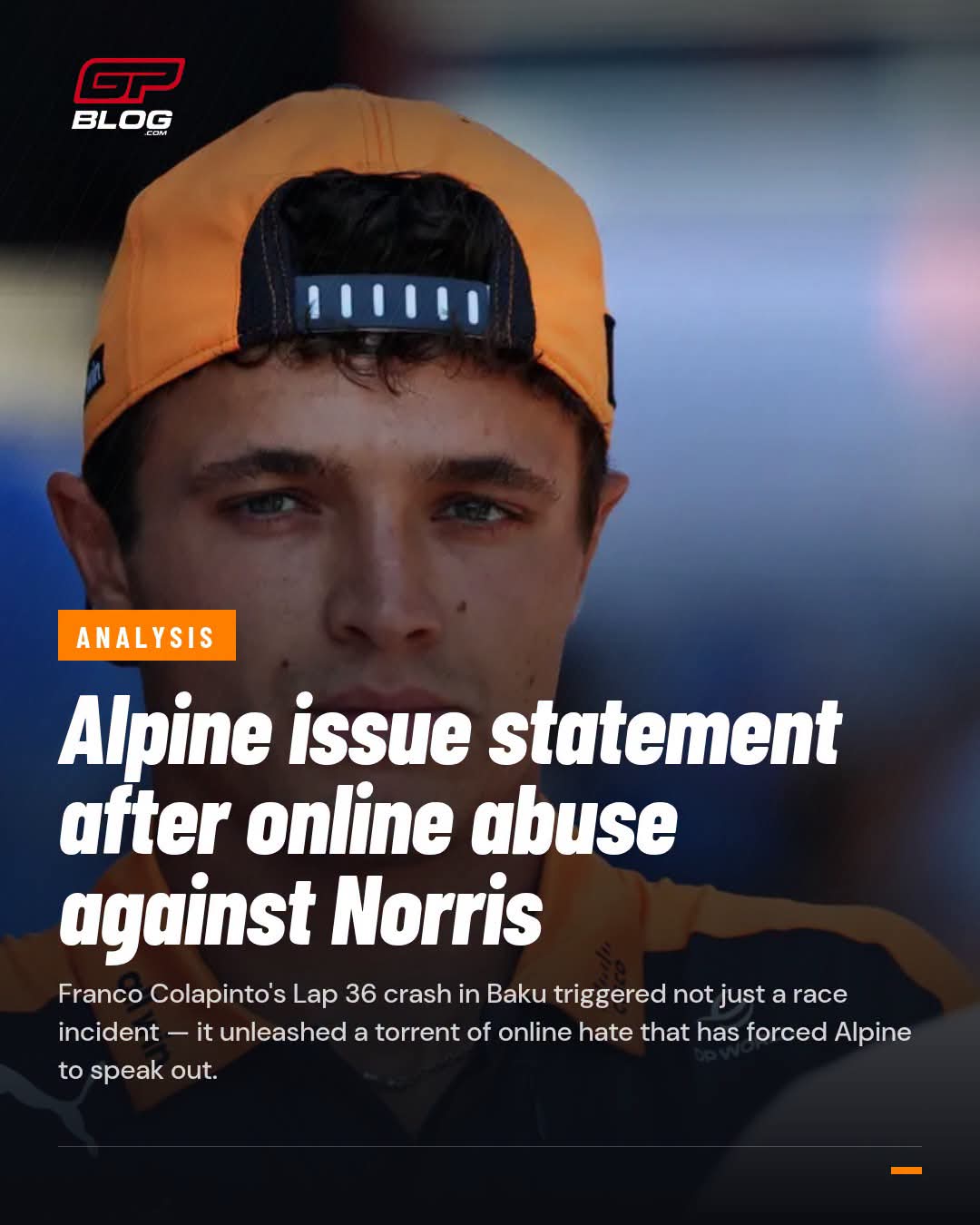
The statement comes after a major wave of online reaction to the incident and Norris’ strong post-race criticism of Colapinto’s driving.
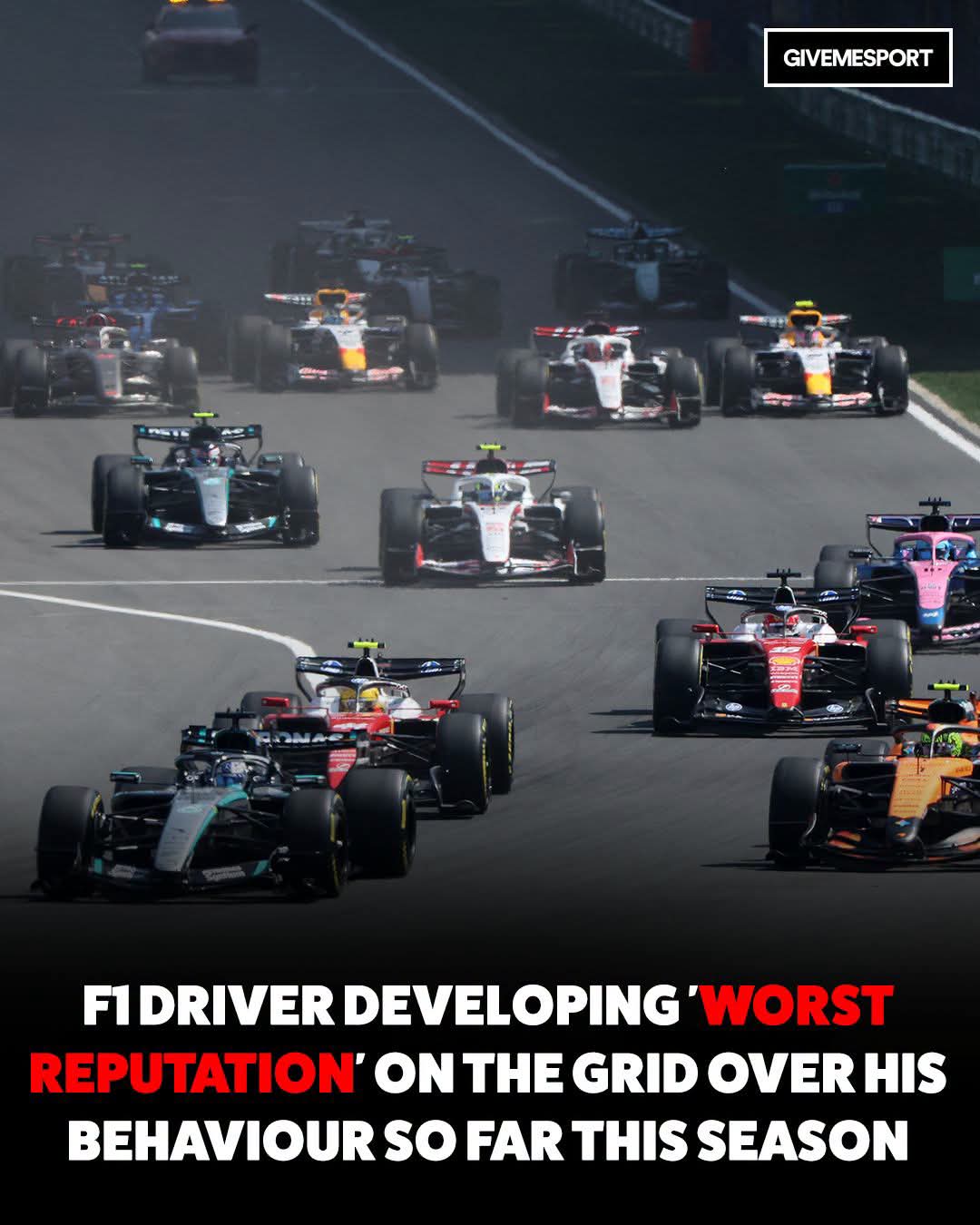
The collision occurred during a Safety Car restart at Turn 1 of the Baku City Circuit. Colapinto locked up while attempting a move, hit his Alpine team-mate Gasly, and the resulting contact sent Gasly into Norris’ McLaren.
All three drivers were unable to continue.
Colapinto was subsequently handed a 10-second time penalty, which was converted into a five-place grid penalty for the next race because he did not finish the Azerbaijan Grand Prix.
However, the sporting punishment was followed by another issue that Alpine considered much more serious: abusive behaviour on social media.
ALPINE SPEAKS OUT AFTER ONLINE BACKLASH
Alpine issued a statement strongly condemning what it described as “hate and abuse” directed at Colapinto and other members of the Formula 1 community.
The team stressed that its message was not intended to target any particular fanbase.
Instead, Alpine argued that online abuse should be rejected regardless of which driver or team is involved.
The statement also extended beyond Colapinto, with Alpine mentioning members of the media and rival teams.
The team’s position was that intense sporting rivalry is part of Formula 1, but personal abuse should not become an accepted part of the sport.
WHAT HAPPENED BETWEEN COLAPINTO, GASLY AND NORRIS?
The controversy began during a Safety Car restart on Lap 36.
As the field approached Turn 1, Colapinto attempted to make progress on the inside but locked up under braking.
The Alpine driver was unable to slow the car sufficiently and made contact with Gasly.
Gasly was then pushed into Norris, ending the McLaren driver’s race.
The consequences were particularly costly because Norris had been fighting for valuable championship points.
Gasly also lost a potential points finish, while Colapinto’s own race ended as well.
The incident therefore affected three drivers in a matter of seconds.
NORRIS WAS HIGHLY CRITICAL OF THE INCIDENT
Norris made his frustration clear immediately after the race.
The McLaren driver argued that Formula 1’s governing body should consider stronger punishments, including race bans, for incidents that he believes are sufficiently careless.
He also expressed frustration at the financial cost of damaged Formula 1 machinery.
Norris’ comments were made immediately after being eliminated from the race, and the driver acknowledged that he had not yet watched a full replay of the incident when giving his initial reaction.
That context is important.
There is a difference between criticising a driver’s racing decision and directing personal abuse towards that driver.
Alpine’s statement focused specifically on the latter.
COLAPINTO ACCEPTED RESPONSIBILITY
Colapinto did not attempt to deny responsibility for the crash.
After the incident, the Argentine driver apologised to Gasly, Norris and Alpine.
He described himself as being out of control and acknowledged that it was a major mistake.
That response meant the sporting side of the controversy was relatively straightforward: the stewards investigated the incident and issued a penalty.
The online reaction, however, became a separate problem.
ALPINE: MISTAKES HAPPEN WHEN DRIVERS RACE AT THE LIMIT
One of the central messages in Alpine’s statement was that Formula 1 drivers operate at the limits of performance.
Mistakes are therefore inevitable.
That does not mean drivers should avoid accountability when they make errors.
Colapinto was investigated and punished by the FIA stewards, and his five-place grid penalty will affect his next race.
But Alpine argued that a sporting mistake should not become a justification for personal attacks.
The team wants the distinction between competitive criticism and online abuse to remain clear.
WHY ONLINE ABUSE HAS BECOME A BIGGER F1 ISSUE
Formula 1 has experienced enormous growth in global popularity in recent years.
Social media has played a major role in that expansion, allowing fans to interact directly with drivers, teams and journalists.
However, that accessibility also creates risks.
Drivers can become the immediate target of thousands of angry messages after a controversial incident.
The same can happen to team members, journalists and even fans supporting rival teams.
Alpine’s statement reflects a broader concern within the sport that intense online discussions can cross the line into harassment.
ALPINE SAYS THE MESSAGE IS NOT ABOUT ONE FANBASE
Perhaps the most important part of Alpine’s statement was its insistence that the issue should not be framed as a battle between different groups of supporters.
The team specifically said its condemnation was not directed at one particular fanbase or supporters of one driver.
That distinction matters.
Formula 1 has passionate supporters of Verstappen, Hamilton, Norris, Leclerc, Alonso and many other drivers.
Strong disagreement between fans is normal.
Personal attacks and threats are something entirely different.
Alpine’s message was that the sport should encourage rivalry without normalising abusive behaviour.
THE FIA PENALTY AND THE ONLINE RESPONSE ARE TWO DIFFERENT ISSUES
It is also important to separate the FIA’s decision from Alpine’s statement.
The FIA’s role is to regulate racing incidents and apply sporting penalties.
Alpine’s concern is the behaviour that followed the incident away from the circuit.
Colapinto’s five-place grid penalty is therefore the formal sporting consequence of the crash.
Online abuse is a separate issue that cannot be solved simply by changing the racing penalty.
That distinction is at the heart of Alpine’s message.
COLAPINTO FACES A DIFFICULT NEXT RACE
The five-place grid penalty means Colapinto will carry a significant disadvantage into the next Grand Prix.
The penalty could make his qualifying result particularly important.
A strong qualifying performance would give him a better chance of recovering positions despite the grid drop, while a weaker qualifying result could leave him starting deep in the field.
More importantly, the next race will give Colapinto an opportunity to respond through his driving.
A clean and controlled weekend would help move attention away from the Baku incident.
NORRIS ALSO HAS REASON TO BE FRUSTRATED
While Alpine defended Colapinto against online abuse, that does not mean Norris’ frustration should be dismissed.
From Norris’ perspective, the collision ended his race and cost him a chance to score points.
Drivers are entitled to criticise incidents that affect them.
The important distinction is between legitimate sporting criticism and targeted personal harassment.
A driver can believe another competitor made a serious mistake without that becoming a justification for abusive behaviour online.
FORMULA 1’S CHALLENGE: KEEPING RIVALRY HEALTHY
This incident highlights one of the difficult challenges facing modern Formula 1.
The sport wants passionate fans.
It wants rivalries.
It wants drivers competing aggressively for every position.
Those elements help create the drama that makes Formula 1 attractive around the world.
But the same intensity can become problematic when disagreements move from the track to social media and become personal.
Teams therefore have an interest in encouraging supporters to maintain a level of respect even when emotions are running high.
ALPINE WANTS A LONG-TERM SOLUTION
Alpine’s statement went beyond simply condemning the latest wave of abuse.
The team said it intends to continue working with Formula 1 and the FIA to discuss ways of tackling online abuse.
That suggests the team sees this as a wider issue rather than an isolated incident involving Colapinto.
Finding an effective solution will not be simple.
Social media platforms, teams, governing bodies, drivers and fans all play different roles in the online ecosystem.
But Alpine believes that teams have a responsibility to speak out when abuse becomes excessive.
THE BIGGER PICTURE AFTER BAKU
The Azerbaijan Grand Prix will be remembered for George Russell’s victory, Max Verstappen’s late challenge and Isack Hadjar’s impressive return to the podium.
But the Colapinto-Gasly-Norris collision became another major storyline.
On the track, the FIA dealt with the incident through its normal sporting procedures.
Off the track, Alpine has now addressed what it considers a separate and increasingly serious problem.
The team is not asking fans to stop criticising drivers.
Instead, its message is that criticism should remain focused on the sporting performance and the racing incident rather than becoming personal abuse.
FINAL TAKEAWAY
The Azerbaijan Grand Prix crash involving Franco Colapinto, Pierre Gasly and Lando Norris created controversy both on and off the circuit.
Colapinto accepted responsibility for the mistake and received a five-place grid penalty for the next race.
Norris strongly criticised the incident and called for tougher action against what he regarded as careless driving.
But Alpine has now drawn attention to another consequence of the controversy: online abuse directed at Colapinto and others within the Formula 1 community.
The team’s message is straightforward.
Racing drivers can make mistakes. Fans can disagree. Rivalries can be intense. But Alpine believes none of that s hould justify hateful or abusive behaviour online.
As Formula 1 continues to grow, how the sport manages that balance between passionate rivalry and respectful discussion could become increasingly important.