Formula 1 qualifying at the Austrian Grand Prix delivered everything fans could ask for—high-speed drama, championship twists, yellow-flag controversy, and a tense wait for the FIA’s final verdict.
For a few anxious minutes after the checkered flag, nobody knew whether George Russell would actually start from pole position. Questions over yellow flags, Max Verstappen’s late-session incident, and confusion surrounding FIA regulations created one of the most dramatic qualifying conclusions of the season.
In the end, the officials reached a decision—but not before sending Mercedes, Red Bull, and fans around the world on an emotional roller coaster.
VERSTAPPEN’S LATE INCIDENT TURNED QUALIFYING UPSIDE DOWN
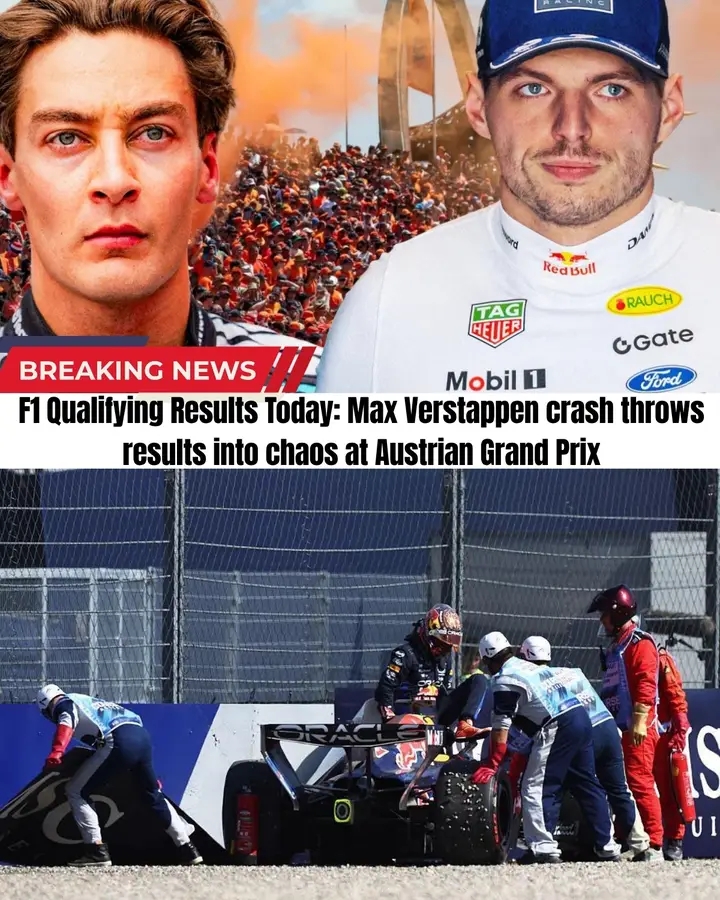
The closing moments of Q3 were shaping up to be a thrilling battle for pole when Max Verstappen’s final effort came to an abrupt end.
An incident involving the reigning world champion brought out yellow flags during the decisive laps, instantly putting several drivers’ performances under scrutiny.
Whenever yellow flags appear during qualifying, drivers are expected to slow sufficiently to demonstrate they are respecting the warning. Failure to do so can result in lap times being deleted or further penalties, making every fraction of a second crucial.
With several cars crossing the timing line while the yellow flags were displayed, uncertainty spread throughout the paddock.
GEORGE RUSSELL APPEARED TO HAVE DELIVERED A MASTERCLASS
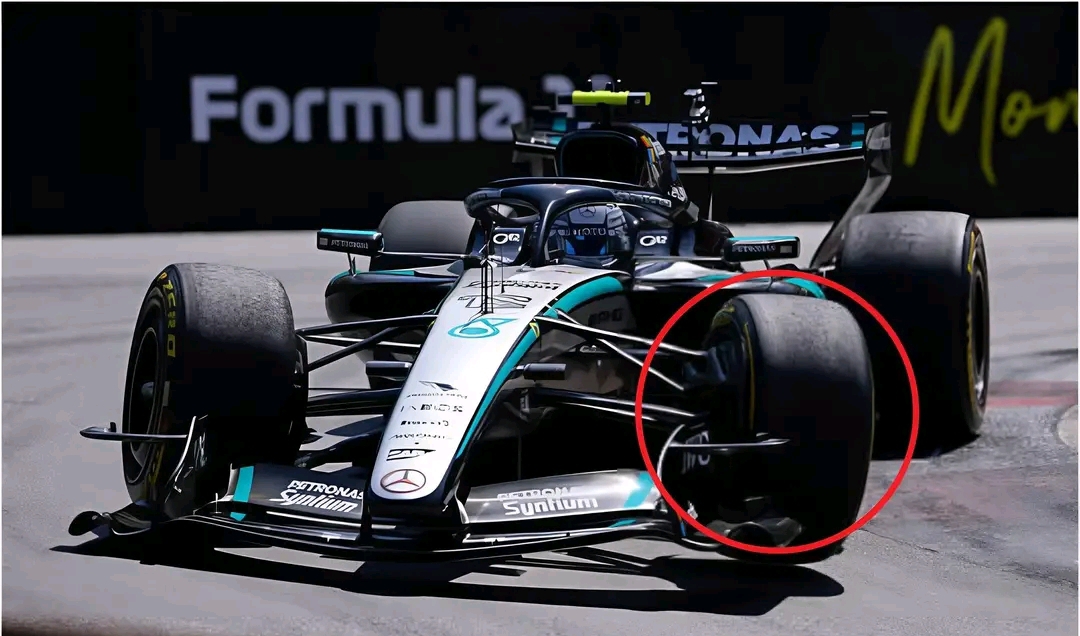
George Russell produced an exceptional qualifying lap that initially looked good enough to secure pole position.
The Mercedes driver extracted every bit of performance from the car, putting together one of his strongest laps of the season at exactly the right moment.
However, celebrations inside the Mercedes garage were quickly put on hold.
As questions emerged about whether Russell had slowed enough through the yellow-flag zone, speculation began that his lap could be deleted.
FIA RULES CREATED MOMENTS OF CONFUSION
Formula 1’s yellow-flag regulations are designed to prioritize safety above outright speed.
Drivers must clearly reduce speed when passing through a yellow-flag sector, but determining whether they have complied often requires detailed analysis of telemetry, onboard footage, and sector times.
This process can take several minutes after qualifying ends, leaving teams and fans waiting for an official decision.
That delay was exactly what unfolded in Austria.
MERCEDES FACED AN ANXIOUS WAIT
Inside Mercedes, emotions reportedly ranged from optimism to concern as engineers waited for confirmation from race control.
Team principal Toto Wolff and the Mercedes pit wall knew that even a tiny breach of the regulations could cost Russell pole position.
Young teammate Kimi Antonelli was also part of the post-session discussions as Mercedes assessed the situation while awaiting the FIA’s review.
Moments like these highlight how modern Formula 1 isn’t decided solely by outright speed. Understanding regulations and complying with every sporting rule has become just as important as producing the fastest lap.
THE FIA DELIVERED ITS VERDICT
After reviewing the available evidence, the FIA determined that Russell had complied with the yellow-flag requirements.
His pole position therefore stood, ending several tense minutes of uncertainty.
The investigation confirmed that although yellow flags had affected the session, Russell had slowed sufficiently to satisfy the regulations.
For Mercedes, it was the best possible outcome after what had become an unexpectedly stressful finish to qualifying.
WHY THIS RESULT MATTERS FOR THE CHAMPIONSHIP
Pole position in Austria carries enormous strategic value.
The Red Bull Ring may be one of Formula 1’s shortest circuits, but overtaking opportunities remain highly dependent on track position, tire management, and race strategy.
Starting from the front gives Russell a valuable opportunity to control the opening stint while forcing his rivals to attack rather than dictate the pace.
For Verstappen, any setback during qualifying places additional pressure on race day, especially in an increasingly competitive championship where Mercedes, Ferrari, and McLaren continue to challenge for victories.
Every point matters as the title battle intensifies.
MERCEDES CONTINUES TO BUILD MOMENTUM
Russell’s performance is another encouraging sign that Mercedes has made meaningful progress.
The team’s recent upgrades appear to be delivering improved one-lap pace while also strengthening overall race competitiveness.
If Mercedes can consistently challenge at the front, Formula 1 could enjoy one of its closest championship fights in years.
That would not only benefit Russell but also increase pressure on every leading team to keep developing throughout the remainder of the season.
WHAT TO EXPECT ON RACE DAY
Starting from pole is only the first step.
Russell will still face relentless pressure into Turn 1, where any poor launch could immediately hand the advantage to his closest rivals.
Strategy, tire degradation, Safety Cars, and weather conditions could all influence the final outcome.
Meanwhile, Verstappen will undoubtedly be determined to recover from qualifying disappointment, making Sunday’s race one of the most anticipated of the season.
FINAL THOUGHTS
The Austrian Grand Prix qualifying session proved once again why Formula 1 remains one of the world’s most unpredictable sports.
A spectacular pole-position lap was nearly overshadowed by yellow-flag controversy, while FIA officials faced intense scrutiny before confirming the final starting order.
In the end, George Russell kept his pole position, Mercedes celebrated a major achievement, and Formula 1 fans were left with another reminder that championships are often shaped not only by speed but also by precision, discipline, and strict adherence to the regulations.
With tensions rising among the front-running teams, all eyes now turn to race day, where the battle for victory promises to be every bit as dramatic as qualifying itself.