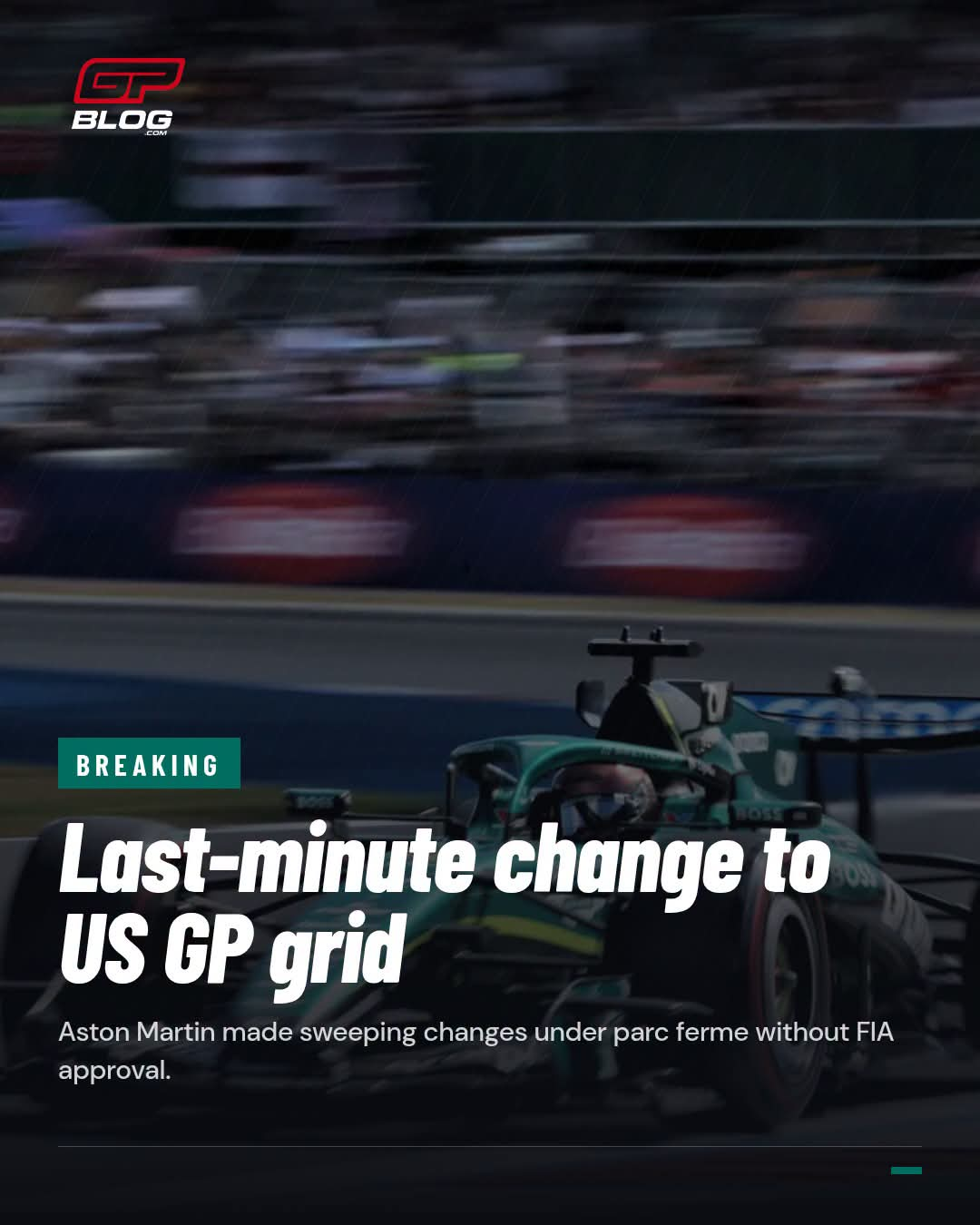
A pit lane start confirmed! 🚨…🚨 BREAKING NEWS: PIT LANE START CONFIRMED FOR THE UNITED STATES GRAND PRIX AS F1 GRID DRAMA INTENSIFIES
The United States Grand Prix has been hit by a significant development, with a pit lane start confirmed ahead of the highly anticipated Formula 1 race at the Circuit of The Americas in Austin, Texas. The decision is set to add another layer of intrigue to an already competitive weekend, forcing the affected team to rethink its race strategy and prepare for a difficult challenge from the back of the field.
The announcement has immediately raised questions about the circumstances behind the pit lane start, the potential impact on the race, and whether the driver involved can recover enough positions to turn a difficult situation into a memorable performance.
In Formula 1, starting from the pit lane is one of the most challenging situations a driver can face. Unlike competitors lining up on the starting grid, a driver beginning the race from the pit lane must wait for the field to pass before joining the circuit. This can create an immediate disadvantage, particularly at a circuit where track position and clean air can play an important role in determining race results.
A MAJOR SETBACK BEFORE LIGHTS OUT
The confirmation of a pit lane start represents a significant setback for the driver concerned, especially at a venue as demanding as the Circuit of The Americas.
The Austin circuit is known for its long opening sequence of corners, substantial elevation changes, heavy braking zones and several opportunities for overtaking. Although these characteristics can help a driver fight back through the field, they also make the opening stages particularly important.
A driver starting from the pit lane will need to make the most of every opportunity while avoiding unnecessary risks. With rivals already fighting for position from the moment the lights go out, recovering lost ground will require patience, precision and an effective strategy.
The situation could also influence how the team approaches tyre management, fuel consumption and pit stop timing throughout the race.
However, the precise reason for the pit lane start has not been specified in the initial announcement. It would therefore be premature to attribute the decision to a particular technical change, penalty or regulatory infringement without further confirmation.
WHY A PIT LANE START MATTERS IN FORMULA 1
Pit lane starts can occur when a team makes certain changes to a car under conditions that require the driver to begin the race from the pit lane, or when a driver is otherwise required to start outside the normal grid under the applicable regulations.
Depending on the circumstances, technical changes, parc fermé restrictions or other regulatory issues can play a role.
The consequences can be substantial.
Starting from the pit lane means surrendering the opportunity to contest the opening corners alongside the other drivers. It also places additional pressure on the team to identify the correct moment to stop for fresh tyres and determine whether an alternative strategy could provide an advantage.
Instead of concentrating on defending a grid position, the driver must focus on overtaking, maintaining tyre performance and avoiding traffic.
That challenge becomes even greater when competing against teams with similar pace. Passing a rival may require several laps of preparation, particularly if the cars have comparable straight-line speed or aerodynamic performance.
At Austin, the long back straight provides an opportunity to attack, but drivers must still position their cars carefully through the preceding corners to maximise their chances of completing a move.
STRATEGY COULD BECOME THE BIGGEST WEAPON
With a pit lane start confirmed, strategy could become the defining factor in the affected driver’s race.
The team will need to evaluate whether an early pit stop, a longer opening stint or a different tyre approach offers the best chance of recovering positions.
An early stop could allow the driver to exploit clean air if traffic conditions permit. However, it could also leave the car vulnerable to a lengthy second stint, depending on tyre degradation and the race’s eventual pit stop requirements.
Staying out for longer could provide the opposite opportunity. If the driver can maintain competitive pace while other competitors make their stops, a different sequence of pit stops might create opportunities to gain positions.
Safety cars and virtual safety cars could also change the picture dramatically. A neutralisation at the right moment can reduce the time lost during a pit stop and bring a driver who started from the pit lane back into contention for a stronger result.
Nevertheless, relying on a safety car is never a guaranteed strategy. The team must prepare for several scenarios and ensure that the driver can respond quickly when conditions change.
AUSTIN PRESENTS AN OPPORTUNITY TO FIGHT BACK
Despite the setback, the Circuit of The Americas offers several features that could help a determined driver recover.
The long straight leading into Turn 12 is one of the circuit’s most recognised overtaking opportunities. Drivers who exit the preceding corners well can use their speed advantage to challenge rivals under braking.
There are also technical sections where a driver with strong car control can pressure competitors into mistakes.
However, overtaking requires more than raw speed. A driver must balance aggression with tyre preservation, especially when following another car through the twisting middle sector.
Excessive tyre wear could undermine a recovery attempt later in the race. Conversely, managing the tyres effectively could allow the driver to attack when competitors begin to lose performance.
The challenge will be to make progress without compromising the car or creating unnecessary contact.
PRESSURE BUILDS ON THE DRIVER AND TEAM
A pit lane start places additional pressure on both the driver and the engineers.
The driver must remain calm despite losing the advantage of a conventional grid position. Every decision matters, from choosing where to attempt an overtake to deciding when to protect the tyres.
Meanwhile, engineers must monitor race pace, tyre temperatures, traffic and potential strategic opportunities.
Communication between the cockpit and the pit wall will be particularly important. A driver who becomes trapped behind slower cars may need to alter the planned strategy, while a sudden change in weather or a safety car could require an immediate response.
The team must also be realistic about its objectives. Depending on the car’s performance and the starting circumstances, the priority might be to score points, limit championship damage or collect valuable information for future races.
A successful recovery would demonstrate the team’s ability to respond under pressure, even if a pit lane start makes a podium finish considerably more difficult.
WHAT DOES THIS MEAN FOR THE UNITED STATES GRAND PRIX?
The confirmed pit lane start adds another storyline to the United States Grand Prix and could influence the competitive picture once the race begins.
While attention naturally focuses on the drivers fighting for victory, situations like this can create opportunities for competitors who execute their strategies effectively.
A driver who starts further back may also influence the race by forcing rivals to defend, altering pit stop calculations or joining battles in the midfield.
For fans, the uncertainty creates an additional reason to watch closely. Formula 1 races are rarely decided by starting positions alone, and Austin has repeatedly demonstrated how changing strategies and incidents can transform the competitive order.
Still, the scale of the challenge will depend on the identity of the driver, the performance of the car, the tyre choices available and the circumstances that led to the pit lane start.
Without those details, predicting a specific finishing position would be premature.
THE BIG QUESTION: CAN THE DRIVER RECOVER?
The most important question now is how much ground the affected driver can recover once the race gets underway.
A pit lane start is undeniably a disadvantage, but it does not automatically end a driver’s hopes of achieving a respectable result.
Strong race pace, intelligent overtaking and a well-timed strategy can help compensate for a difficult starting position. The driver will also need to avoid mistakes, because losing additional time through damage or penalties could make recovery considerably harder.
The team, meanwhile, must identify opportunities without exposing the car to unnecessary risks.
As preparations continue for the United States Grand Prix, the confirmed pit lane start has added fresh uncertainty to the weekend.
One thing is clear: the affected driver faces a demanding challenge at Austin, and the race strategy could prove just as important as outright speed.
The next chapter will unfold when the lights go out at the Circuit of The Americas. Whether the driver can turn this setback into a remarkable comeback remains to be seen.
Note: The driver’s identity and the official reason for the pit lane start were not included in the original announcement. Those details should be confirmed before publication to ensure the report accurately reflects the specific incident.
#F1 #USGP #Formula1 #UnitedStatesGP #Motorsport #BreakingNews