Few Formula 1 careers have divided fans quite like that of Pastor Maldonado. For some, the Venezuelan was one of the most accident-prone drivers ever to compete in the sport. For others, he was an underrated racer whose genuine speed was overshadowed by financial controversy, unfortunate incidents and an unforgiving reputation.
But behind the jokes, crashes and controversial headlines lies a remarkable story involving an unexpected Grand Prix victory, millions in Venezuelan state-backed sponsorship, political controversy and an abrupt departure from Formula 1.
It is a story that deserves considerably more attention than the nickname ‘Crashtor’ suggests.
And it all began with one unforgettable afternoon in Barcelona.
THE DAY PASTOR MALDONADO SHOCKED FORMULA 1
On May 13, 2012, Pastor Maldonado achieved something few people expected.
Driving for Williams, the Venezuelan secured a stunning victory at the Spanish Grand Prix, defeating local favourite Fernando Alonso in front of an enthusiastic home crowd at the Circuit de Barcelona-Catalunya.
It was a remarkable achievement for a driver competing in a Williams team that was not considered a regular contender for Grand Prix victories.
Maldonado had already demonstrated impressive speed during qualifying, securing second place before inheriting pole position following Lewis Hamilton’s exclusion from the qualifying results for a fuel-related infringement.
However, starting from pole was only part of the challenge. He still needed to survive the pressure of racing against Alonso, who was determined to deliver a home victory for Ferrari.
Maldonado handled the situation brilliantly.
He managed his tyres, controlled the pace and resisted Alonso’s challenge to secure his first and only Formula 1 victory.
The significance of the result extended beyond the championship.
Maldonado became the first Venezuelan driver to win a Formula 1 Grand Prix, creating a historic sporting moment for his country.
For Williams, it was particularly emotional. The victory ended a lengthy period without a race win and demonstrated that the legendary British team still possessed the ability to compete at the highest level.
Yet the celebrations were soon interrupted by an extraordinary incident.
THE WILLIAMS GARAGE FIRE THAT TURNED CELEBRATION INTO CHAOS
Approximately 90 minutes after the chequered flag, a fire broke out in the Williams garage.
The incident transformed what should have been a completely celebratory afternoon into a frightening emergency.
Smoke filled the team area as personnel and other members of the paddock rushed to respond. Several people were injured, and the incident caused significant disruption.
The fire became one of the most memorable and disturbing images associated with the 2012 Spanish Grand Prix.
For Maldonado, however, the sporting achievement remained historic.
His victory had already secured his place in Formula 1 history, regardless of what happened afterwards.
Unfortunately, the rest of his career would never quite reach those heights again.
THE MILLIONS BEHIND MALDONADO’S FORMULA 1 DREAM
To understand why Maldonado attracted so much criticism, it is necessary to examine the financial arrangements that supported his Formula 1 career.
His biggest backer was Petróleos de Venezuela, better known as PDVSA, Venezuela’s state-owned oil company.
The sponsorship provided substantial financial support, helping Maldonado secure opportunities with Williams and subsequently Lotus.
This was not an unusual arrangement in Formula 1. The sport has a long history of drivers arriving with significant commercial backing.
However, Maldonado’s situation attracted particular attention because his financial support came from a state-owned company operating in a country facing serious economic and political difficulties.
Critics questioned whether public resources should be supporting an individual’s expensive motorsport career while Venezuela faced major domestic challenges.
Maldonado defended the arrangement, arguing that the sponsorship was part of a wider sporting investment and that criticism of his funding sometimes became political.
Nevertheless, the association followed him throughout his Formula 1 career.
The financial backing also created an uncomfortable perception: that Maldonado’s position on the grid was protected by money rather than performance.
That perception would become increasingly difficult to escape whenever he made a mistake.
WAS MALDONADO REALLY ONE OF THE WORST DRIVERS IN FORMULA 1 HISTORY?
This is perhaps the most interesting question surrounding his legacy.
Maldonado developed a reputation for collisions, penalties and costly mistakes. His aggressive approach occasionally produced spectacular racing, but it also created unnecessary problems for himself and other competitors.
His nickname, ‘Crashtor’, became particularly popular among Formula 1 fans.
There were certainly incidents that justified criticism.
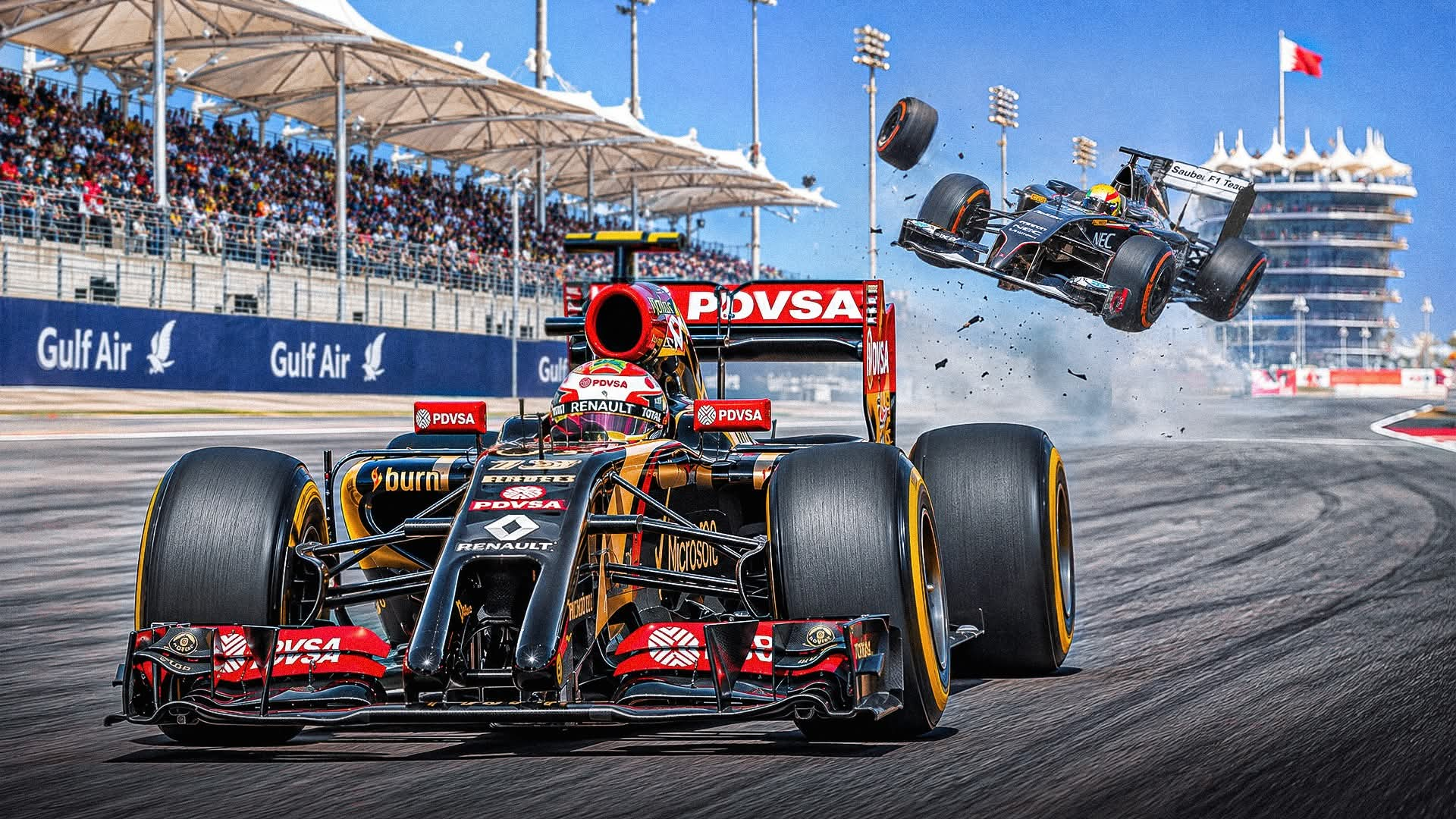
His collision with Esteban Gutiérrez at the 2014 Bahrain Grand Prix was particularly memorable. Maldonado made contact with the Sauber driver, sending Gutiérrez’s car into a dramatic rollover.
Other incidents involving Lewis Hamilton and several midfield competitors further damaged his reputation.
His disciplinary record also became a talking point. In 2012, he collected numerous penalties, while his aggressive driving continued to attract attention during his subsequent seasons.
However, reducing his entire career to crashes would be unfair.
Maldonado was the 2010 GP2 champion, an achievement that demonstrated his ability to compete successfully against talented young drivers.
He also defeated experienced competitors during his early Formula 1 career and demonstrated genuine qualifying speed.
His 2012 Spanish Grand Prix victory remains the strongest evidence of his natural ability.
The BBC examined the controversy surrounding his reputation in 2015, highlighting the contrast between his impressive speed and his tendency to make costly mistakes.
The more balanced conclusion is that Maldonado was a capable Formula 1 driver who frequently failed to convert his speed into consistent results.
He was not a hopeless driver who accidentally found himself on the grid.
But neither was he a consistently reliable performer who deserved to be judged exclusively by his Barcelona victory.
WILLIAMS, LOTUS AND THE CAREER THAT NEVER RECOVERED
Following his historic 2012 victory, expectations surrounding Maldonado increased.
Unfortunately, his subsequent performances failed to establish him as a regular front-running competitor.
His 2013 campaign with Williams was particularly disappointing.
The team struggled with its machinery, and Maldonado managed just one championship point throughout the season.
He also experienced a difficult relationship with the organisation, with tensions eventually contributing to his departure.
For 2014, he moved to Lotus, taking his PDVSA financial backing with him.
The move initially appeared logical. Lotus had demonstrated competitive potential, and Maldonado wanted to remain in Formula 1.
However, the team’s financial and technical difficulties made progress extremely challenging.
His first season with Lotus produced just two championship points.
Although the team improved in 2015, Maldonado continued to struggle with consistency and reliability.
There were occasional encouraging performances, including seventh-place finishes in Canada, Austria and Russia.
But his results remained insufficient to establish him as a dependable top-level driver.
His relationship with Lotus also became increasingly dependent on the financial support associated with PDVSA.
And that support would eventually disappear.
THE FINANCIAL CRISIS THAT ENDED HIS FORMULA 1 CAREER
Maldonado’s departure from Formula 1 was not the result of one final spectacular accident.
Instead, the circumstances were largely financial.
By the end of 2015, Venezuela was experiencing an increasingly severe economic crisis. PDVSA was also facing financial difficulties, creating uncertainty surrounding its sponsorship commitments.
Lotus had already been struggling financially before Renault’s takeover of the team.
Maldonado had initially been expected to continue with the newly rebranded Renault operation for the 2016 season.
However, the sponsorship situation changed dramatically.
In February 2016, Maldonado announced that he would not compete in Formula 1 that year.
His position was subsequently taken by Kevin Magnussen.
Reports at the time linked the decision directly to problems involving PDVSA’s financial backing.
Maldonado later described the sudden change as a major surprise, explaining that the situation had deteriorated within a matter of hours.
After five seasons, his Formula 1 career had effectively ended.
It is important to distinguish this financial collapse from political sanctions: the available reporting identifies problems with PDVSA’s sponsorship commitments and Venezuela’s economic crisis as the immediate circumstances behind his departure, rather than establishing that sanctions were lifted or directly ended his career.
WHAT HAPPENED TO MALDONADO AFTER FORMULA 1?
Although his Formula 1 career ended unexpectedly, Maldonado did not immediately abandon professional motorsport.
He eventually returned to international competition through endurance racing.
His involvement in the FIA World Endurance Championship with DragonSpeed demonstrated that he still had the motivation to compete at a high level.
During the 2018–19 WEC season, he secured an LMP2 class victory at Spa-Francorchamps alongside his teammates.
He also achieved success at the 2019 Daytona 24 Hours, adding another significant achievement to his racing career.
These results were important because they demonstrated that Maldonado’s abilities were not limited to Formula 1.
Endurance racing requires a different approach, with greater emphasis on consistency, teamwork, tyre management and avoiding unnecessary risks.
His success in that environment offered another perspective on a driver whose Formula 1 reputation had become dominated by accidents.
It also reinforced an important point: a driver’s career cannot always be accurately judged through one championship or one collection of controversial incidents.
THE BIGGER FORMULA 1 QUESTION: SHOULD MONEY DETERMINE WHO GETS A SEAT?
Maldonado’s story raises a broader question about Formula 1’s driver-selection system.
Motorsport has always been an expensive industry.
Young drivers often require substantial financial support to progress through karting, Formula 4, Formula 3, Formula 2 and eventually Formula 1.
Some receive backing from manufacturers, development programmes and wealthy sponsors. Others rely on family resources or commercial partnerships.
Consequently, financial considerations have always influenced opportunities within the sport.
Maldonado became one of the most visible examples of this system because his sponsorship was so closely associated with a national oil company.
However, it would be misleading to suggest that he was the only driver whose commercial backing helped secure a Formula 1 opportunity.
The uncomfortable reality is that financial resources can sometimes open doors that pure performance alone cannot.
This creates a difficult balance for teams.
They need drivers capable of delivering results, but they also need commercial partners capable of keeping their organisations financially sustainable.
Maldonado’s career demonstrated both sides of that relationship.
His sponsorship brought valuable financial resources to struggling teams, while his occasional flashes of brilliance proved that he possessed legitimate racing talent.
The problem was consistency.
FINAL VERDICT: VICTIM OF HIS REPUTATION OR MASTER OF HIS OWN MISFORTUNE?
Pastor Maldonado’s Formula 1 career deserves a more complicated verdict than either his biggest supporters or harshest critics might suggest.
He was not the worst driver in Formula 1 history.
A GP2 championship and a Formula 1 Grand Prix victory are achievements that cannot simply be dismissed.
Defeating Fernando Alonso at the 2012 Spanish Grand Prix required speed, composure and excellent race management.
Those qualities were real.
However, Maldonado also made too many mistakes, accumulated unnecessary penalties and struggled to deliver consistent performances across five seasons.
His financial backing undoubtedly influenced the opportunities available to him, but it would be equally unfair to claim that money was the only reason he reached Formula 1.
Perhaps the biggest tragedy of his career was that his most famous achievement and his most damaging reputation developed almost simultaneously.
He will always be remembered as the Venezuelan who defeated Alonso in Barcelona, but also as the driver whose aggressive approach became a recurring source of controversy.
His departure in 2016 further complicated his legacy because it came through financial circumstances rather than a conventional sporting retirement.
Ultimately, Maldonado was a talented but inconsistent driver whose career was shaped by a combination of ability, commercial backing, mistakes and circumstances beyond his control.
He was neither the misunderstood genius some supporters portray nor the completely talentless pay driver his harshest critics suggest.
He was Pastor Maldonado: a Grand Prix winner whose extraordinary Barcelona afternoon ensured that Formula 1 would never forget his name.
And perhaps that is the most fitting verdict of all.
—
SEO KEYWORDS: Pastor Maldonado, Pastor Maldonado F1 career, Pastor Maldonado Spanish Grand Prix, 2012 Spanish GP, Williams F1, PDVSA sponsorship, Formula 1 pay drivers, Pastor Maldonado crashes, why Maldonado left F1, Venezuelan F1 driver.
WATCH THE FULL STORY: The original video examining Pastor Maldonado’s controversial Formula 1 career is available on YouTube:
[Watch the full Pastor Maldonado story on YouTube](https://youtu.be/es1eE-wlFuI?utm_source=chatgpt.com)