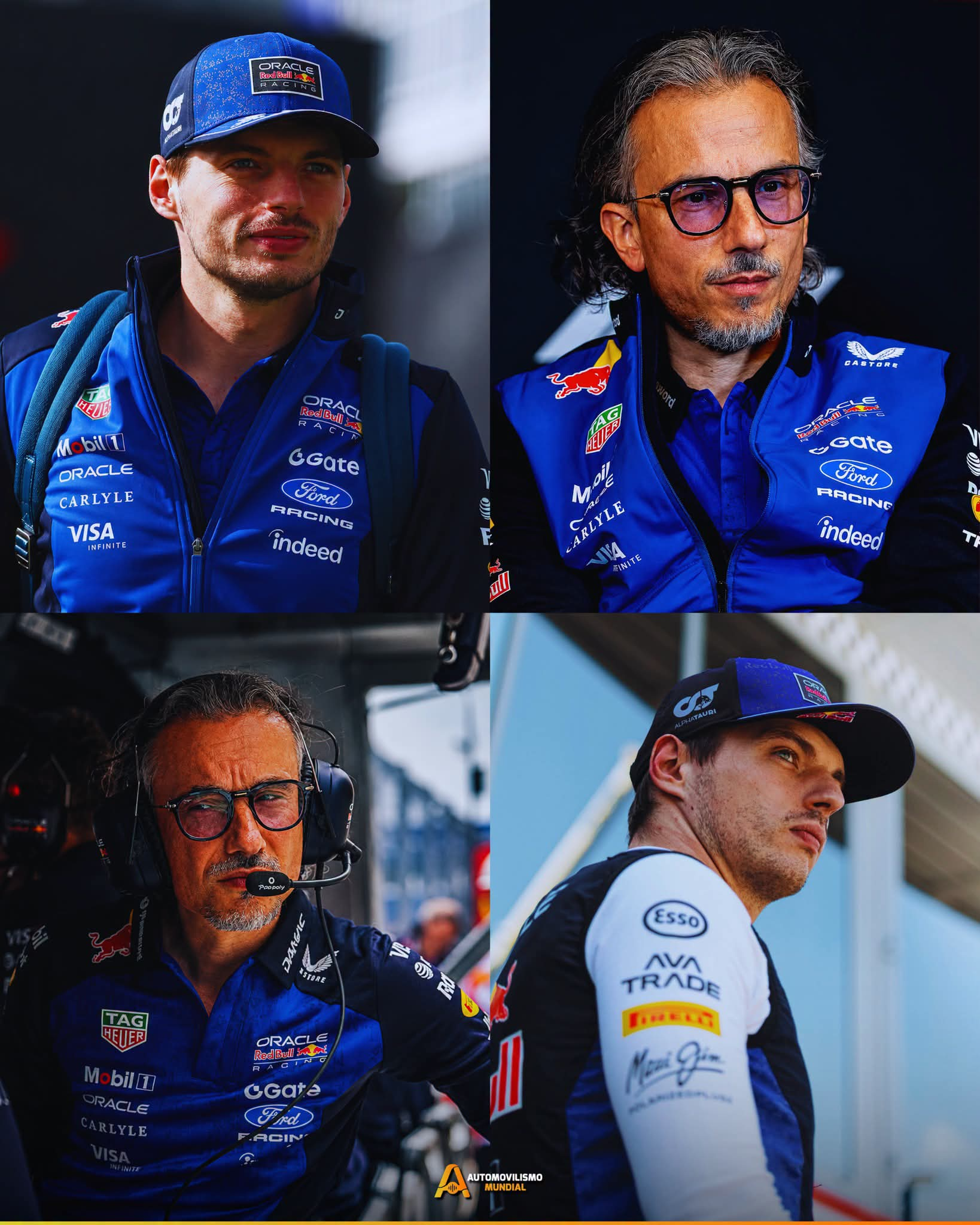
Lewis Hamilton has openly disagreed with Max Verstappen over the condition of the Circuit of the Americas, reigniting debate about track safety and the physical demands placed on Formula 1 drivers ahead of the United States Grand Prix. While the Red Bull star has described the circuit’s bumps as unacceptable and raised concerns about his spine, Hamilton believes the uneven surface adds character to one of F1’s most popular venues.
The contrasting opinions have highlighted an important question for the sport: when do challenging track conditions become a genuine safety concern? For Hamilton, the bumps are part of the challenge that makes racing in Austin distinctive. For Verstappen, the problem has reached a point where temporary fixes are no longer enough.
HAMILTON DEFENDS COTA’S CHALLENGING TRACK SURFACE
Hamilton explained that he personally enjoys the bumps because they force drivers to react quickly and make constant corrections behind the wheel. Although he acknowledged that a perfectly flat circuit would be ideal in some respects, he argued that removing every imperfection could take away some of the track’s distinctive character.
The Ferrari driver identified Turns 19 and 9 as areas where the bumps were noticeable, but insisted that they had not caused him serious problems. He also dismissed the suggestion that the conditions were particularly troubling for him, joking that he was 42 years old and his back remained fine.
Hamilton’s comments reflect his preference for circuits that test a driver’s adaptability rather than offering a completely predictable driving surface. However, his experience should not necessarily be taken as evidence that the same conditions are equally comfortable or safe for every competitor.
VERSTAPPEN RAISES SERIOUS CONCERNS ABOUT HIS SPINE
Verstappen has taken a considerably stronger position, despite describing the Circuit of the Americas as one of his favourite tracks and praising the city of Austin. His criticism is directed at the severity of the bumps, which he believes have become increasingly difficult to manage.
The Dutchman argued that repeatedly addressing isolated sections of the circuit amounts to putting a temporary plaster over a much larger problem. In his view, properly resolving the issue would require a more extensive renovation, potentially involving significant financial costs and considerable work on the track itself.
More concerning were Verstappen’s comments about medical checks on his spine. He said the results concerning the lower part of his spine did not look particularly good, highlighting the physical consequences that repeated impacts can have on drivers.
His remarks do not, by themselves, establish a specific diagnosis or prove that the Austin circuit caused an injury. Nevertheless, they underline why track conditions deserve serious attention when drivers report discomfort or potential health concerns.
WHY THE COTA BUMPS HAVE BECOME A MAJOR F1 ISSUE
The Circuit of the Americas is widely recognised for its challenging layout, dramatic elevation changes and demanding corners. Its surface, however, has also attracted criticism because of bumps that can unsettle cars travelling at high speed.
Modern Formula 1 cars operate with sophisticated suspension systems and carefully controlled ride heights. When a car encounters an unexpected surface imperfection, it can become harder for a driver to maintain stability, precision and confidence, particularly through fast corners or under heavy braking.
The debate is therefore not simply about whether drivers enjoy a bumpy circuit. It concerns the distinction between a challenging racing surface and conditions that could compromise safety or impose excessive physical strain.
Hamilton and Verstappen can both appreciate the same circuit while reaching different conclusions about its condition. Their contrasting experiences also demonstrate why track assessments should consider more than one driver’s personal comfort.
ANTONELLI TAKES POLE AS VERSTAPPEN CLOSES IN
The disagreement comes amid a high-pressure United States Grand Prix weekend, with Kimi Antonelli securing pole position ahead of Verstappen. The Mercedes driver edged out the reigning champion by 0.179 seconds, while Isack Hadjar claimed third place for Red Bull.
The result was particularly notable after Ferrari had appeared strong throughout the three practice sessions before failing to carry that advantage into qualifying. Hamilton was left starting fifth, adding another challenge to his weekend as he looks to recover positions in the race.
Antonelli also entered the event with a mathematical opportunity to become Formula 1’s youngest world champion. However, the reported championship scenario required several results to fall into place, including a victory for the Italian and unfavourable finishes for his rivals.
With Verstappen starting near the front and Hamilton further back, the race promises a demanding test of strategy, tyre management and race pace. Track conditions could become another important factor if drivers struggle to maintain control over the bumpier sections.
WILL FORMULA 1 NEED TO INTERVENE?
The disagreement between Hamilton and Verstappen does not automatically mean that the circuit must undergo a complete reconstruction. However, Verstappen’s comments raise legitimate questions about whether the most problematic sections should receive a more thorough assessment.
Any decision would need to balance driver safety, engineering considerations, financial costs and the character of the venue. Removing every bump may be neither practical nor necessary, but identifying areas that create excessive impacts or undermine car control should remain a priority.
For Formula 1, the central issue is not which driver wins the argument. It is whether the circuit provides a sufficiently safe and consistent environment for competitors while preserving the qualities that make it exciting.
Hamilton’s willingness to embrace the challenge reflects his driving philosophy, while Verstappen’s criticism highlights the physical limits that even elite athletes must respect. Both perspectives deserve consideration.
As the United States Grand Prix unfolds, attention will remain on the racing action and whether the bumps affect performance. Beyond the result, the discussion could renew pressure for a closer examination of the Circuit of the Americas and how Formula 1 manages challenging track surfaces in the future.