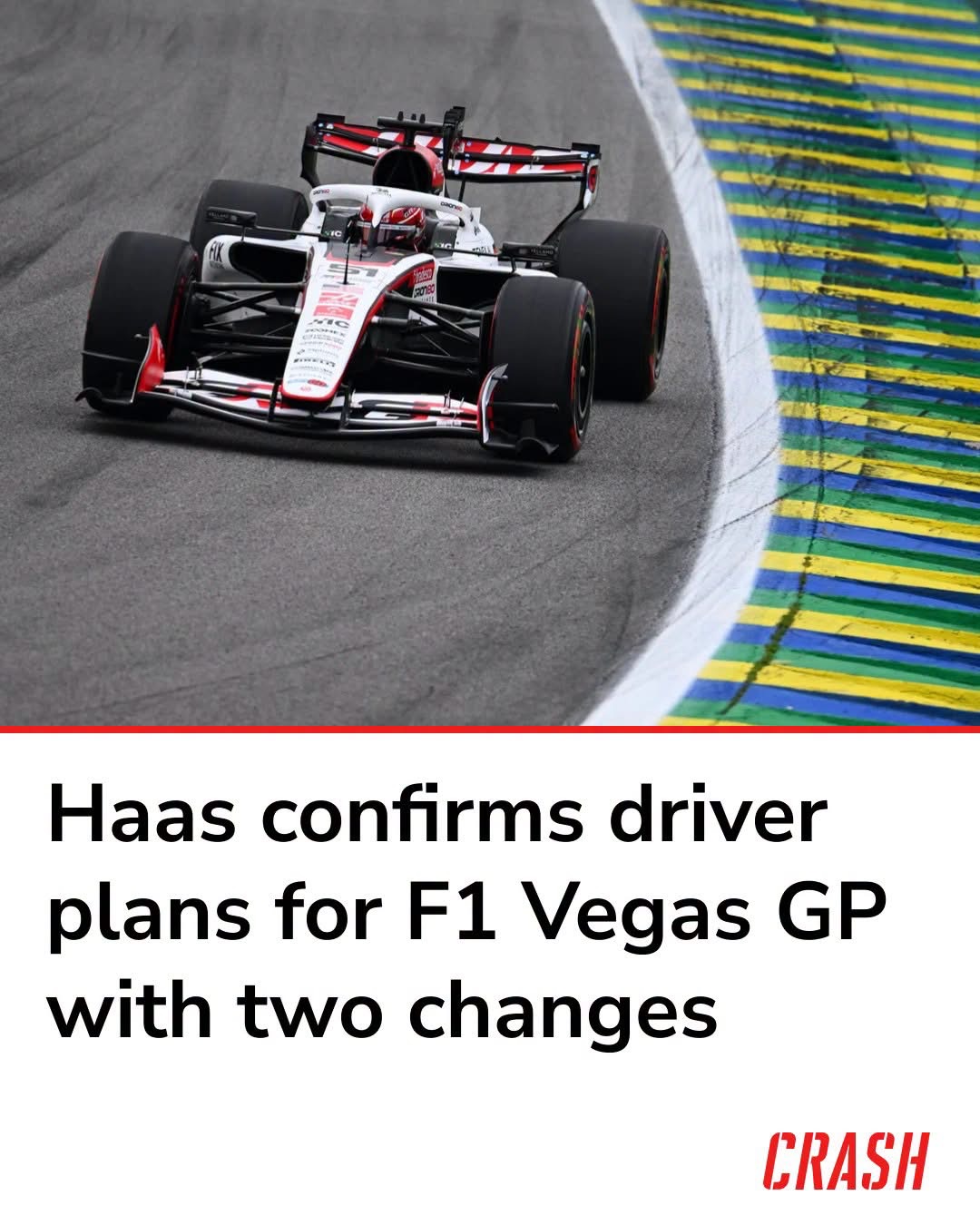
Haas has confirmed another significant driver decision ahead of the 2026 Las Vegas Grand Prix, with Rafael Camara set to return to the Formula 1 grid following his unexpected debut in Brazil.
The American outfit has officially announced that the Brazilian youngster will continue in place of Esteban Ocon, who was removed from the team’s lineup following the opening day of the Mexico City Grand Prix.
The decision gives Camara another opportunity to demonstrate his potential while accelerating his development ahead of his planned full-time Formula 1 campaign in 2027.
After an encouraging but challenging introduction to the championship at Interlagos, the upcoming Las Vegas race represents another important step in his journey.
HAAS CONFIRMS RAFAEL CAMARA FOR LAS VEGAS GRAND PRIX
Haas has confirmed that Camara will compete at the Las Vegas Grand Prix, marking his second consecutive appearance with the team.
The Brazilian was originally scheduled to make his full-time Formula 1 debut in 2027 after being selected to replace Ocon. However, the team’s decision to remove the Frenchman following the Mexico City Grand Prix dramatically changed those plans.
Instead of waiting until next season, Camara was immediately brought into the team for the Brazilian Grand Prix, giving him his first opportunity to compete in Formula 1.
Haas has now confirmed that the young driver will continue in the seat for Las Vegas, allowing him to gain additional experience before his full-time campaign begins.
CAMARA ADMITS LAS VEGAS WILL BE ANOTHER MAJOR LEARNING EXPERIENCE
Camara has acknowledged that the Las Vegas Grand Prix presents another challenge, particularly because he has never driven the circuit before.
Speaking ahead of the weekend, the Brazilian explained that his focus would be on building upon the experience gained in Sao Paulo.
He said:
“I’m looking forward to getting back in the car in Las Vegas.”
“Brazil was a good learning experience, and now the focus is on building on that, improving step by step and making the most of every session.”
“It’s a new circuit for me, so there’s a lot to learn, but I’ll do my best to keep progressing throughout the weekend.”
His comments underline the importance of gaining mileage and understanding the demands of different circuits rather than immediately chasing spectacular results.
BRAZILIAN GRAND PRIX PROVIDED CAMARA WITH A DIFFICULT FIRST TEST
Camara’s Formula 1 debut at the Brazilian Grand Prix offered an early indication of the challenges facing a newcomer.
The Haas driver qualified 13th at Interlagos but struggled during the race, eventually finishing at the back of the field.
Although the result was disappointing, his first weekend was always expected to involve a substantial learning curve.
Formula 1 cars require drivers to adapt to complex braking systems, aerodynamic demands, tyre management and sophisticated energy deployment. These challenges become even more demanding when a driver has limited preparation time.
The experience gained in Brazil could therefore prove valuable as Camara prepares for another unfamiliar circuit.
LAS VEGAS PRESENTS A DIFFERENT CHALLENGE FOR HAAS ROOKIE
The Las Vegas Strip Circuit offers a completely different environment from Interlagos.
The temporary street circuit features long straights, heavy braking zones and challenging low-temperature conditions that can make tyre preparation particularly important.
For a rookie, understanding how to generate tyre temperature and maintain grip throughout qualifying could become one of the biggest challenges of the weekend.
Camara will also need to adapt quickly to the circuit’s layout while working with Haas engineers to improve the car’s setup.
With limited practice opportunities compared with traditional permanent circuits, every session could become crucial to his development.
HAAS’ 2027 DRIVER PLAN GETS AN EARLY PREVIEW
Camara’s continued presence in the car also provides Haas with an early look at its future driver investment.
The Brazilian is expected to become a full-time member of the team in 2027, making these additional appearances particularly valuable.
The more experience he gains before next season, the better prepared he could be for the demands of a full Formula 1 campaign.
However, the pressure remains on him to demonstrate progress. Haas will want to see improvements in qualifying performance, race pace, tyre management and consistency as his experience grows.
The Las Vegas Grand Prix therefore represents more than another opportunity to compete. It is another important assessment of how quickly the young Brazilian can adapt to Formula 1.
CAN RAFAEL CAMARA IMPRESS HAAS IN LAS VEGAS?
Camara’s immediate objective will be to deliver a cleaner and more competitive weekend after his difficult debut in Brazil.
Finishing ahead of established drivers would certainly attract attention, but his most important target may be reducing mistakes and demonstrating steady improvement across the sessions.
For Haas, giving its future driver additional opportunities now could prove beneficial when the 2027 season begins.
The Las Vegas Grand Prix will provide another opportunity for Camara to show why the team selected him for its future.
And with Esteban Ocon no longer part of Haas’ immediate plans, the Brazilian youngster has a valuable opportunity to establish himself as the team’s next major investment.