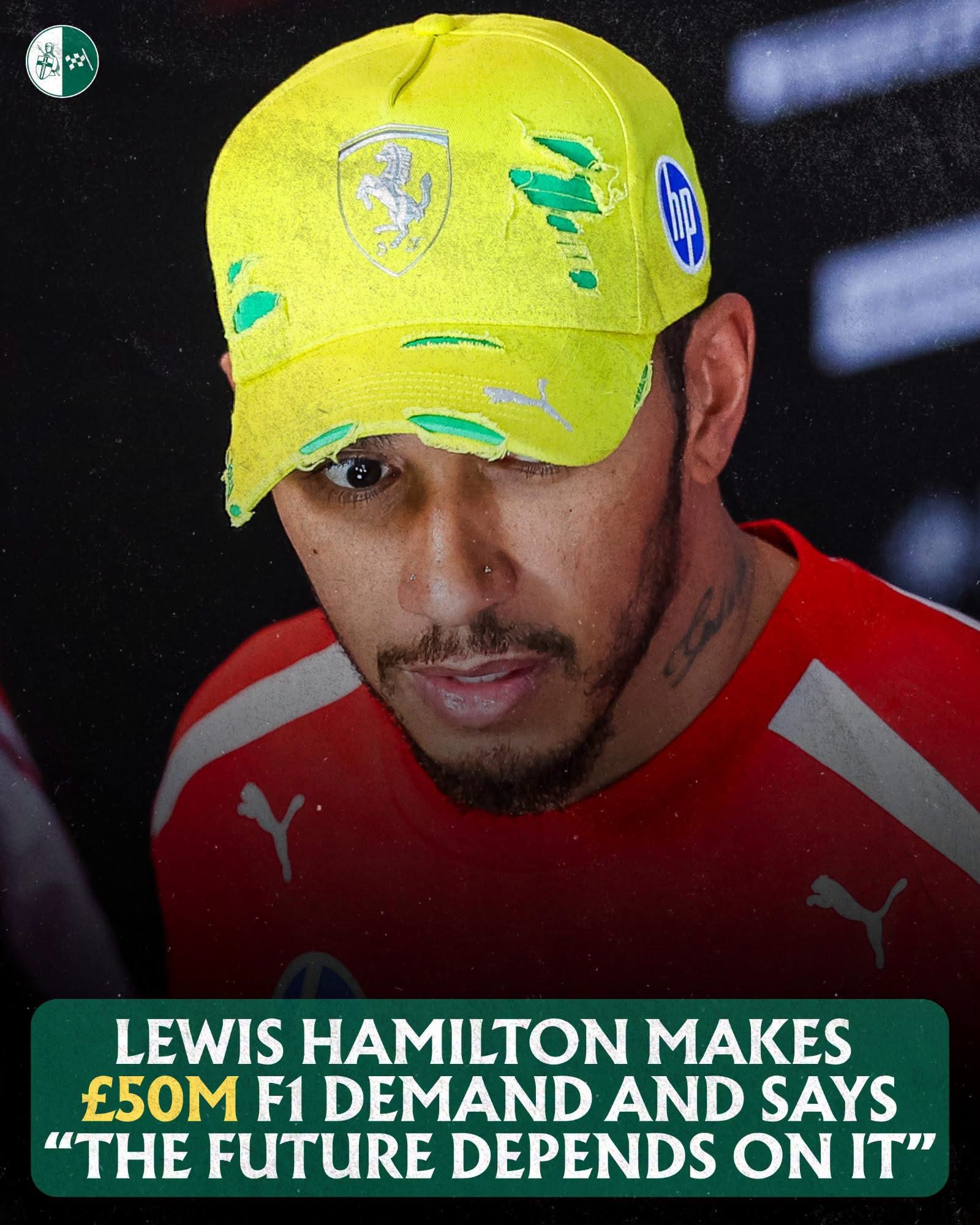
Lewis Hamilton has renewed his call for Formula 1 to do more to create opportunities for people from underrepresented backgrounds, with his Mission 44 foundation urging the sport to commit another £50 million towards improving diversity and inclusion across motorsport.
The seven-time world champion believes Formula 1 has made meaningful progress since the Hamilton Commission published its landmark report in 2021. However, he wants the championship, the FIA and all 11 teams to move beyond existing initiatives and make a much bigger financial commitment to creating lasting opportunities.
The latest proposal places a renewed spotlight on one of Hamilton’s most important off-track campaigns. While his achievements with Mercedes and Ferrari have made him one of the most influential drivers in Formula 1 history, he has consistently argued that the sport must become more accessible to talented individuals who have traditionally faced barriers to entering the industry.
LEWIS HAMILTON CALLS FOR £50 MILLION INVESTMENT
Five years after the Hamilton Commission published its findings, Mission 44 is asking Formula 1’s leadership and teams to invest a further £50 million in programmes designed to support underrepresented talent.
The proposed investment is intended to help people enter motorsport, develop their skills and progress into more senior positions across the industry.
Hamilton’s message is clear: improving diversity cannot depend entirely on individual initiatives or occasional public commitments. It requires sustained investment, long-term planning and opportunities that allow talented people to build successful careers.
The request also places responsibility across the entire Formula 1 ecosystem, rather than treating diversity as an issue that one organisation or team can solve independently.
THE HAMILTON COMMISSION REVEALED A MAJOR PROBLEM IN MOTORSPORT
The latest campaign builds on the work of the Hamilton Commission, which published its ‘Accelerating Change’ report in July 2021.
The investigation examined the barriers preventing Black people from entering and progressing within UK motorsport. One of its findings was particularly significant: at the time, Black people represented less than one per cent of the workforce across the British motorsport industry.
That figure highlighted a serious representation gap in a sport that attracts a global audience and depends on highly skilled professionals working across engineering, technology, management and commercial operations.
The report identified systemic barriers as a major contributing factor, reinforcing Hamilton’s argument that talent alone is not always enough when access to opportunities is unequal.
The Commission was therefore designed to move the conversation beyond representation on the starting grid and examine the wider workforce responsible for making Formula 1 function.
MISSION 44 WANTS OPPORTUNITIES BEYOND THE RACING GRID
One important aspect of Hamilton’s campaign is that it focuses on the entire motorsport industry, not simply the number of drivers from underrepresented backgrounds.
Formula 1 employs thousands of people across engineering, aerodynamics, strategy, software development, mechanics, communications and business operations.
Many young people may have the ability to work in these areas but lack access to the education, experience, professional networks or financial support needed to enter the industry.
Mission 44’s proposed investment is aimed at helping address these challenges by supporting pathways into motorsport and creating opportunities for career development.
This is particularly important because increasing diversity among engineers, mechanics and decision-makers could have a much wider impact than improving representation in a single area of the sport.
WHY HAMILTON BELIEVES FORMULA 1 MUST DO MORE
Hamilton’s influence gives his campaign considerable visibility, but the challenge extends far beyond one driver’s reputation.
Formula 1 has made progress through diversity initiatives, educational programmes and efforts to improve access to motorsport careers. However, the existence of these programmes does not automatically mean that the barriers identified in 2021 have disappeared.
The proposed £50 million commitment would represent an opportunity to turn previous promises into more substantial long-term action.
It would also require cooperation between Formula 1 management, the FIA and individual teams. Each organisation has different responsibilities, but all play a role in determining who gets access to opportunities within the championship.
For Hamilton, the objective is to make sure that talented people are not excluded from motorsport because of their background or circumstances.
WILL F1 ACCEPT THE £50 MILLION CHALLENGE?
The biggest question now is whether Formula 1 and its stakeholders will respond to Mission 44’s request with the level of investment being proposed.
A commitment of this scale would require more than a public statement. The funding would need clear objectives, measurable outcomes and programmes capable of producing lasting improvements across the industry.
There is also an opportunity for the 11 teams to demonstrate that diversity and inclusion are not simply public relations priorities but important parts of motorsport’s future workforce development.
If the proposal receives meaningful support, it could help open new career pathways for people who might otherwise never have considered a future in Formula 1.
Hamilton has already used his position to challenge the sport on this issue. His latest campaign demonstrates that his ambitions extend beyond what happens during a Grand Prix weekend.
For the Ferrari driver, the future of Formula 1 should not only be measured by faster cars, bigger audiences and championship victories, but also by how many talented people are given a genuine opportunity to become part of the sport.