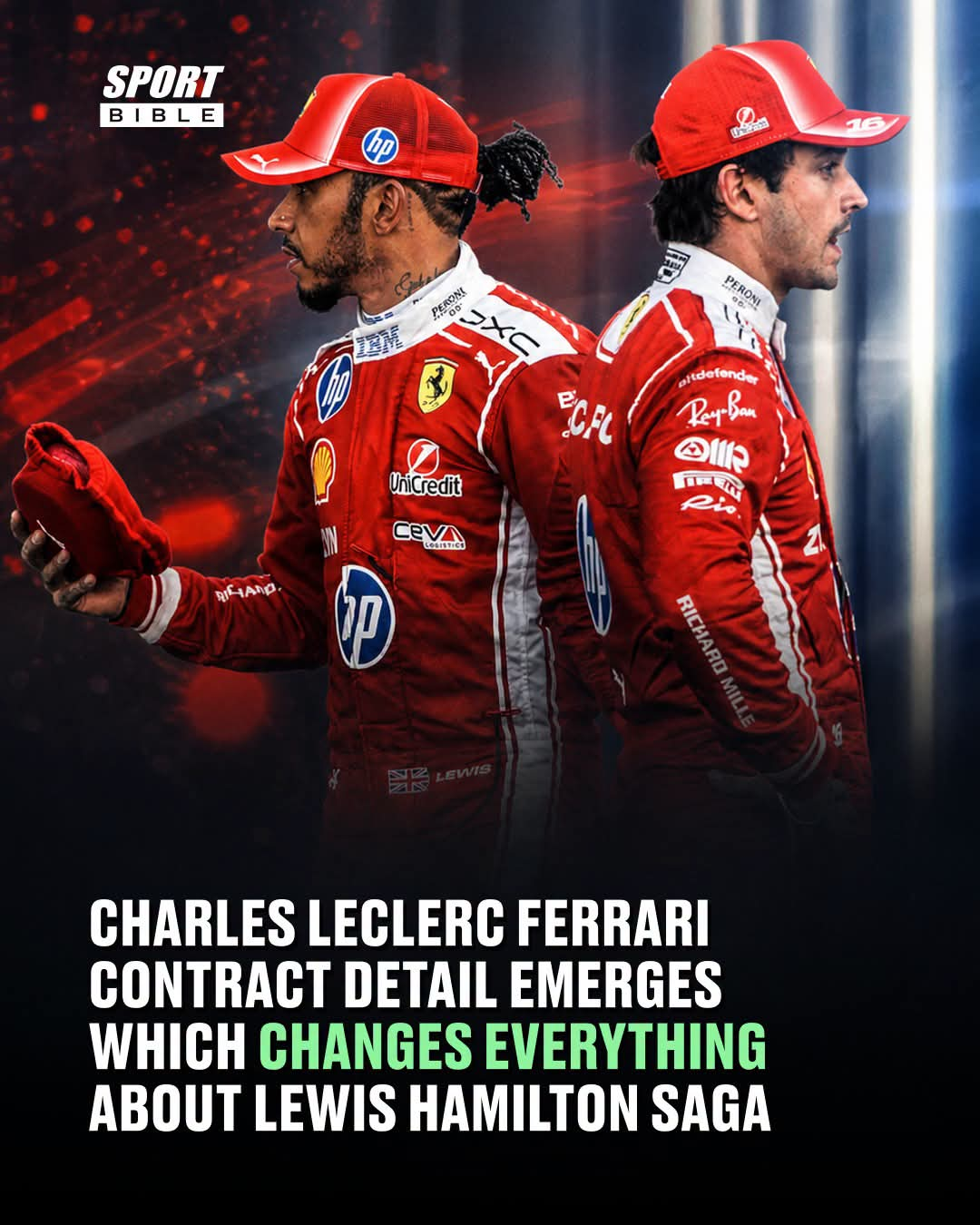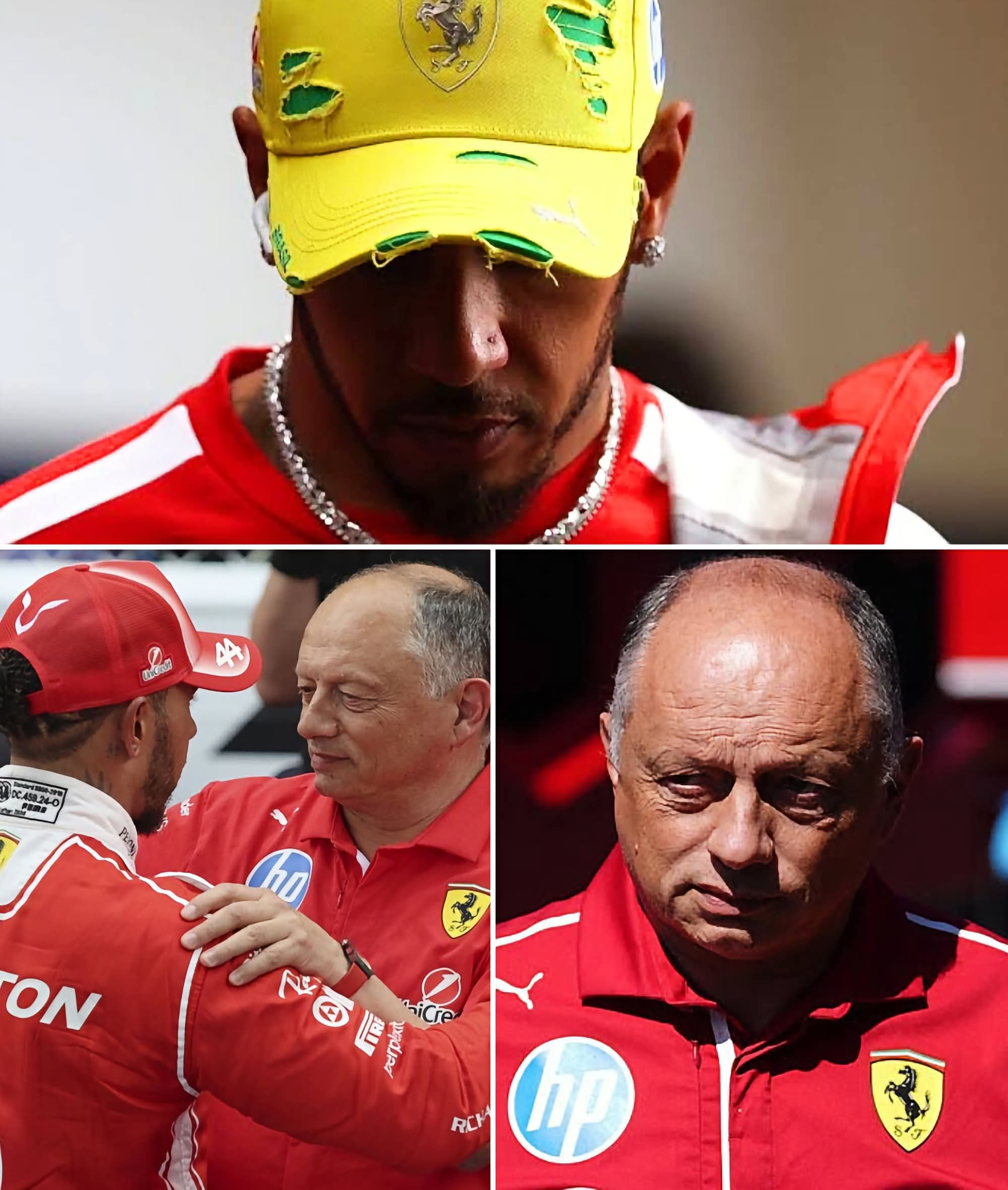
Ferrari’s growing internal crisis has taken another dramatic turn after former Haas team principal Guenther Steiner suggested that Fred Vasseur could eventually take drastic action against Lewis Hamilton and Charles Leclerc if their rivalry continues damaging the team. Following a tense meeting between the two drivers in Brazil, the warning has raised fresh questions about how much longer Ferrari can tolerate conflict between its biggest stars.
The situation is particularly uncomfortable for Hamilton, who joined Ferrari with enormous expectations after leaving Mercedes. Instead of enjoying a smooth transition, the seven-time world champion now finds himself at the centre of a growing dispute involving his teammate, team management and the wider Ferrari organisation.
With both drivers determined to establish themselves as the team’s leading figure, Vasseur faces a difficult challenge: maintaining harmony without weakening the competitive spirit that makes Ferrari capable of fighting at the front.
MEXICO CITY CLASH SPARKED ANOTHER FERRARI CRISIS
The latest tension between Hamilton and Leclerc emerged during the Mexico City Grand Prix, where the Ferrari teammates went wheel-to-wheel during the opening stages of the race.
Their battle at Turns 1 and 4 created a difficult situation for the team. Leclerc eventually emerged ahead, although he received a five-second penalty, while Hamilton lost ground and finished behind Max Verstappen, who claimed victory.
The incident quickly became more than an ordinary racing disagreement. Hamilton reportedly felt that Leclerc had worked against him, while the Monegasque believed the British driver had pushed him off the track during their battle.
Both drivers were unhappy, and their frustration exposed a problem Ferrari can no longer afford to ignore.
When teammates fight aggressively, the consequences can extend beyond lost positions. Ferrari risks damaging its race strategy, compromising valuable championship points and creating an atmosphere in which individual ambitions become more important than collective success.
For a team with Ferrari’s history and expectations, that is an increasingly serious concern.
VASSEUR CALLED BOTH DRIVERS INTO A CRUCIAL MEETING
Following the Mexico incident, Ferrari team principal Fred Vasseur arranged discussions with Hamilton and Leclerc ahead of the Brazilian Grand Prix.
The meeting was intended to address the growing tension and reinforce the team’s expectations regarding how its drivers should compete against each other.
However, the discussions were initially delayed after Leclerc travelled back to Europe for the birth of his daughter. Once he returned, the meeting eventually took place in Sao Paulo.
Vasseur did not reveal everything discussed behind closed doors, but his public comments made the team’s position clear.
He stressed that both drivers must respect each other and, more importantly, respect Ferrari, its employees and everyone working behind the scenes.
His message was significant because it showed that the disagreement had become an organisational concern rather than simply a personal argument between two competitors.
Ferrari cannot allow internal battles to undermine the work of hundreds of people attempting to deliver competitive results every weekend.
STEINER BELIEVES FERRARI COULD EVENTUALLY SEND A DRIVER HOME
Former Haas team principal Guenther Steiner has now delivered one of the strongest warnings yet about the situation.
Speaking on the Red Flag podcast, Steiner acknowledged that having two drivers capable of winning races is a desirable problem for any team principal. However, he also argued that the rivalry could become extremely difficult to manage if neither driver is willing to compromise.
Steiner suggested that Vasseur might eventually have to issue a serious ultimatum, warning both drivers that they could be sent home if they continued putting personal ambitions ahead of Ferrari.
His comments were not an announcement of an actual Ferrari punishment. Rather, they represented his assessment of the kind of drastic response Vasseur might eventually consider if the situation deteriorates.
That distinction matters. There is currently no confirmed indication that Ferrari intends to suspend Hamilton or Leclerc.
Nevertheless, Steiner’s warning illustrates how damaging the situation could become if another major confrontation occurs.
HAMILTON’S FERRARI DREAM IS FACING AN UNEXPECTED TEST
Hamilton’s move to Ferrari was one of the biggest stories in modern Formula 1.
After spending years building his legacy at Mercedes, the British driver arrived in Maranello hoping to add another championship chapter to his remarkable career.
However, joining Ferrari was never going to be a simple transition. The team has its own internal culture, enormous public expectations and a teammate who has spent years establishing himself as its leading driver.
Leclerc is not an ordinary teammate. He is a proven race winner who understands Ferrari’s working environment and has his own ambitions of becoming a world champion.
That creates an unavoidable competitive tension.
Hamilton wants to deliver success with Ferrari, but he also needs to demonstrate that he can compete on equal terms with Leclerc. Meanwhile, Leclerc has little reason to surrender his position simply because a seven-time champion has joined the team.
The challenge is finding a way for both drivers to compete fiercely without turning every close battle into another management crisis.
FERRARI CANNOT AFFORD TO LET THE RIVALRY DAMAGE ITS RESULTS
The biggest danger for Ferrari is not necessarily that Hamilton and Leclerc disagree. Strong teammates will naturally have moments of frustration, especially when both believe they have the pace to win.
The real problem begins when those disagreements affect the team’s performance.
Ferrari needs both drivers working together to develop the car, maximise strategy opportunities and collect as many points as possible. Any unnecessary collision, public accusation or refusal to cooperate could hand an advantage to rival teams.
Mercedes, McLaren and Red Bull would all benefit if Ferrari became distracted by internal politics.
There is also a wider commercial and reputational issue. Ferrari is one of the most recognisable brands in global sport, and repeated public disputes between its drivers can overshadow the team’s engineering progress and competitive ambitions.
Vasseur therefore has to establish clear boundaries. Both drivers must understand that they are free to fight for victories, but the team’s interests cannot become secondary whenever they find themselves battling on track.
WHO WOULD FERRARI SUPPORT IF THE SITUATION GETS WORSE?
One of the most interesting questions surrounding the dispute is whether Ferrari would eventually favour one driver over the other.
Hamilton brings extraordinary experience, global attention and a record of championship success. Leclerc, meanwhile, represents Ferrari’s long-term investment and has a deep understanding of the team’s environment.
Choosing between them would be extremely difficult.
Supporting Hamilton too strongly could create frustration for Leclerc, particularly if he believes his performances have earned him equal treatment. Giving Leclerc preferential treatment could equally damage Hamilton’s confidence and raise questions about the circumstances surrounding his move to Maranello.
The most sensible approach would be to establish transparent racing rules and apply them consistently.
However, if the drivers repeatedly ignore those instructions, Vasseur may eventually have to make a decision that neither competitor welcomes.
Steiner’s suggestion that both could be sent home is an extreme possibility, not an established Ferrari plan. Still, the fact that such a scenario is being discussed demonstrates the seriousness of the situation.
THE BRAZILIAN GP COULD BECOME A TURNING POINT
The meeting in Sao Paulo was an opportunity for Ferrari to reset the relationship between its drivers before another difficult weekend.
Whether that discussion produces lasting change remains uncertain.
Hamilton and Leclerc are both fiercely competitive, and neither is likely to abandon the ambition of becoming Ferrari’s leading driver. That ambition is not necessarily a problem. In fact, Ferrari needs drivers who are hungry for victories.
But competitiveness must come with discipline.
If the pair can respect the team’s instructions and avoid unnecessary confrontation, Ferrari could turn its driver rivalry into a genuine advantage. If the tension continues, however, Vasseur may find himself spending more time managing his drivers than improving the team’s results.
For Hamilton, the priority is proving that his Ferrari project can still deliver the success he came to Maranello to achieve. For Leclerc, it is protecting his position while continuing to demonstrate that he deserves to lead the team.
Ferrari does not need its drivers to become friends. It needs them to become effective teammates.
And if another major clash occurs, the consequences could be far more serious than another uncomfortable meeting behind closed doors.