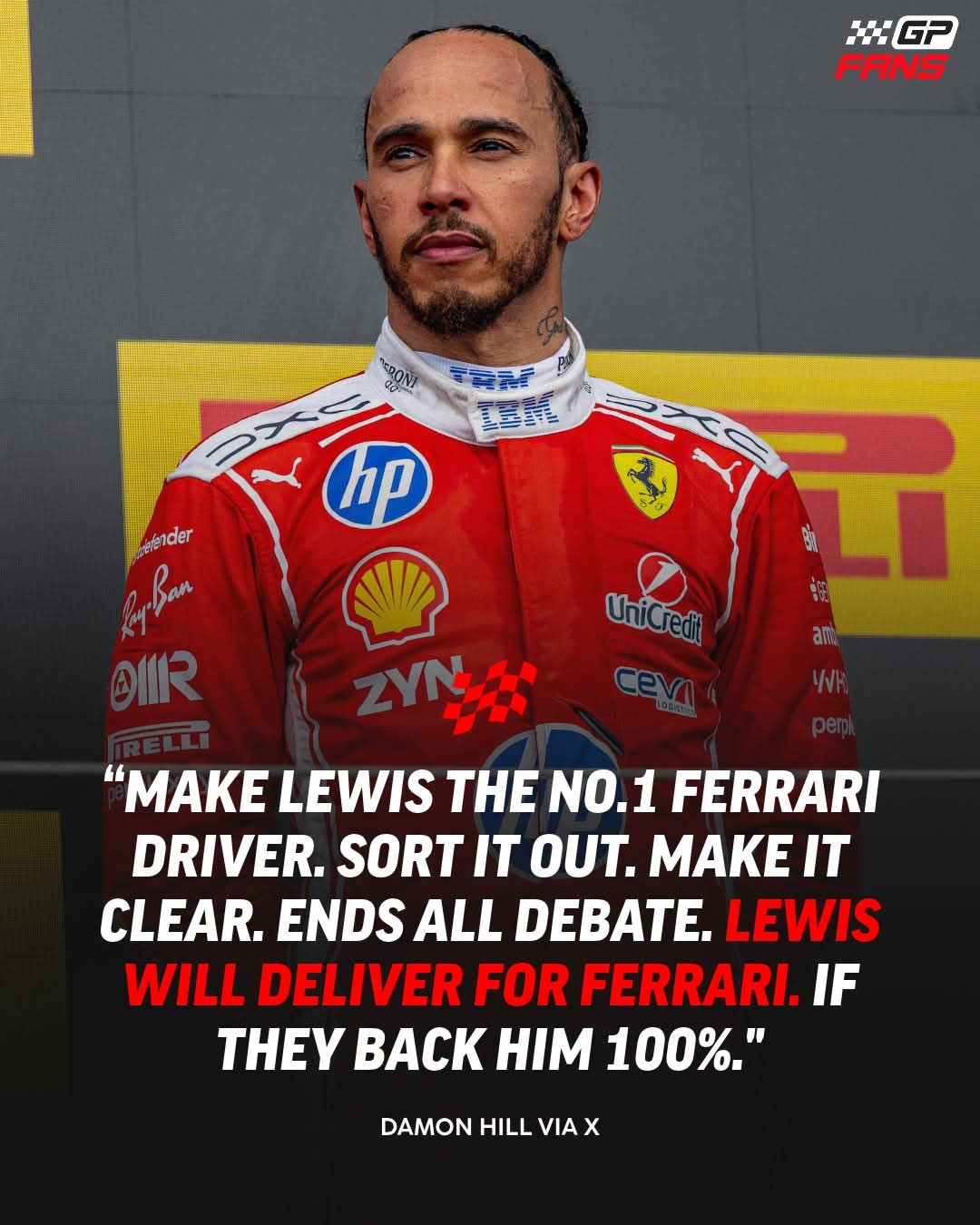
The tension at Ferrari is no longer simmering quietly in the background. After the Mexico City Grand Prix, where Lewis Hamilton and Charles Leclerc clashed on the opening lap and threw away a potential one-two, the question has become unavoidable: Should Ferrari throw its full weight behind Lewis Hamilton?
This is not just another team radio drama. It strikes at the heart of Ferrari’s championship ambitions for 2027, the delicate balance of two elite drivers who both see themselves as leaders, and the legacy of one of the most ambitious driver moves in modern Formula 1 history. Hamilton joined the Scuderia for 2025 with the clear goal of ending Ferrari’s long title drought. Two seasons later, the results are mixed, the internal dynamics are strained, and the clock is ticking.
THE MEXICO FLASHPOINT THAT FORCED THE ISSUE
Hamilton started the Mexico City Grand Prix from pole — his first for Ferrari. What followed was a messy opening-lap battle with Leclerc that sent both cars off track and handed the initiative to Max Verstappen. Ferrari finished with points but left a clear victory on the table. Hamilton did not hide his frustration afterward, suggesting his teammate races him harder than external rivals and making it clear he would not stay silent.
Team principal Fred Vasseur convened a meeting in São Paulo. The message was blunt: Ferrari comes first. Personal battles cannot override the team’s interests when a win is on the table. Vasseur emphasized respect for the brand, the factory workers, and the tifosi. Both drivers were reminded that collective failure is unacceptable.
The incident exposed a structural problem. Ferrari currently fields two drivers who have spent years operating as de facto number ones. Leclerc has been the team’s established star for nearly a decade. Hamilton arrived as a seven-time champion with the expectation of leading the charge. Treating them as equals works when the car is not quite at the front. It becomes toxic the moment genuine victory is within reach.
HAMILTON’S 2026 RESURGENCE AND THE CASE FOR BACKING HIM
Hamilton’s first season in red was difficult. Adaptation issues, unfamiliar processes, and a car that did not suit his style left him without a podium. In 2026 he has bounced back strongly. A memorable win in Barcelona, multiple podiums, consistent points, and a late-season surge have put him third in the drivers’ championship and helped Ferrari secure a solid grip on second in the constructors’ standings.
He has also become more involved in the technical direction of the team, pushing on power unit development, chassis details, and operational changes. Hamilton has publicly stated he believes Ferrari can fight for the championship in 2027 if the remaining weaknesses — particularly engine performance relative to Mercedes and Red Bull — are addressed. That level of investment and long-term focus is rare from a driver in his forties.
Supporting Hamilton more decisively makes strategic sense for several reasons. He still possesses elite racecraft and experience under pressure. His commercial value and global profile remain unmatched. And with a contract running through at least 2027 (with options discussed), the team has a finite window to maximize his contribution before the next generation takes over.
Clear hierarchy has worked for championship-winning teams before. Mercedes built its dynasty around Hamilton with supportive teammates. Red Bull has long prioritized Max Verstappen. Ferrari’s own history shows that ambiguity often leads to lost points and internal friction.
THE RISKS OF FAVORING ONE DRIVER
Fully backing Hamilton is not without danger. Leclerc remains exceptionally quick, especially in qualifying, and is deeply embedded in the team culture after years at Maranello. Publicly demoting him risks alienating a highly motivated driver who still has many peak years ahead and a long-term contract. It could also create the perception that Ferrari is abandoning its homegrown talent for a high-profile outsider.
There is also the question of whether Hamilton’s outspoken style and constant push for change fully mesh with Ferrari’s traditional ways of working. He has admitted that integrating someone with his approach is not easy. Vasseur has acknowledged the team underestimated the scale of the transition. Creating a clear number-one status could amplify those cultural frictions if not managed carefully.
Moreover, pure equality can sometimes extract the maximum from both drivers. McLaren’s recent approach with its dual stars shows that carefully managed rivalry can elevate performance when both feel they have a genuine chance. The difference is that Ferrari is currently operating closer to the front, where every point matters more.
WHAT FULL BACKING WOULD ACTUALLY LOOK LIKE
“Backing Lewis” does not require public humiliation of Leclerc or rigid team orders every weekend. It means establishing clear principles: when a Ferrari is in a winning position, the team’s interest overrides individual ambition. Strategy calls, upgrade priority, and race management should reflect who is better placed to deliver the result that season. Communication needs to be tighter so frustration does not spill into public criticism.
It also means continuing to give Hamilton the engineering support and development input he has been requesting. The remaining races of 2026 are being treated by Hamilton himself as test events for next year’s car. That mindset only works if the team is aligned behind a coherent direction.
THE BIGGER PICTURE FOR FERRARI AND FORMULA 1
This decision matters beyond one team. Ferrari’s ability to convert star power and resources into titles has been questioned for years. Signing Hamilton was a statement of intent. Failing to maximize that partnership would reinforce the narrative that Maranello still struggles with internal coherence when it matters most.
For the sport, a fully committed Hamilton at the front of a competitive Ferrari remains one of the most compelling storylines available. An eighth title for the most successful driver in history, achieved in red, would be historic. Even a strong title challenge would elevate the championship.
Hamilton has made clear he is still fully committed and believes the team can compete at the highest level. The question is whether Ferrari is prepared to make the hard organizational choices that usually accompany championship success.
The Mexico incident and the subsequent meeting were a warning. Teams that refuse to choose often end up with neither driver fully delivering. As Ferrari builds toward 2027, clarity may be more valuable than diplomacy. Backing Lewis Hamilton more decisively is not guaranteed to deliver a title — but continuing with ambiguity almost certainly will not.