In the quiet of São Paulo’s Cemitério do Morumbi, a young man in a blue Senninha T-shirt stood among flowers and simple markers. Andrea Kimi Antonelli, 20 years old and newly crowned Formula 1 world champion, had come back to the grave of the driver who shaped his childhood dreams. This time he arrived not as a promising rookie but as the man who rewrote the record books.
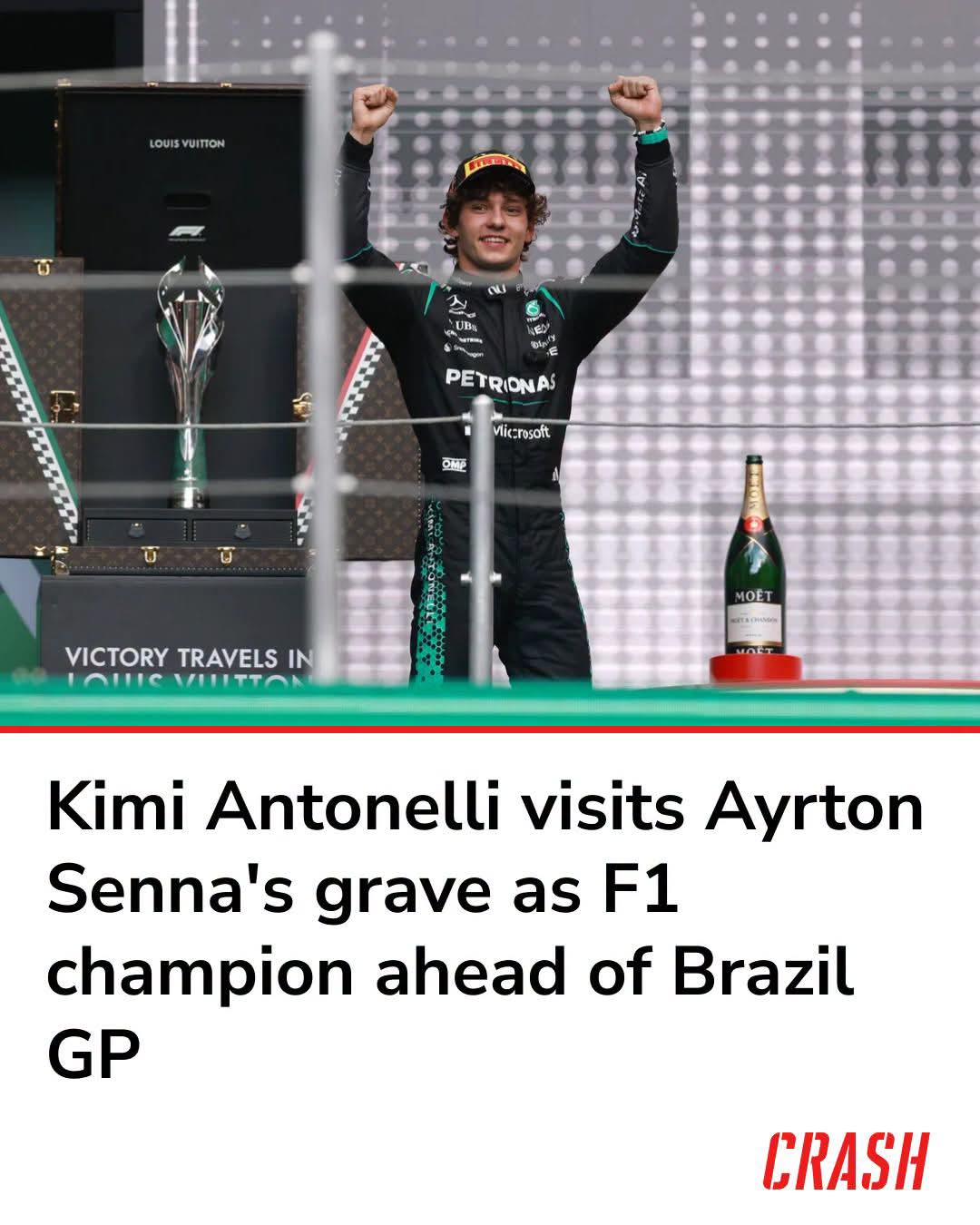
The visit carried a different weight. Last year Antonelli came as a teenager still finding his feet in the sport. This year he came as the youngest champion in Formula 1 history, the first Italian to claim the title since Alberto Ascari in 1953, and a driver who had just sealed the championship with a measured third place in Mexico City while four races still remained on the calendar.
THE MOMENT THAT CHANGED EVERYTHING
Antonelli clinched the 2026 drivers’ title the previous weekend in Mexico. A podium finish was enough. At 20 years and 68 days old he shattered Sebastian Vettel’s long-standing mark as the youngest champion. The radio messages that followed were pure emotion: tears, laughter, the simple repeated words “We did it.” Mercedes celebrated its first drivers’ championship since Lewis Hamilton’s 2020 triumph. For Italian motorsport the moment closed a 73-year gap.
The achievement was no overnight fairy tale. Antonelli’s debut season in 2025 had been turbulent. Questions about experience and readiness followed him. Then came the winter of development, a car that suited his aggressive yet precise style, and a 2026 campaign defined by early dominance, consecutive wins, and the ability to manage pressure when the title became mathematical. Nine victories and seven poles told the story of a driver who matured in public at extraordinary speed.
A CHILDHOOD HERO AND A LIVING CONNECTION
Ayrton Senna has always been more than a poster on Antonelli’s wall. The three-time champion died at Imola in 1994, a circuit close to Antonelli’s hometown of Bologna. The geography alone created an emotional link. Antonelli chose race number 12 in deliberate homage to the number Senna used during key periods of his career. He has already confirmed he will keep 12 next season rather than switch to the champion’s traditional number 1.
In 2025, before his first race at Interlagos, Antonelli visited the grave twice in one day. He described the cemetery as peaceful and quiet. He sat and read a book with his coach. The gesture felt private rather than performative. This year the return carried the added layer of achievement. He arrived with family, met members of the Senna family, and sat in the cockpit of the 1986 Lotus 98T that Senna once raced. “An unforgettable day,” he posted. “It will take some time to sink in, but I will carry these memories with me forever.”
WHY THE TRIBUTE MATTERS BEYOND SENTIMENT
Formula 1 runs on performance, but it is also sustained by mythology. Senna remains one of the sport’s most powerful figures three decades after his death. His intensity, rain mastery, and public commitment to Brazil still resonate. When a new champion publicly anchors himself to that legacy, it does more than create nice photographs. It reminds a global audience that the sport has continuity. Young drivers still look backward even as they push the technical frontier forward.
For Mercedes the symbolism is useful. The team has rebuilt after the dominant hybrid era. A young champion who openly cites Senna’s work ethic and desire to give back offers a narrative that extends beyond pure results. Antonelli has spoken about Senna’s dedication, passion, and empathy. Those qualities are exactly what teams try to cultivate in drivers who must handle media, sponsors, and the mental load of modern Formula 1.
The Brazilian fans feel it too. Interlagos still treats Senna as a national hero. A foreign champion who repeatedly returns to the grave and plans a special helmet design for the race weekend is not simply being polite. He is acknowledging the cultural weight of the place. Antonelli has said the helmet marks 35 years since Senna’s first home victory in Brazil and ranks among the best designs he has created.
THE BROADER IMPACT ON THE SPORT
Antonelli’s title arrives at a moment when Formula 1 continues to expand its global audience. A 20-year-old Italian champion with an authentic connection to one of the sport’s icons creates natural storytelling that travels well. It humanizes the data-heavy, high-tech spectacle. It also raises the bar for the next generation of prospects. If a driver can win a championship in only his second full season, the pressure on future talents intensifies.
Mercedes now sits in a strong position for the constructors’ fight as well. The combination of Antonelli’s speed and George Russell’s consistency gives the team a dual threat. For Ferrari and Red Bull the task is clear: close the gap before the young Italian turns experience into sustained dominance.
WHAT COMES NEXT
This weekend at Interlagos Antonelli will race as champion for the first time. The special helmet will be visible. The Brazilian crowd will respond. Whether he wins or not, the weekend already carries historical resonance. The driver who grew up studying Senna’s onboard footage now stands in the same paddock as champion, having paid respects at the same resting place.
The story is not finished. Antonelli has the car, the talent, and the emotional grounding. Senna’s example of relentless standards remains his reference point. In an era of simulation, data, and commercial demands, that personal thread still matters. Formula 1 has a new youngest champion. He chose to mark the occasion by returning to the grave of the man who first made him want the job. That choice says as much about the future of the sport as any trophy.