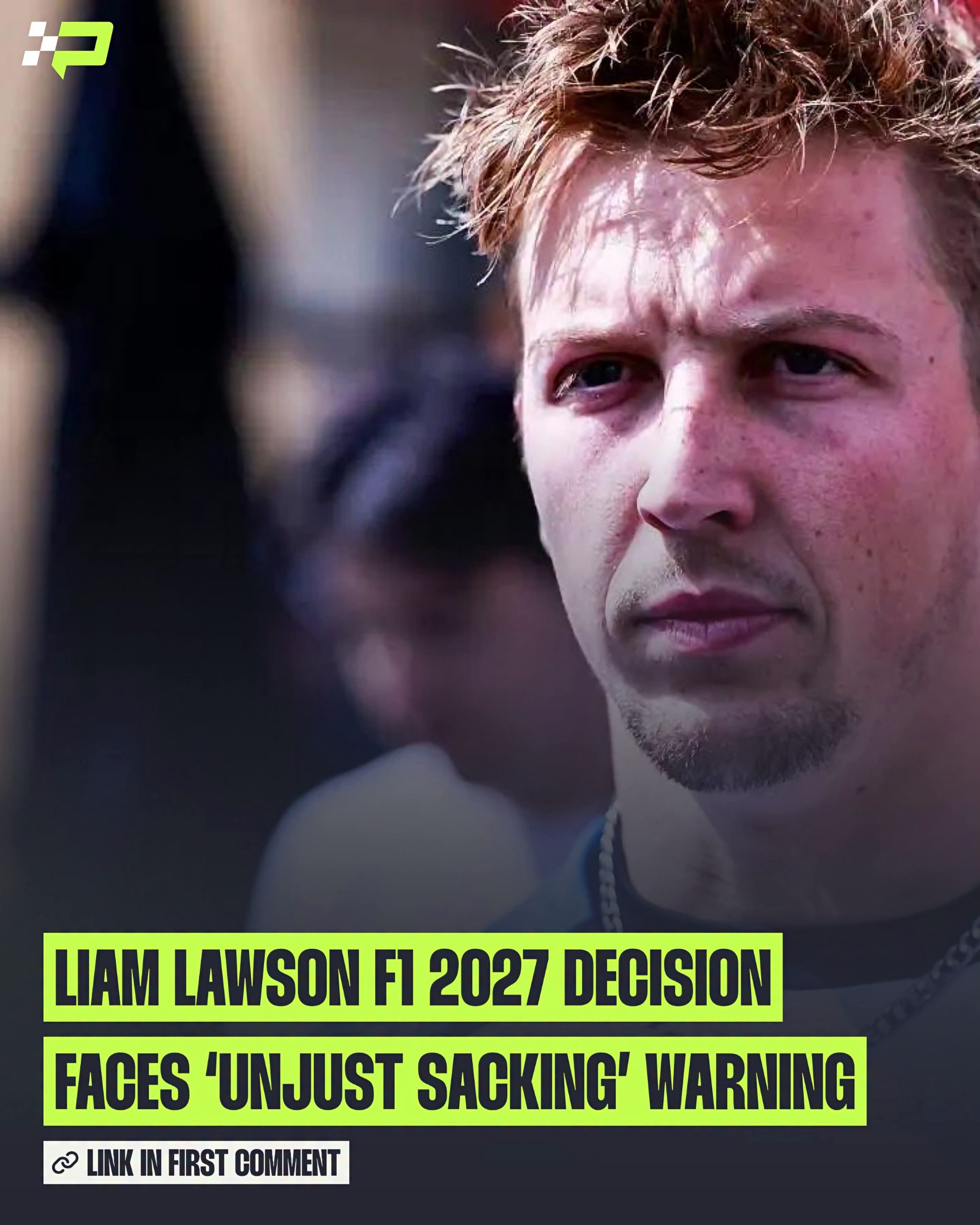
The battle for the remaining seats on the Formula 1 grid is beginning to intensify, but one potential driver decision is already attracting serious criticism from within the sport. With Racing Bulls still weighing up its options for the 2027 season, a former Formula 1 driver has delivered a strong warning that could put additional pressure on Red Bull’s management.
The concern centres on whether a driver who has worked hard to rebuild his reputation and delivered valuable results throughout the 2026 campaign could be sacrificed to make room for a younger prospect. Karun Chandhok believes such a decision would be extremely difficult to justify, describing a possible departure as one of the most unjust sackings Formula 1 could witness.
His comments have added another dimension to an increasingly complicated driver market, where performance, long-term potential and Red Bull’s development philosophy are all competing for attention.
A STRONG 2026 CAMPAIGN COULD STILL NOT GUARANTEE HIS FUTURE
Liam Lawson has put together what is being described as his most impressive Formula 1 campaign so far. According to the latest figures in the report, the New Zealander has collected 77 points and played an important role in helping Racing Bulls establish itself in fifth position in the 2026 Constructors’ Championship.
That contribution is particularly significant because Lawson entered the season carrying considerable pressure following his difficult experience at the senior Red Bull team.
His demotion from Red Bull to Racing Bulls could easily have affected his confidence and momentum. Instead, he has gradually rebuilt his reputation, demonstrated his ability to deliver points and provided the team with a dependable option in the midfield.
However, his performances have not completely silenced speculation about his future.
Red Bull’s interest in developing young talent means Lawson must still compete with emerging prospects, particularly Nikola Tsolov. This creates an uncomfortable situation in which a driver can deliver a strong season and still face uncertainty because the organisation may see greater long-term potential elsewhere.
CHANDHOK WARNS AGAINST WHAT COULD BECOME A CONTROVERSIAL DECISION
Chandhok has made it clear that he would strongly disagree with Racing Bulls releasing Lawson after his performances this season.
The former Formula 1 driver believes Lawson deserves considerable credit for recovering from the disappointment of losing his Red Bull seat and subsequently delivering competitive performances.
His argument is not simply that Lawson has scored points. It is that the New Zealander has demonstrated resilience under difficult circumstances, something that should count when a team evaluates its drivers.
Chandhok also questioned whether Red Bull’s junior team should continue operating exclusively as a stepping stone for drivers hoping to reach the senior outfit.
Racing Bulls has developed its own identity, commercial relationships and competitive ambitions. While its connection to Red Bull remains central to its structure, the team also needs drivers capable of delivering results and helping it progress in the Constructors’ Championship.
That distinction could become increasingly important as the organisation considers its 2027 lineup.
If Racing Bulls is serious about strengthening its midfield position, replacing an established driver with an inexperienced prospect would need to be justified by more than potential alone.
NIKOLA TSOLOV’S ARRIVAL COULD CHANGE THE ENTIRE DRIVER MARKET
Nikola Tsolov is emerging as one of the important names in Red Bull’s long-term planning.
The Bulgarian youngster is involved in the Formula 2 championship battle, and his performances have placed him firmly in discussions about a possible Formula 1 opportunity.
Red Bull has a history of promoting young drivers, sometimes making aggressive decisions when it believes a prospect has the potential to become a future championship contender.
That philosophy has produced successful stories, but it has also created difficult situations for drivers who find themselves competing for limited opportunities.
Tsolov’s development is therefore a major consideration for Racing Bulls. The team must decide whether he is ready for a full-time Formula 1 seat in 2027 or whether another season of preparation would be more beneficial.
A promotion could accelerate his development, but it would also expose him to the pressure of competing against experienced drivers in a demanding midfield environment.
The question is whether Racing Bulls needs to make that gamble immediately.
JAMIE CHADWICK SUGGESTS RED BULL HAS ANOTHER OPTION
Former W Series champion Jamie Chadwick offered a different perspective, suggesting that Red Bull could potentially continue developing Tsolov without immediately removing Lawson.
She pointed to the possibility of placing the Bulgarian in another racing category while retaining him within the organisation’s development programme.
Super Formula was mentioned as one possible destination, while a reserve-driver role could also allow him to remain connected to the Formula 1 operation.
Chadwick also referenced Oscar Piastri as an example of a driver who spent time away from a full-time Formula 1 seat before eventually making a major impact on the grid.
Piastri’s development demonstrates that a young driver’s career does not necessarily need to be accelerated through an immediate promotion.
For Tsolov, additional experience could provide the preparation required to enter Formula 1 with greater confidence and maturity.
However, Red Bull must also consider whether delaying his promotion could create complications for his development or allow another team to become interested in his services.
The organisation has to balance protecting a promising young driver with making the best possible decision for its current team.
KIMI ANTONELLI’S SUCCESS COULD INFLUENCE RED BULL’S THINKING
One of the arguments surrounding the promotion of young drivers is that Formula 1 teams sometimes need to take calculated risks.
Mercedes demonstrated that approach by promoting Kimi Antonelli into a highly demanding environment following Lewis Hamilton’s departure. The decision attracted enormous attention because Antonelli was still extremely young and had limited experience at the highest level.
However, his success in the 2026 championship has demonstrated how rewarding an early promotion can become when a team identifies the right talent and provides the necessary support.
That example could encourage Red Bull to consider a similar approach with Tsolov.
Nevertheless, Antonelli’s success should not automatically become a blueprint for every young driver. Every prospect develops differently, and the circumstances surrounding a promotion can determine whether it becomes a breakthrough or a difficult setback.
Red Bull must establish whether Tsolov is genuinely ready to compete at Formula 1 level rather than simply assuming that another young-driver gamble will produce the same outcome.
The difference between identifying potential and proving readiness is enormous.
WHY RACING BULLS CANNOT AFFORD TO IGNORE ITS OWN COMPETITIVE AMBITIONS
Another important aspect of this situation is the changing identity of Racing Bulls.
The team may have originally been viewed primarily as a development platform for Red Bull’s future stars, but its competitive ambitions have become increasingly important.
Finishing fifth in the Constructors’ Championship would represent a significant achievement, particularly in a midfield environment where every point can influence financial rewards, sponsorship opportunities and the team’s standing within Formula 1.
A driver lineup should therefore be judged on its ability to deliver results as well as its potential to produce a future Red Bull star.
Lawson’s 77-point contribution gives Racing Bulls a strong reason to consider continuity. Replacing him would mean introducing uncertainty into a team that has benefited from his performances.
That does not mean the organisation should ignore Tsolov’s potential. It means the decision should be based on a clear assessment of what gives Racing Bulls the strongest opportunity to improve.
There is also a wider message for the team’s other drivers. If strong performances are not enough to secure a future, confidence in the organisation’s long-term direction could become difficult to maintain.
RED BULL FACES A DECISION THAT COULD DEFINE ITS 2027 STRATEGY
The situation is bigger than deciding which two drivers will occupy the Racing Bulls seats.
Red Bull must determine how it wants its development system to operate in the coming years. Does it prioritise immediate competitiveness, or does it continue taking risks on younger drivers in the hope of discovering another generational talent?
Both approaches have advantages, but getting the balance wrong could create unnecessary problems.
Keeping Lawson would reward a driver who has recovered from a difficult period and delivered valuable results. Promoting Tsolov could give the organisation an opportunity to accelerate the development of a promising prospect.
There is also the possibility of finding another competitive arrangement that allows Tsolov to gain experience without immediately forcing Lawson out.
For now, no final 2027 decision has been confirmed in the report, and speculation should not be mistaken for an official announcement.
However, Chandhok’s intervention has made the debate more interesting because it challenges Red Bull to explain what more a driver must do to earn his place.
THE BIG QUESTION: SHOULD RESULTS MATTER MORE THAN POTENTIAL?
Formula 1 is a ruthless sport, and teams are not obligated to retain drivers simply because they have performed well. Every organisation must consider its financial position, development strategy and long-term ambitions.
But there is a difference between making a difficult sporting decision and creating the impression that results are secondary to a team’s desire to promote its latest prospect.
Lawson has experienced the disappointment of losing his senior Red Bull opportunity. His subsequent performances at Racing Bulls have given him a chance to rebuild his reputation, and another unexpected departure could raise uncomfortable questions about the stability of Red Bull’s driver programme.
Tsolov deserves an opportunity to demonstrate his potential, but that does not automatically mean Lawson should lose his seat.
If Racing Bulls ultimately chooses the Bulgarian, the organisation will need a convincing sporting explanation for why that decision offers a better future than retaining its current driver.
For now, the 2027 lineup remains undecided. But one thing is becoming increasingly clear: this is no longer just a battle between an established driver and a rising youngster. It is a test of whether Red Bull’s development philosophy can balance future potential with the value of proven performance.