The Monaco Grand Prix has always been a paradox. It is the jewel in the Formula 1 crown—a historic, high-glamour spectacle—yet, in terms of pure racing, it remains an uncompromising, claustrophobic nightmare for drivers.
As the 2026 season arrives at the Circuit de Monaco, a familiar tension has resurfaced, amplified by a significant shift in the grid composition. With the field expanded to 22 cars for the first time in a decade, the already frantic opening session of qualifying (Q1) is under the microscope. Are we witnessing a genuine safety hazard, or is this just the price of doing business on the world’s most iconic street circuit?
THE MATHEMATICS OF MAYHEM
To understand the frustration, one must look at the geometry of the track. Monaco is just 3.3 kilometers long. When you cram 22 cars onto a track that is notoriously narrow, with very few places to safely let faster traffic pass, the delta between a “flying” lap and a “cool-down” lap becomes a massive safety liability.
Ferrari’s Charles Leclerc, among others, has been vocal about the difficulty. When cars are separated by only a few seconds on a track this short, the “dirty air” and the physical proximity make it nearly impossible to find clean track space. In previous seasons, 20 cars already strained the system; two additional cars may seem like a small number, but in the context of a 70-second lap, it increases the density of traffic exponentially.
WHY THE CALLS FOR “SPLIT QUALIFYING” ARE GROWING
The immediate solution proposed by many—including figures within the Grand Prix Drivers Association (GPDA)—is to adopt a split-qualifying format. Similar to the system used in Formula 2 and Formula 3, this would divide the field into two groups, effectively halving the traffic during the crucial elimination sessions.
However, the opposition to this is as strong as the support for it. Drivers like Lando Norris have pointed out the inherent unfairness in splitting the groups. Track evolution in Monaco is extreme; the difference in grip levels between the first group and the second could be the difference between making it into Q2 or being eliminated prematurely. In a sport governed by millisecond margins, “luck of the draw” is often seen as an affront to sporting integrity.
MORE THAN JUST A TRAFFIC JAM: THE IMPACT ON TEAMS
The impact of this grid congestion extends far beyond safety concerns; it directly influences team strategy. Engineers are now forced to factor in “traffic management” as a primary variable in their qualifying simulation.
RADIO DEPENDENCY: The burden on race engineers to act as real-time traffic controllers has never been higher. A single miscommunication or a delayed radio call can ruin a driver’s weekend, leading to grid penalties for impeding.
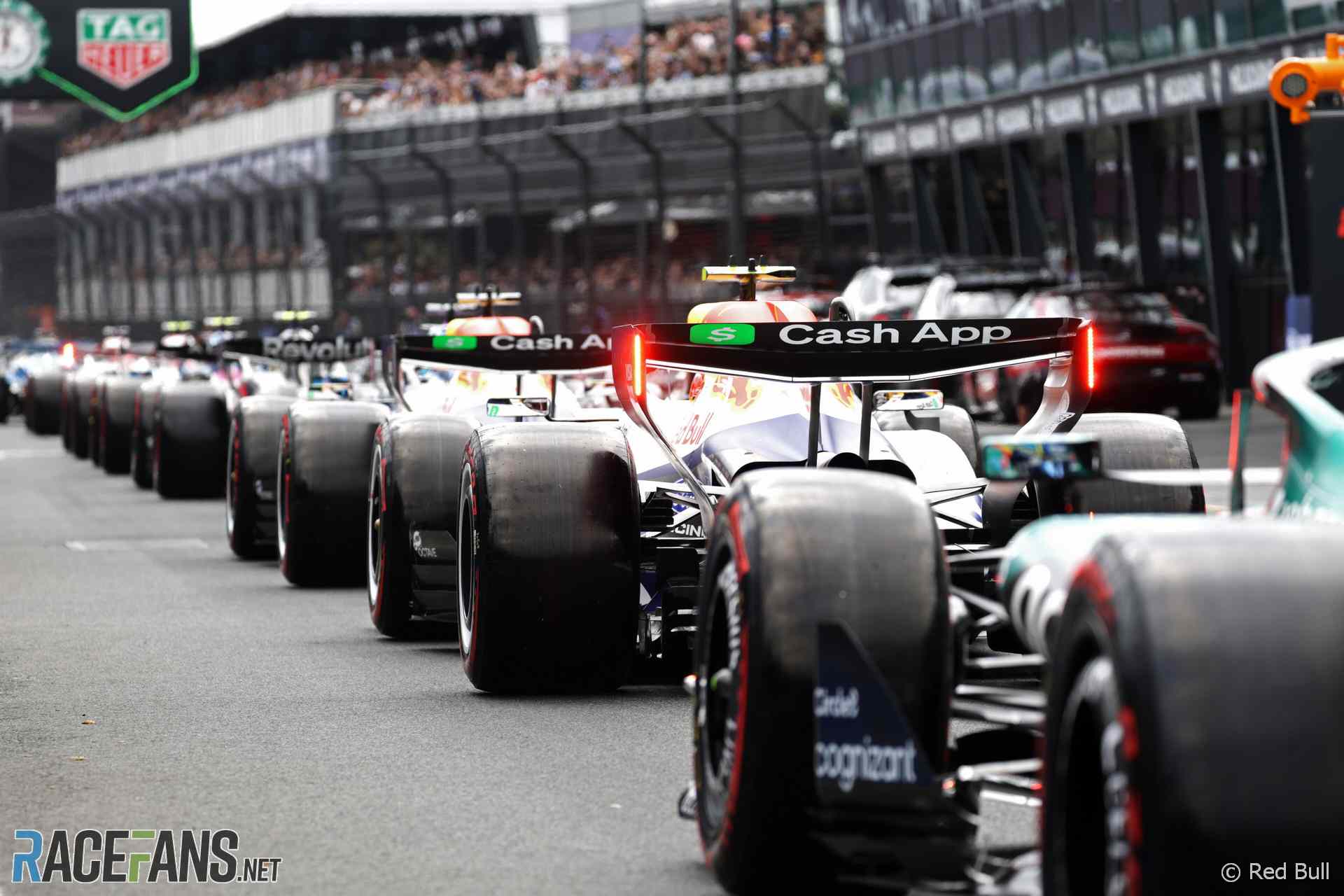
THE “PIT LANE” FACTOR: Expect to see even more gamesmanship in the pit lane, with teams holding cars until the last possible second to avoid the “train” of traffic. This creates its own set of risks, as cars rushing out of the pit box into the fast lane can create dangerous near-misses.
IS THE FEAR JUSTIFIED?
There is a segment of the paddock, and indeed the fanbase, that views these concerns as overblown. After all, F1 has navigated 22-car (and even 24-car) grids at Monaco in the past without catastrophe.
The argument from the “old guard” is simple: this is the challenge of Monaco. Navigating traffic, managing tires, and finding space is part of the legendary skill set required to master the Principality. If a driver cannot manage their space, they argue, it is a skill issue, not a regulatory one.
PREDICTIONS: THE Q1 CLUTTER
As we head into the qualifying session, expect chaos in Q1. The most likely scenario isn’t a total gridlock, but a highly fragmented session where the top teams play a dangerous game of cat-and-mouse. We will likely see:
Increased Impedings: Race Control will be under immense pressure to hand out penalties, and stewards will have their hands full with review cases post-session.
Strategic Under-cutting: Teams will gamble on running at unconventional times to avoid the “pack,” which may result in some surprise eliminations from the top teams.
The “Mirrors and Radio” Test: Ultimately, the outcome will come down to how well the drivers communicate. Those who can navigate the traffic and keep their cool under pressure will have a distinct advantage in starting position—the most valuable currency in Monaco.
While the expansion of the field adds to the spectacle of the 2026 season, Monaco remains a brutal reminder that F1 is not just about raw speed. It is about spatial awareness, communication, and, above all, the ability to survive the track itself. As the lights go out for qualifying, all eyes will be on the narrow streets to see if the 22-car field can coexist without turning the afternoon into a logistical disaster.