In the high-stakes world of Formula 1, driver market decisions often arrive with cold efficiency. Contracts end, seats disappear, and the paddock moves on. Esteban Ocon found himself on the wrong side of that reality when Haas confirmed he would leave the team at the end of the 2026 season, with Ferrari junior Rafael Camara lined up as his replacement.
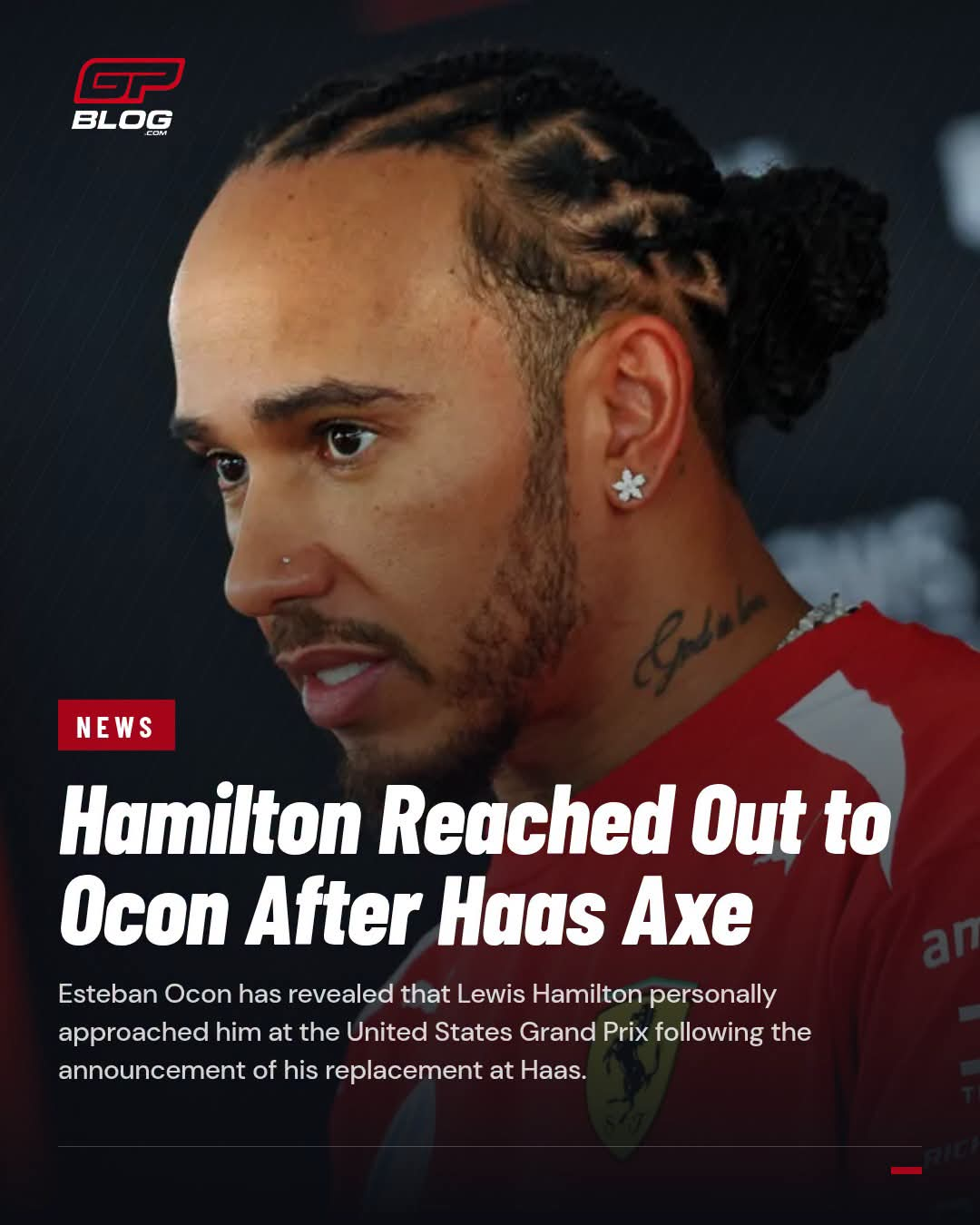
What stood out was not just the announcement itself, but who chose to check in. Lewis Hamilton made a deliberate point of seeking Ocon out during the United States Grand Prix weekend in Austin—the first race after the replacement news became public. Ocon has now revealed what they discussed ahead of the Mexican Grand Prix, offering a rare glimpse into the quieter, more human side of the grid.
**WHAT OCON SAID ABOUT THE HAMILTON CONVERSATION**
Speaking to media in Mexico, Ocon confirmed the interaction. “Yeah, Lewis came to me actually in Austin. We chatted a little bit about the situation and how things went.” He described the gesture as “nice,” especially given the limited contact he received after the news broke.
Earlier, Ocon had noted that only Lance Stroll reached out in the immediate aftermath of Haas’s decision. Hamilton’s approach in Austin stood out for its intentionality. The seven-time champion did not wait for a chance encounter in the paddock corridor. He sought Ocon out.
In a sport where egos and rivalries often dominate headlines, small acts of solidarity carry weight. Hamilton, now racing for Ferrari, has been through his own share of high-profile moves and public scrutiny. Reaching across team lines to a driver facing an uncertain future reflected experience and empathy that younger drivers or those still fighting for seats might not yet prioritize.
**THE CONTEXT BEHIND OCON’S HAAS EXIT**
Ocon joined Haas for the 2025 season after leaving Alpine. His time with the American team produced solid but not spectacular results. He extracted what he could from a car that was rarely among the strongest midfield options, and he has been clear that he believes performance was not the primary reason for his departure.
Haas opted for change. Camara, a strong Formula 2 contender and Ferrari academy driver, represents a longer-term investment aligned with the team’s engine supplier and junior pathway. Oliver Bearman is expected to remain, creating an all-Ferrari-linked lineup for 2027. Team principal Ayao Komatsu has spoken of the need for consistency and the realities of developing a car under new regulations.
Ocon has handled the situation with professionalism. He has continued to push the Haas package hard in the remaining races and has repeatedly stated that this is not the end of his Formula 1 career. “I am still motivated. I am still hungry,” he said when the split was first confirmed. He has also been measured about Camara, acknowledging that the Brazilian deserves his shot while insisting he himself still belongs on the grid.
**WHY HAMILTON’S GESTURE MATTERS BEYOND ONE CONVERSATION**
Formula 1 is a small community. Drivers spend more time together than most outsiders realize—traveling, briefing, waiting through rain delays, and navigating the same media circus week after week. When a seat disappears, the silence from peers can feel louder than any public statement.
Hamilton’s decision to initiate contact carries symbolic value. It signals that even at the top of the sport, respect for a fellow professional’s situation remains possible. For Ocon, hearing from a driver of Hamilton’s stature likely provided a measure of validation at a moment when external validation is scarce.
The broader impact touches several areas. For athletes, it underscores the mental side of career transitions. Losing a seat is not just a contractual matter; it is a public one that affects confidence, negotiations, and public perception. For teams, moments like this humanize the grid and remind fans that these are people first. For the sport itself, such gestures help counter the narrative that F1 has become purely transactional.
Lance Stroll’s earlier message and Hamilton’s later conversation also highlight different forms of support. Stroll, another driver who has faced questions about his place on the grid at times, reached out promptly. Hamilton waited until the first race after the formal replacement announcement and chose a face-to-face discussion. Both approaches have value.
**WHAT THIS MEANS FOR OCON’S FUTURE AND THE WIDER DRIVER MARKET**
Ocon’s options for 2027 remain limited. Most seats are already locked in. Racing Bulls faces its own selection process among young drivers, and other teams have largely finalized their lineups. A reserve role appears the most realistic near-term path if a full-time seat does not materialize, something Ocon has said he would accept as a temporary measure while he works toward a return.
His history shows resilience. He has been left without a drive before and found his way back. That experience, combined with a race win on his résumé and a reputation for maximizing imperfect machinery, keeps him relevant. The remaining races of 2026 give him a platform to demonstrate continued value.
For Haas, the switch to Camara is a calculated bet on youth and manufacturer alignment. Whether it strengthens the team’s competitiveness will depend on development progress and how quickly the new driver adapts. For Ferrari, placing another academy driver in a customer team extends its influence across the grid.
The driver market in this era of Formula 1 rewards youth pipelines and commercial considerations as much as pure results. Veterans like Ocon must navigate that reality carefully. Hamilton’s outreach does not change the commercial equations, but it does reinforce that the paddock still contains drivers willing to acknowledge the human cost of those decisions.
**A SMALL MOMENT THAT REVEALS LARGER TRUTHS**
In the end, Hamilton seeking out Ocon in Austin was not a dramatic intervention. It was a quiet conversation about “the situation and how things went.” Yet in a sport that thrives on speed, strategy, and public narratives, those private moments often say more about character than any podium interview.
Ocon heads into the final stretch of the season still racing, still extracting what he can from the car, and still insisting he belongs. Hamilton’s gesture serves as a reminder that even when the business of Formula 1 moves on, some drivers choose to pause and check that their colleagues are okay.
That choice matters—for Ocon, for the image of the sport, and for anyone who understands that careers in this paddock are rarely as simple as the headlines suggest.