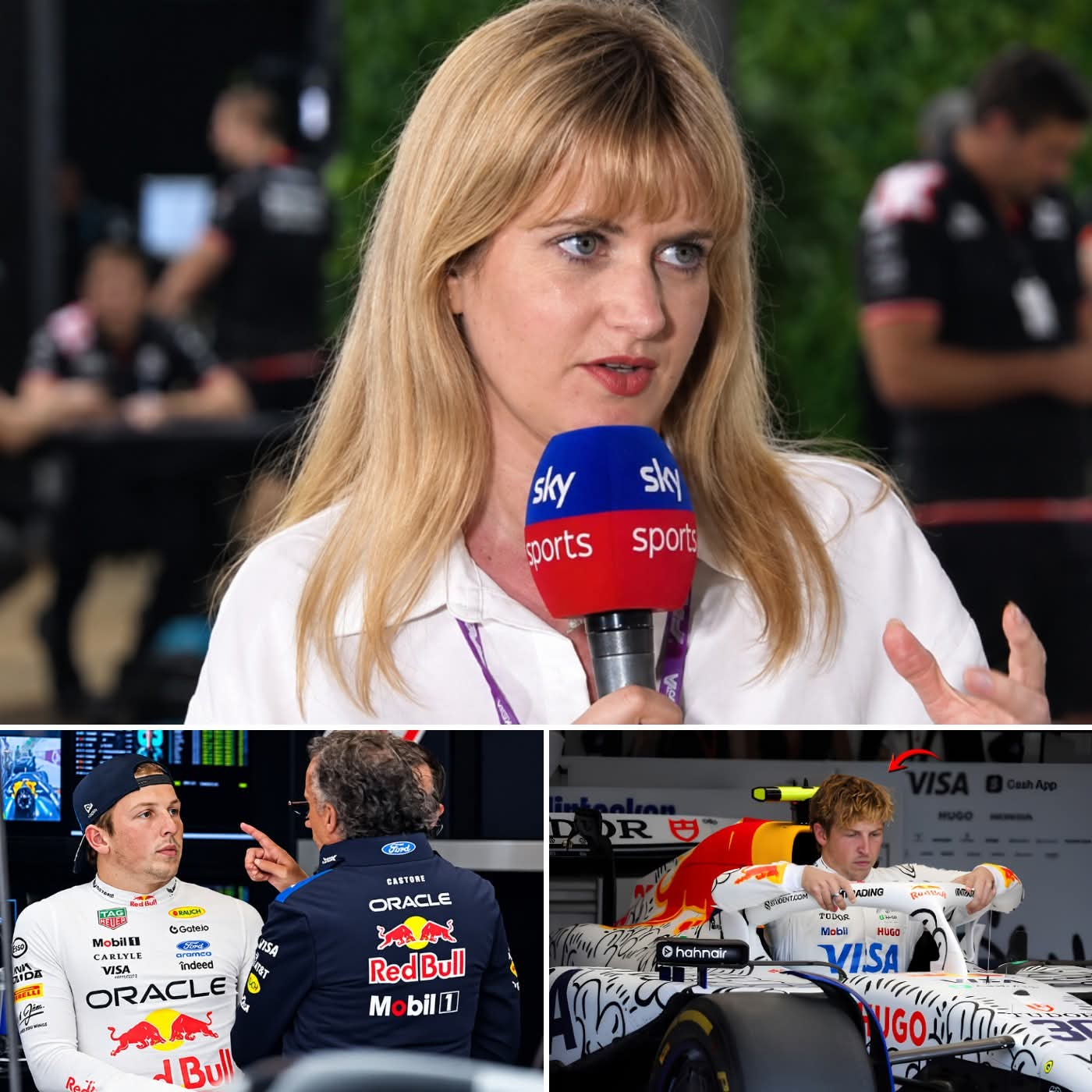
Bernie Collins has cut through the noise surrounding Liam Lawson’s uncertain Formula 1 future with a blunt assessment that captures the reality facing the New Zealander. Red Bull has not yet delivered a definitive answer on the Racing Bulls lineup for 2027, but the calculations involved are clear, and Lawson’s fight for a full-time race seat remains very much alive.
The former strategist turned Sky F1 analyst highlighted the pressures Lawson faces as the team weighs three strong candidates for two seats. That three-into-two dilemma defines the current situation at Visa Cash App Racing Bulls. Current drivers Lawson and Arvid Lindblad sit alongside highly rated Red Bull junior Nikola Tsolov, who has emerged as a serious Formula 2 title contender. Team principal Alan Permane has indicated a decision is coming in the coming weeks, leaving the paddock to speculate while the drivers continue delivering on track.
WHY THIS DECISION MATTERS FAR BEYOND ONE SEAT
This is more than a routine contract negotiation. It is the first major driver call for Racing Bulls in the post-Helmut Marko era. With Marko no longer overseeing the junior programme in the same way, the decision rests with a broader group that includes Red Bull GmbH figures such as Oliver Mintzlaff, Racing Bulls CEO Peter Bayer, team principal Alan Permane, and Red Bull team principal Laurent Mekies. The outcome will signal whether Red Bull continues its traditional aggressive promotion of the next young talent or prioritises proven performance and midfield stability.
Lawson has been one of the standout midfield performers in 2026. He has consistently extracted strong results from the Racing Bulls package, helping the team challenge for its best-ever constructors’ finish. His points haul sits well clear of many more established names outside the top four teams, and he delivered when called up as a temporary replacement for the injured Isack Hadjar at the senior Red Bull team earlier in the season. That cameo, which included solid point-scoring finishes, served as a reminder of his adaptability under pressure.
Lindblad has impressed as a rookie with flashes of genuine speed, particularly in qualifying. Tsolov, meanwhile, has shown the raw pace and race craft that Red Bull has long prized in its academy graduates. Promoting him would continue the pipeline that produced drivers such as Max Verstappen, but it would also mean sidelining a driver who has outperformed expectations this year.
THE CALCULATIONS BEHIND THE BATTLE
Collins’ observation that she “knows what Lawson is up against” points to the layered nature of these decisions. Pure performance data favours continuity. Lawson has been the more consistent of the two current Racing Bulls drivers across qualifying and race craft. Keeping him alongside Lindblad rewards results, maintains a productive partnership, and gives the younger driver another year to develop under the guidance of a more experienced teammate. Tsolov could then take a reserve role, gain simulator and test mileage, and potentially race in Super Formula to stay sharp — a pathway Red Bull has used before.
Yet Red Bull’s history shows it rarely operates on pure short-term points. The organisation has repeatedly prioritised long-term potential, even when it means difficult calls on drivers who have delivered. Lawson already experienced that reality when he was promoted to partner Verstappen at the start of 2025 only to be demoted after two races. His strong 2026 campaign represents a clear recovery and a statement of resilience. Dropping him now would send a message that even solid midfield leadership offers limited security within the Red Bull system.
For Lawson personally, the stakes are high. At this stage of his career he needs a settled platform to continue building his reputation beyond the Red Bull family. A confirmed seat for 2027 keeps him on the grid and visible to other teams looking ahead to 2028. Losing it would force him to explore limited options elsewhere or accept a reserve role that rarely accelerates a career.
IMPACT ON TEAMS, THE MIDFIELD, AND THE BROADER GRID
A retained Lawson-Lindblad pairing would give Racing Bulls continuity as it aims to cement fifth in the constructors’ championship — a significant achievement for a team that has spent years in the lower midfield. Stability allows better development of the car and clearer internal benchmarking. Promoting Tsolov would inject fresh potential but introduce the inevitable learning curve of a rookie season, potentially costing points in a tightly contested battle for position.
The decision also ripples outward. Other teams watch Red Bull’s choices closely when assessing available talent for future vacancies. Lawson’s market value rises with every strong weekend. Tsolov’s trajectory will influence how aggressively other junior programmes develop their own prospects. For the championship itself, the midfield remains one of the most competitive and unpredictable areas of the grid. Any disruption at Racing Bulls could alter the points distribution among several teams fighting for the same positions.
PREDICTIONS AND UNIQUE INSIGHTS
The most logical outcome remains Lawson and Lindblad retained for 2027, with Tsolov integrated as reserve and prepared for a later promotion. Continuity has clear sporting advantages, and the current pairing has already delivered results. Red Bull’s new decision-making structure may also favour a more measured approach than the rapid promotions of previous years.
That said, nothing is guaranteed until the announcement lands. Lawson must keep performing at the same high level through the final races. Any dip could reopen the door for Tsolov. Conversely, continued strong results make it increasingly difficult for the organisation to justify a change.
Lawson’s situation illustrates a broader truth about modern Formula 1. Talent and results are necessary but not always sufficient. Timing, internal politics, long-term planning, and the specific needs of a multi-team organisation all play roles. The New Zealander has already shown he can recover from setbacks and extract maximum performance from the car available to him. That resilience may ultimately prove decisive.
Red Bull has not given its answer yet. When it does, the choice will reveal as much about the organisation’s priorities as it does about the three drivers involved. For now, Lawson remains firmly in the fight — and the quality of that fight is a credit to everyone involved.