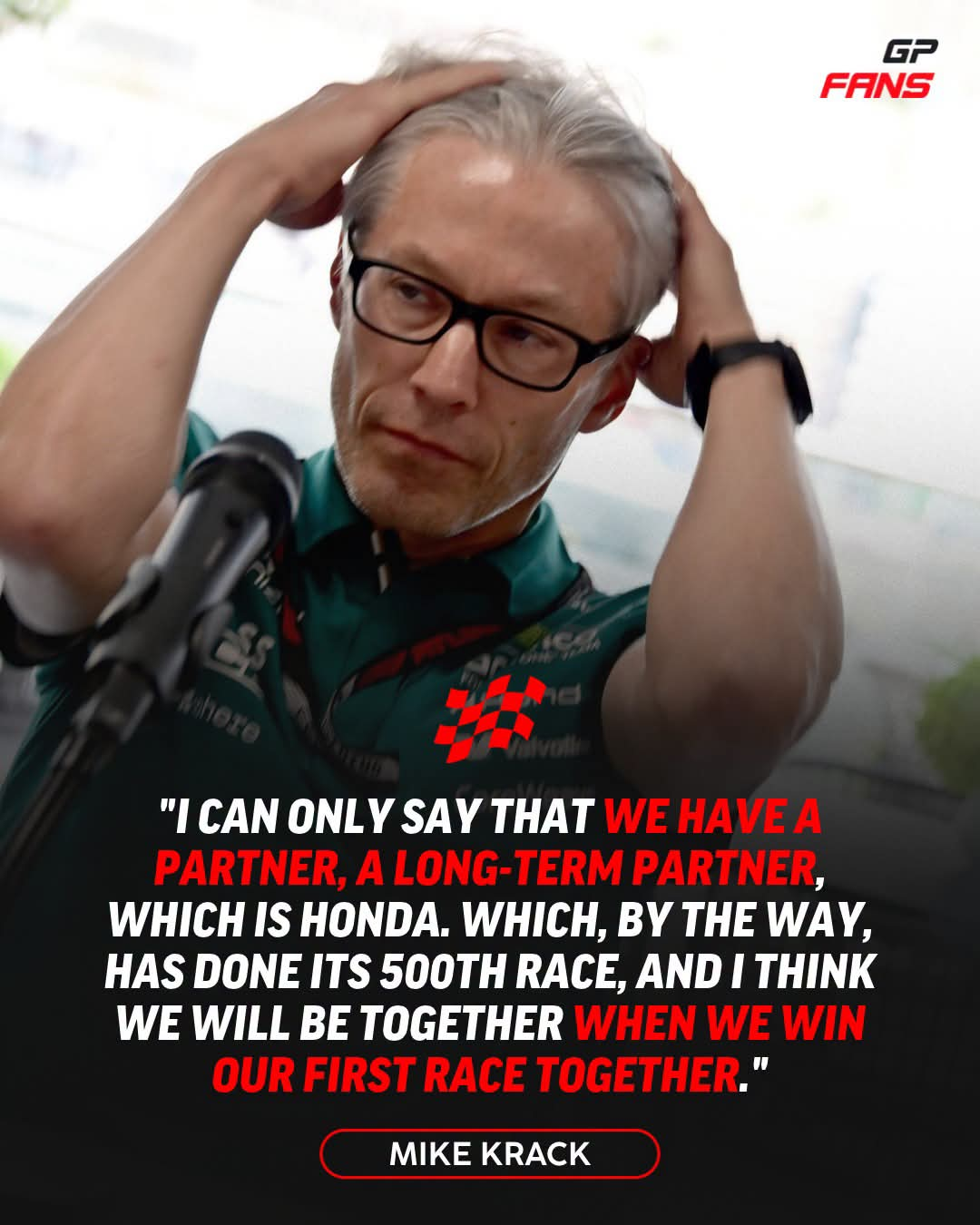
In the high-stakes world of Formula 1, where partnerships can make or break seasons and careers, Aston Martin has just drawn a clear line in the sand. Amid swirling rumors that the Silverstone team might walk away from its underperforming Honda power unit deal, Chief Trackside Officer Mike Krack delivered a defiant message after the United States Grand Prix. “I can only say that we have a partner, a long-term partner, which is Honda… and I think we will be together when we win our first race together.”
It is a strikingly confident declaration given the reality on track. Aston Martin’s 2026 campaign has been a grind. The new regulations era brought high hopes, especially with Adrian Newey’s arrival as the technical spearhead. Yet the Honda power unit has been the persistent weak link—plagued early by severe vibrations that raised genuine concerns about long-term driver health for Fernando Alonso and Lance Stroll, followed by ongoing shortfalls in raw power, driveability, and turbo response.
WHY THE RUMOURS GAINED TRACTION
The frustration is understandable. GPS data analysis from races such as Sepang suggested that with competitive power, Alonso’s car could have been fighting at the sharp end of the grid rather than midfield or worse. Cornering performance has shown flashes of genuine competitiveness under Newey’s influence, but straight-line deficits and inconsistent energy deployment have repeatedly undone the package. Reliability niggles and the occasional last-minute power unit change have only added to the sense of a partnership under strain.
In that climate, speculation was inevitable. Reports linked Aston Martin to possible alternative suppliers, with Red Bull Powertrains (the strong early performer of the new engine formula) frequently mentioned as a theoretical long-term option. Red Bull team principal Laurent Mekies shut those suggestions down firmly, stating the organisation is not ready or inclined to supply outside its own group. Still, the mere existence of the rumours reflected how far Honda’s current output sits behind the front-runners.
Krack’s response was therefore more than corporate damage control. By tying the team’s first victory explicitly to Honda, he framed the relationship as one of shared destiny rather than temporary convenience. It was a public show of faith at a moment when many observers expected hedging language or careful non-denials.
THE DEEPER CONTEXT OF A WORKS PARTNERSHIP
Formula 1 history is littered with engine partnerships that began painfully and later flourished. Honda itself has form here: its early years with McLaren in the previous hybrid era were difficult before the manufacturer eventually delivered title-winning machinery with Red Bull. Newey has acknowledged that Honda is currently further back than the version Red Bull inherited in 2019, noting this is effectively the Japanese company’s first full season back under the latest regulations. He has also expressed confidence that Honda’s engineering culture and resources will allow rapid acceleration once the core problems are understood.
Honda’s own leadership has been candid about the gap. The manufacturer is targeting meaningful steps for the opening races of 2027 and a further significant upgrade around the middle of next season. Under the FIA’s ADUO system, underperforming power units receive additional development opportunities—exactly the kind of regulatory lifeline Honda needs and is expected to use.
For Aston Martin, the decision to stand firm carries strategic weight. Walking away from a works partnership is rarely clean or cheap. Integration, software, energy recovery systems, and chassis development are deeply intertwined. Switching suppliers mid-cycle risks setting the team back years just as Newey’s aerodynamic philosophy is beginning to take root. Staying the course signals belief that the chassis side is fundamentally competitive and that the missing performance is recoverable with focused Honda development.
IMPACT ON DRIVERS, TEAM, AND THE BROADER GRID
Fernando Alonso, now deep into the later stage of a remarkable career, continues to extract everything possible from the car. His frustration has been visible at times, yet he has also spoken of progress happening behind the scenes in Japan. Lance Stroll has endured the same limitations while the team works to extract more from the current package. A public commitment from the leadership helps stabilise the garage atmosphere and keeps the focus on development rather than speculation.
For the organisation as a whole, the statement reinforces the long-term project narrative that owner Lawrence Stroll has sold to sponsors and stakeholders. Aston Martin’s road-car brand benefits from an F1 presence that looks ambitious rather than transitional. For Honda, the public support is valuable political capital as it fights to close a performance deficit that could otherwise damage its reputation in a sport it has long treated as a technology showcase.
On the grid, the situation adds another layer of intrigue to the midfield and the longer-term power unit landscape. If Honda delivers the expected recovery in 2027, Aston Martin could suddenly become a genuine contender and reshape the competitive order. If progress stalls, the pressure will only intensify and the next round of speculation will be louder.
LOOKING AHEAD: FAITH OR FOLLY?
Krack’s words are bold precisely because they are measurable. The team has publicly staked its first win under the current regulations on the Honda partnership. That creates a clear benchmark for 2027. Early signs of improved power, better driveability, and reliability will be scrutinised intensely. A mid-season step-change, as Honda has outlined, could transform the narrative. Continued struggles would leave the leadership looking optimistic to a fault.
What makes the statement interesting is its refusal to treat the current pain as terminal. In an era of cost caps, complex hybrid power units, and limited development tokens, patience and deep technical collaboration often separate the teams that eventually succeed from those that keep restarting. Aston Martin is choosing the former path—at least for now.
Whether that faith is rewarded will define the next chapter for one of Formula 1’s most watched projects. For the moment, the message from Silverstone is unambiguous: the first win is coming, and it will arrive with Honda power.