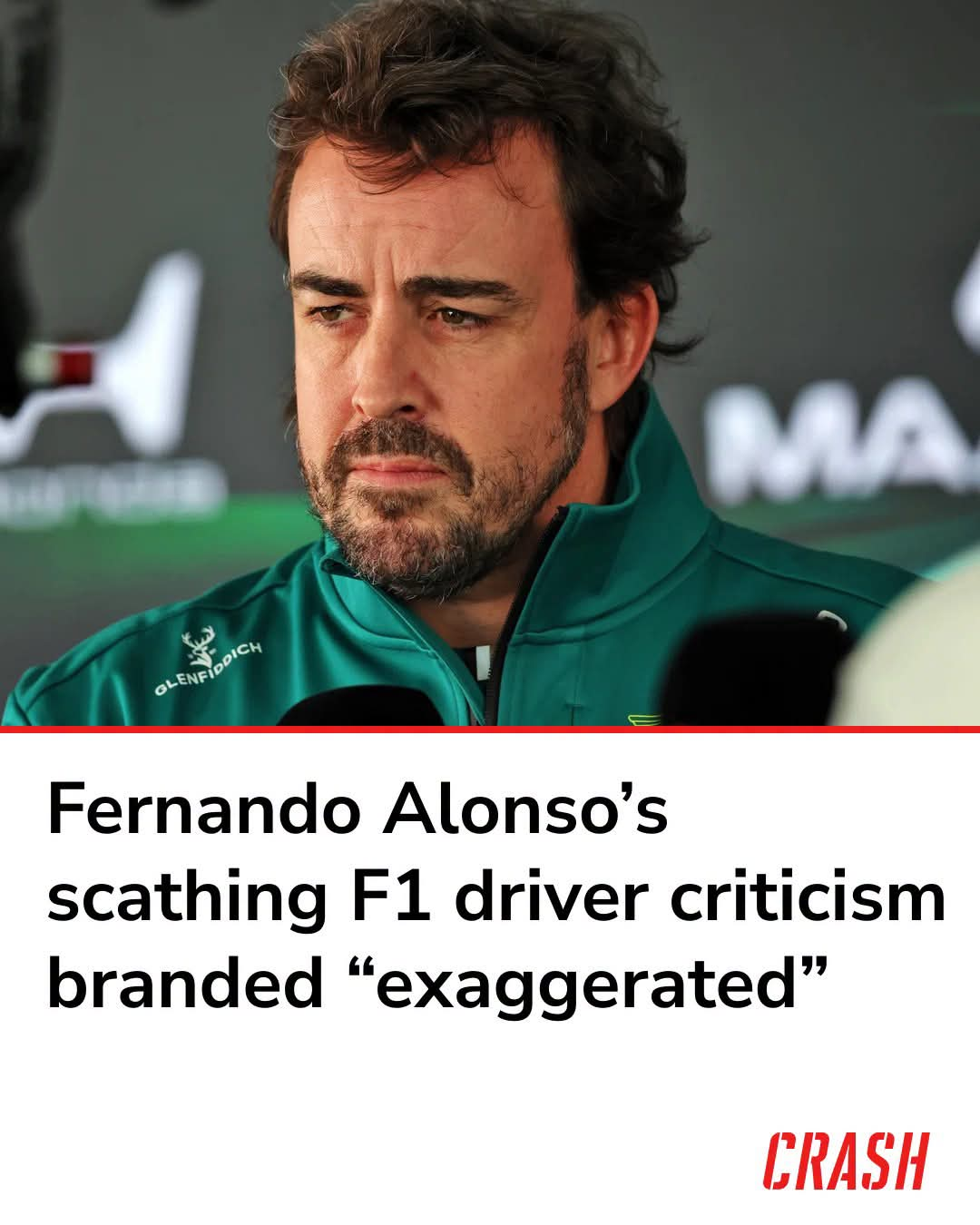
Fernando Alonso’s criticism of Formula 1’s backmarkers has sparked a fresh debate after former F1 driver Ivan Capelli accused the two-time world champion of exaggerating his assessment. Alonso’s frustration followed a difficult United States Grand Prix, where an opening-lap collision with Alex Albon damaged his Aston Martin and left him finishing outside the points.
The Spaniard did not hide his displeasure after the incident, arguing that the quality of drivers towards the back of the grid was too low. However, Capelli believes Alonso’s comments overlooked the difficulties drivers face when competing in machinery that does not respond as expected.
The disagreement raises a wider question about modern Formula 1: when mistakes happen at the back of the field, how much responsibility belongs to the driver, and how much should be attributed to the car?
ALONSO’S HARSH COMMENTS AFTER UNITED STATES GRAND PRIX COLLISION
Alonso’s race at the Circuit of the Americas was compromised after contact with Williams driver Alex Albon on the opening lap. The incident left significant damage on the Aston Martin, affecting Alonso’s ability to compete for a stronger result.
He eventually finished 16th, adding another frustrating afternoon to Aston Martin’s difficult campaign. Speaking after the race, Alonso argued that the standard of driving towards the back of the field needed to improve.
“When you start at the back, there is this risk always,” Alonso said, before describing the quality of drivers in the lower third of the grid as “very low.”
His remarks reflected the frustration of a driver who believed his race had been ruined by avoidable contact. However, the statement also placed several competitors under scrutiny, prompting questions about whether Alonso was being fair to drivers operating in less competitive machinery.
For a driver with two world championships and decades of experience, Alonso’s words carry considerable weight. But his reputation does not make the criticism immune to challenge, particularly when the incident occurred in the crowded and unpredictable opening stages of a Grand Prix.
IVAN CAPELLI SAYS ALONSO WENT TOO FAR
Former F1 driver and Sky Sports Italia pundit Ivan Capelli disagreed with Alonso’s assessment, describing it as exaggerated.
Speaking to Italian publication La Gazzetta dello Sport, Capelli argued that drivers should not be judged solely on their results when their cars limit what they can achieve.
He pointed to Sergio Perez and Valtteri Bottas as examples of experienced drivers who have demonstrated their abilities in more competitive machinery. Both have won Formula 1 races in the past, illustrating how much a driver’s results can change when the performance of the car improves.
Capelli explained that drivers attempting to extract more from an uncompetitive car can find themselves operating close to its limits. When the machinery fails to respond as expected, mistakes and contact can become more likely.
His argument challenges the idea that poor results or incidents at the back of the grid necessarily indicate a lack of driving quality. In a sport where aerodynamic performance, tyre grip and mechanical behaviour can vary significantly between teams, the car remains a major part of the equation.
WHY THE 2026 F1 CARS MAY BE MAKING ADAPTATION MORE DIFFICULT
Capelli also highlighted the challenge of adapting to Formula 1’s 2026 technical regulations. The new generation of cars has changed how drivers manage performance, making adaptation an important factor in the current championship.
He suggested younger drivers may have an advantage when learning the new technology because they can develop their habits around the latest machinery from the beginning of their F1 careers.
More experienced drivers, meanwhile, may need to adjust instincts and techniques built over many seasons. That does not mean older drivers cannot adapt, but the process can require them to abandon methods that previously brought success.
The contrast has become part of the wider conversation surrounding the 2026 season, with drivers experiencing different levels of comfort in the new cars. Andrea Kimi Antonelli’s strong campaign has drawn particular attention, although the performance of any individual driver also depends on the competitiveness of their team’s package.
For Alonso, the challenge is especially complicated because Aston Martin has struggled to provide consistently competitive machinery. Even a highly experienced driver can find it difficult to fight for points when the car lacks the necessary pace or suffers significant damage during a race.
CAPELLI BELIEVES ALONSO STILL HAS THE MOTIVATION TO FIGHT
Despite challenging Alonso’s comments, Capelli offered a more sympathetic assessment of the Spaniard himself.
He suggested that Alonso continues to enjoy racing and remains determined to achieve more in Formula 1. Capelli also described him as a stubborn competitor who continues trying to add another chapter to his career.
That determination has long been part of Alonso’s reputation. His willingness to keep fighting despite difficult circumstances has helped sustain his career across different teams and generations of cars.
However, determination alone cannot overcome every technical disadvantage. Alonso needs a car capable of converting his experience into competitive results, while Aston Martin must continue working to improve its overall package.
His criticism of the backmarkers may therefore be understood as a reaction to the frustration of another compromised race. Yet Capelli’s response highlights why such incidents require careful analysis rather than broad conclusions about the ability of an entire group of drivers.
THE DEBATE GOES BEYOND ALONSO AND ALBON
The disagreement exposes one of Formula 1’s most persistent tensions: the balance between driver responsibility and car performance.
Drivers must make sound decisions in close racing, particularly on the opening lap when several cars compete for limited space. At the same time, the ability to defend, attack and recover from difficult situations depends heavily on the machinery beneath them.
Alonso believes the standard of driving at the back of the field is a concern. Capelli argues that the limitations of the cars must also be considered, especially when experienced drivers have previously demonstrated their ability to win races.
Neither perspective removes the need to examine the specific circumstances of the collision between Alonso and Albon. The incident itself, the available space and the decisions made by both drivers matter more than generalisations about the quality of the grid.
As Formula 1 continues through the 2026 season, the debate is likely to remain relevant. With the Mexican Grand Prix approaching, Alonso will be looking for a cleaner weekend and a better result, while Aston Martin needs to give him a package capable of competing more consistently.
For now, Capelli has made his position clear: Alonso’s frustration may be understandable, but blaming the quality of drivers at the back of the grid overlooks the technical limitations that can shape their performance.