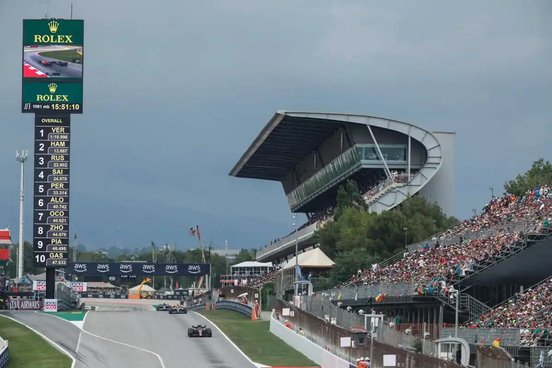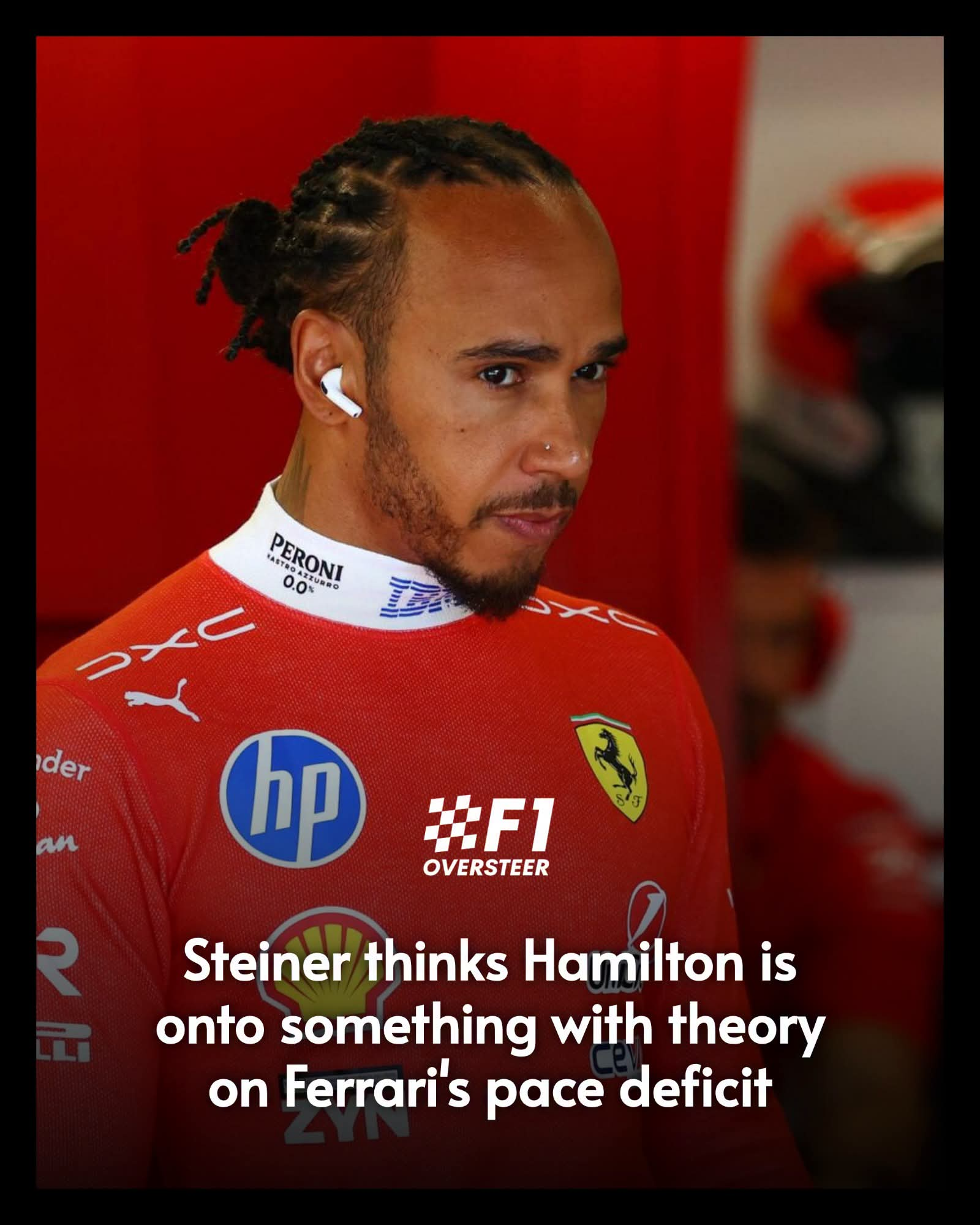
Lewis Hamilton’s concerns about Ferrari’s sudden loss of pace during qualifying for the 2026 United States Grand Prix have received support from former Haas team principal Guenther Steiner, who suspects that rival teams may be holding back performance during practice before unleashing more speed when it matters most.
Ferrari appeared capable of challenging for pole position at the Circuit of the Americas after encouraging performances in practice and the opening stages of qualifying. However, the picture changed dramatically in Q3, when Mercedes and Red Bull found additional pace and left the Italian team struggling to keep up.
The unexpected shift frustrated Hamilton, who questioned how Ferrari’s competitors had suddenly found so much speed. Steiner has now echoed that suspicion, suggesting that Ferrari’s strong practice performances may create expectations that its rivals deliberately avoid meeting until qualifying.
Although neither man has presented evidence proving that rival teams are deliberately concealing performance, their comments have renewed attention on the competitive differences between practice, qualifying and race day.
LEWIS HAMILTON QUESTIONS WHERE FERRARI’S RIVALS FOUND THEIR EXTRA SPEED
Hamilton entered qualifying with reasons to believe Ferrari could challenge for a stronger result. The seven-time world champion had felt competitive in the earlier sessions, and the car appeared capable of matching its leading rivals through the corners.
However, Ferrari struggled to maintain that position in Q3. Hamilton qualified fifth, while Charles Leclerc secured fourth on the grid, leaving both drivers disappointed after what had looked like a promising build-up.
Hamilton questioned whether Mercedes and Red Bull had increased their engine performance for the final qualifying session. He explained that Ferrari had not made dramatic changes to its car between the earlier sessions and Q3, making the sudden difference difficult for him to understand.
His concern was not simply that Ferrari had been beaten. It was the size and timing of the performance gap that caught his attention.
Hamilton also acknowledged that Ferrari continued to lose time on the straights, an area where he believed Mercedes and Red Bull retained a significant advantage. In his assessment, Ferrari could compete through the corners but lacked the straight-line speed necessary to challenge consistently for the leading positions.
That distinction could prove crucial as Ferrari attempts to close the gap during the remaining rounds of the championship.
GUENTHER STEINER SUSPECTS RIVALS ARE HOLDING SOMETHING BACK
Steiner believes Hamilton may have identified a recurring pattern in the way Ferrari’s competitors approach a Grand Prix weekend.
Speaking on the Chequered Flag podcast, the former Haas boss suggested that Ferrari-powered cars had appeared particularly strong during recent practice sessions, only for their advantage to diminish when qualifying began.
He stopped short of describing the situation as outright sandbagging, but raised the possibility that Mercedes and Red Bull were not showing their full potential earlier in the weekend.
Steiner also acknowledged that he had not conducted a detailed analysis of the relevant data. His comments were therefore an interpretation of the pattern he believed he had observed, rather than a verified technical finding.
Nevertheless, his assessment highlights a familiar challenge in Formula 1: practice times do not always provide an accurate picture of the competitive order.
Teams operate under different fuel loads, engine settings, tyre programmes and aerodynamic configurations. Some may prioritise long-run performance, while others focus on single-lap speed or testing new components.
Consequently, a team that appears dominant on Friday can lose ground on Saturday without necessarily having suffered a technical setback.
FERRARI’S STRAIGHT-LINE SPEED REMAINS A MAJOR CONCERN
Beyond the question of whether its rivals are concealing performance, Ferrari has a more immediate problem to solve.
Hamilton believes the Scuderia is competitive through corners but continues to lose ground on the straights. That weakness can make it difficult to fight for pole position, defend against faster cars and execute overtaking moves during the race.
Straight-line performance depends on several factors, including engine output, aerodynamic drag, energy deployment and how effectively the car exits slower corners. A deficiency in one area can compromise the entire lap, particularly at a circuit such as COTA, where drivers must balance high-speed corners with lengthy acceleration zones.
Ferrari’s engine performance has also attracted attention throughout the 2026 campaign. The FIA’s Additional Development and Upgrade Opportunities system, known as ADUO, provides eligible manufacturers with opportunities to address certain power-unit performance gaps under the regulations.
Those opportunities could become important if Ferrari determines that its deficit is primarily related to the engine rather than the aerodynamic package.
However, the team would need to identify precisely where it is losing time before deciding which changes would deliver the greatest improvement.
CHARLES LECLERC’S RESULT SHOWS FERRARI STILL HAS POTENTIAL
Despite the qualifying disappointment, Ferrari’s race performance offered a more encouraging picture.
Leclerc finished second at the United States Grand Prix, while Hamilton secured fourth place. The result demonstrated that Ferrari remained capable of competing near the front, even if it could not consistently match Mercedes and Red Bull over a single lap.
Steiner pointed to Leclerc’s second-place finish as evidence that Ferrari had performed well in the race. He also argued that the team’s expectations can become inflated when practice results suggest that victory or pole position is within reach.
Ferrari’s challenge is therefore partly about converting potential into consistent results. Strong practice pace creates optimism, but the points are awarded on Sunday, and the team must ensure its performance translates across qualifying, strategy and race management.
For Hamilton, the Austin weekend was another reminder that cornering performance alone is insufficient when rivals possess an advantage on the straights. For Leclerc, the podium showed that Ferrari can still capitalise when circumstances and race pace align.
The difference between those two outcomes underlines why Ferrari needs to examine both its qualifying weakness and its ability to maintain competitive performance throughout a full race distance.
COULD THE SUSPICIONS CHANGE THE CHAMPIONSHIP BATTLE?
The timing of the debate makes it particularly interesting, with the 2026 championship entering its closing stages.
Mercedes leads the Constructors’ Championship with 607 points, ahead of Ferrari on 474 and Red Bull on 355. In the Drivers’ Championship, Kimi Antonelli leads with 365 points, followed by George Russell on 242 and Hamilton on 241.
Those standings underline the scale of Mercedes’ advantage and the importance of every remaining opportunity for Ferrari to challenge its rivals.
If Ferrari can improve its straight-line speed and consistently reproduce its best practice performance in qualifying, it could become more dangerous in the fight for race victories and podiums. But if its rivals are already extracting more performance from their existing packages, Ferrari may need to look beyond its current setup approach.
There is no confirmed evidence that Mercedes or Red Bull are deliberately hiding substantial engine performance during practice. Their apparent gains could reflect normal differences in fuel loads, engine modes, tyre preparation and qualifying execution.
Even so, Hamilton’s observations and Steiner’s comments raise a legitimate competitive question: how much of a team’s apparent pace during practice reflects its true potential?
Ferrari will want to answer that question through its own data rather than speculation. Understanding where its rivals gain time could help the team make better decisions about setup, development and strategy.
HAMILTON AND STEINER HAVE PUT FERRARI’S NEXT CHALLENGE IN FOCUS
Hamilton’s frustration in Austin was understandable. Ferrari had looked capable of fighting near the front before losing ground in the session that determined the starting positions, and the sudden change left the driver searching for an explanation.
Steiner’s support has given the theory greater visibility, but it has not established that Ferrari’s rivals are deliberately concealing their speed. The former Haas team principal himself presented the idea as a suspicion based on a pattern he believes he has noticed.
The most important issue for Ferrari is whether it can close the gap where it matters most. Better straight-line performance, stronger qualifying execution and a clearer understanding of rival strategies could all help the team turn promising weekends into more consistent challenges for victory.
With the championship battles continuing, Ferrari cannot afford to rely on impressive practice sessions alone. Hamilton and Leclerc need a car that delivers when the pressure is highest, while the team must establish whether its deficit comes from its own limitations, the efficiency of its rivals or a combination of both.
Until more detailed evidence emerges, the idea that Mercedes and Red Bull are holding back performance remains an intriguing theory rather than a proven explanation. But Hamilton and Steiner have made one thing clear: Ferrari’s sudden loss of pace in qualifying deserves a closer look.