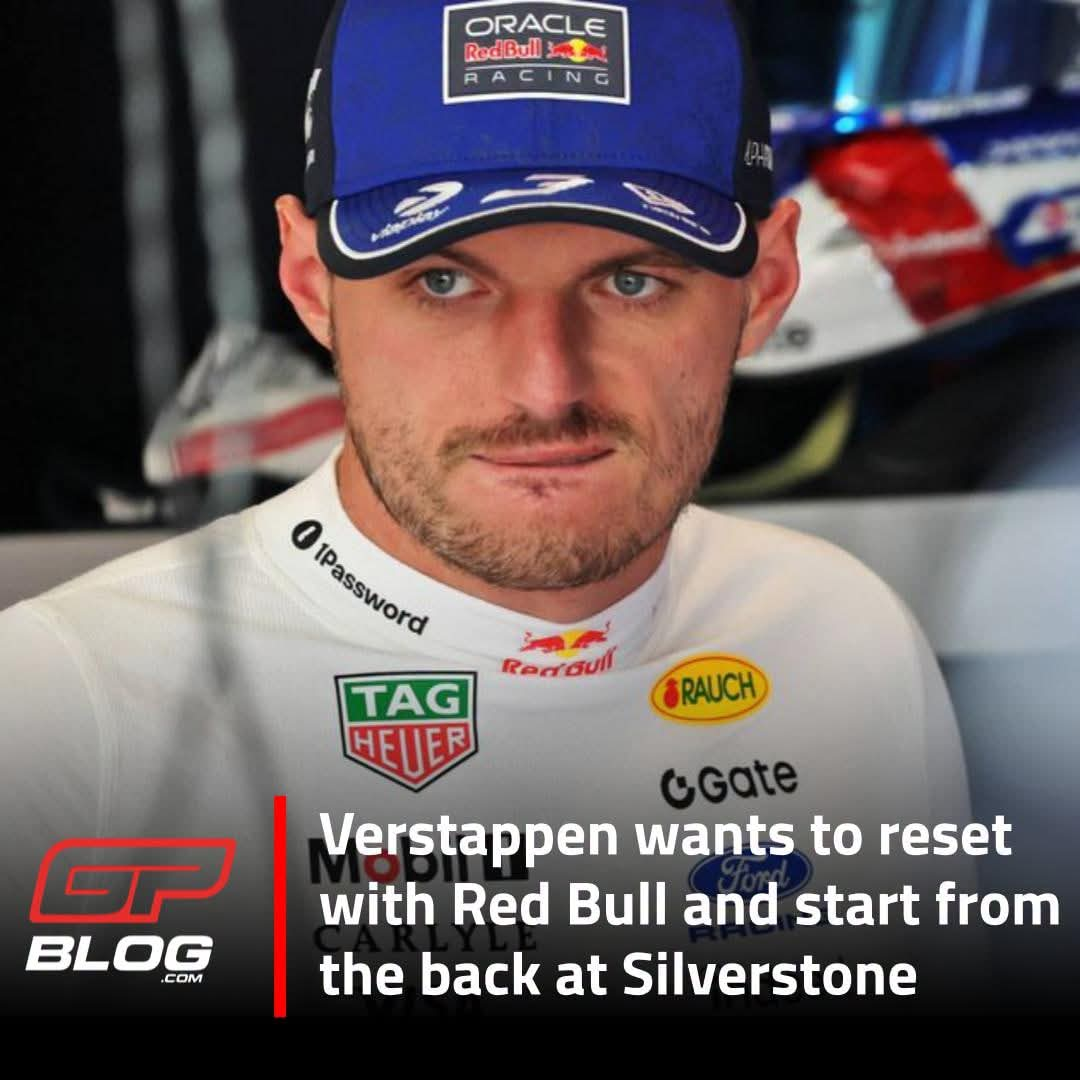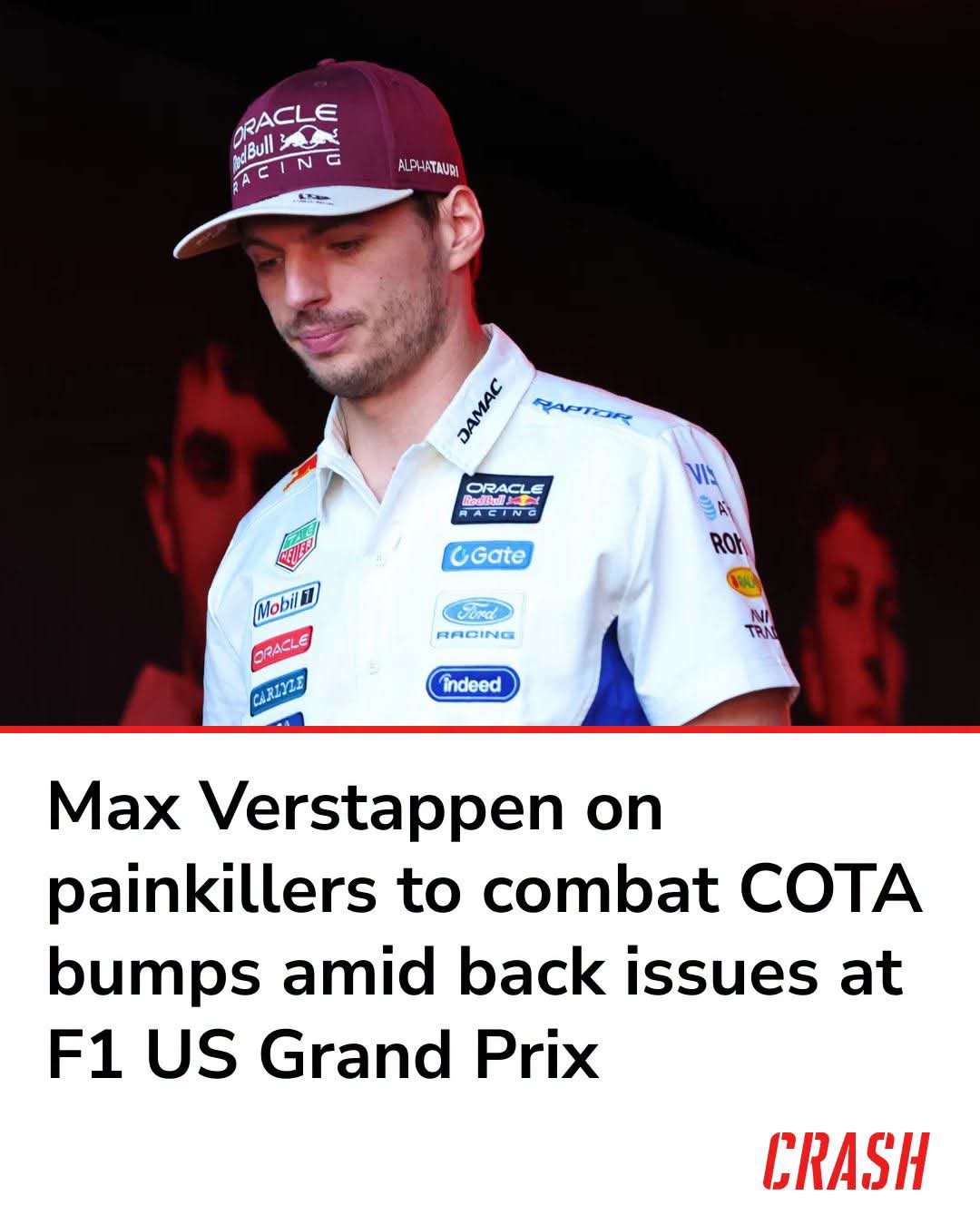
Max Verstappen has revealed he is taking painkillers to cope with the extreme bumps at the Circuit of the Americas, describing the vertical loads as “impossible” and confirming that medical scans have shown significant wear on discs in his lower back. The Red Bull driver’s comments escalate the growing row over the Austin track surface ahead of the United States Grand Prix.
While some drivers share his concerns, others, including Lewis Hamilton, believe the bumps form part of the circuit’s character.
### VERSTAPPEN DETAILS THE PHYSICAL DAMAGE
After qualifying second behind Kimi Antonelli, Verstappen spoke candidly about the toll the track is taking on his body.
“I’ve had a few scans done and you can see it in certain discs at the bottom of the back there’s nothing left there,” he told ViaPlay. “Before Turn 1 and Turn 19 I lift myself out of the seat before I get there, otherwise it’s simply impossible. I’m getting the pills in to manage.”
The four-time world champion had already labelled the bumps “unacceptable” and “out of control” earlier in the weekend. His latest remarks make clear that the issue has moved beyond discomfort into a genuine health concern.
### NORRIS AND PIASTRI ECHO THE COMPLAINTS
Lando Norris confirmed he is taking headache tablets before every session as a precaution against the repeated impacts. “Turn 19 is pretty horrible,” the McLaren driver said. “I’ve been taking headache tablets before every session. It’s what I have to deal with, maybe other people don’t have the same issues, but I have to, otherwise I can’t drive properly.”
Oscar Piastri highlighted a specific racing risk, describing the approach to Turn 1 as resembling a “motocross jump.” He noted that while the bump is manageable in qualifying when drivers brake after it, in the race the braking zone will sit directly on the irregularity, creating a potential hazard during overtaking moves.
### HAMILTON TAKES A DIFFERENT VIEW
Not every driver is calling for urgent changes. Lewis Hamilton, at 41, dismissed the severity of the complaints.
“People are complaining, I’m 41 and my back is fine,” the Ferrari driver said. “It is bumpy, but I think it’s OK… I personally like the bumps, I think it adds character to the track, it feels flat and I love the challenge of that. The car is moving and you have to correct it. In a perfect world it would be a flat track, but then there would be lacking character.”
Hamilton’s stance underscores how differently drivers can experience the same surface depending on set-up, driving style and individual physiology.
### CIRCUIT BOSS RESPONDS
COTA circuit boss Bobby Epstein accepted there is an issue at the bottom of Turn 1 but pushed back against the broader criticism. He said the team only became aware of the specific dip this week and would have addressed it sooner had they known. Other bumps around the circuit, he claimed, have already been improved.
“We don’t feel good that there’s a bump at the bottom of Turn 1,” Epstein told ESPN. “We didn’t know about it until this week. We would have fixed it. But the other things Max spoke about, all the bumps around the track, we’ve fixed them. The track is in really good shape.”
He distinguished between a bump, which can be ground down, and a dip, which is harder to correct quickly.
### A DEEPER ISSUE FOR DRIVER WELFARE
The debate at Austin highlights a recurring tension in modern Formula 1. Cars generate enormous forces; when those forces meet an imperfect surface, the cumulative effect on drivers’ bodies can be severe. Verstappen’s willingness to discuss scan results and painkiller use raises the stakes beyond routine track feedback.
With COTA contracted to host Formula 1 until at least 2034, the pressure for a more permanent solution is likely to increase. Temporary grinding and partial resurfacing have not resolved the underlying problem of ground movement beneath the circuit.
### WHAT IT MEANS FOR SUNDAY’S RACE
Drivers will have to manage the conditions as they are. For Verstappen, that means continuing to use painkillers and adjusting his body position before the worst sections. For the stewards and race organisers, the focus will be on whether the surface creates any additional safety concerns during the Grand Prix itself, particularly under race fuel loads and in battles for position.
The United States Grand Prix already carries championship significance. The state of the track has now added a layer of physical controversy that Formula 1 cannot easily ignore.