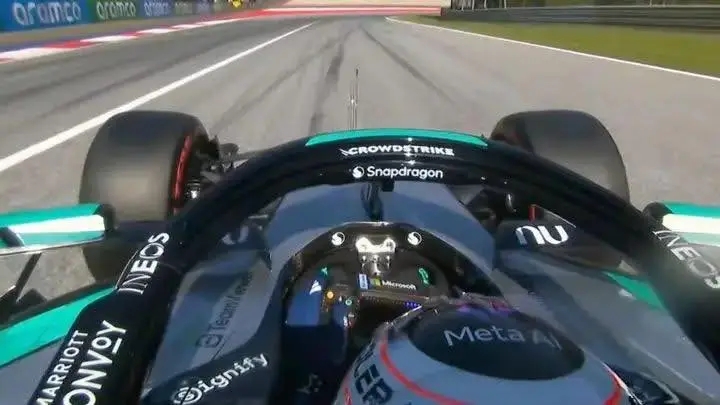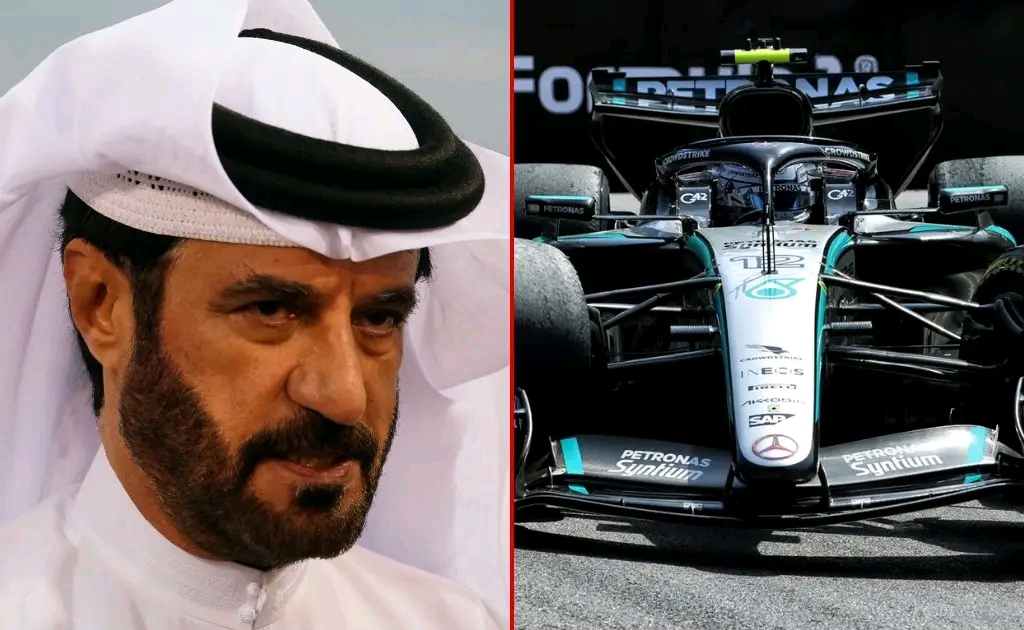
The aftermath of the Monaco Grand Prix has taken an unexpected turn as Mercedes finds itself under intense scrutiny following reports that FIA officials are examining unusual data patterns linked to the team’s hybrid power unit systems.
While the race weekend delivered its usual mix of strategy, pressure, and championship drama, attention has now shifted away from the streets of Monte Carlo and toward the technical garages, where questions surrounding engine telemetry and hybrid system performance have sparked widespread speculation throughout the Formula 1 paddock.
Although no official rule violation has been confirmed, the investigation has quickly become one of the biggest talking points in Formula 1, with fans and rival teams closely monitoring developments.
WHY THE FIA IS LOOKING CLOSER AT MERCEDES
Modern Formula 1 cars generate enormous amounts of data during every session. From fuel flow rates and battery deployment to energy recovery systems and power unit efficiency, virtually every component is monitored in real time.
Reports suggest FIA technical personnel identified irregular signals within Mercedes’ telemetry data following the Monaco Grand Prix. As part of standard regulatory procedures, officials have reportedly begun reviewing detailed performance information to determine whether the data reflects a harmless anomaly, a software calibration issue, or something requiring further examination.
Investigations of this nature are not uncommon in Formula 1. The FIA routinely analyzes telemetry and technical data to ensure all teams remain within the sport’s highly complex regulations.
However, when a leading team becomes the focus of such attention, the story naturally attracts significant interest.
UNDERSTANDING THE COMPLEXITY OF F1 HYBRID POWER UNITS
Formula 1’s current hybrid engines are among the most sophisticated machines in motorsport history.
Each power unit combines a turbocharged internal combustion engine with advanced electrical systems designed to recover and deploy energy efficiently throughout a race.
These systems include:
- Energy Recovery System (ERS)
- Motor Generator Unit-Kinetic (MGU-K)
- Motor Generator Unit-Heat (MGU-H)
- Battery energy storage systems
- Fuel flow monitoring technology
Because these components interact through thousands of calculations every second, unusual telemetry readings can sometimes result from software updates, sensor irregularities, or data transmission anomalies rather than any deliberate breach of regulations.
This is one reason why the FIA’s review process can take time before any conclusions are reached.
WHAT HAPPENS IF THE FIA FINDS NOTHING?
One possible outcome is that the investigation concludes with no regulatory concerns.
Formula 1 teams frequently generate data that requires clarification, particularly when new upgrades, revised engine mappings, or changing track conditions affect performance metrics.
If officials determine that the unusual signals stemmed from technical noise, sensor behavior, or legal operational parameters, Mercedes would likely be cleared without any further action.
Such a result would reinforce the team’s insistence that it is cooperating fully with the governing body.
WHAT IF A TECHNICAL BREACH IS DISCOVERED?
The more dramatic scenario would involve the FIA identifying a genuine technical infringement.
The severity of any potential penalty would depend entirely on the nature of the issue.
Possible consequences could range from warnings and fines to race result adjustments or disqualification if regulations were found to have been breached significantly.
At this stage, however, there is no evidence that such penalties are being considered.
That distinction is important because Formula 1 investigations often generate headlines long before any findings emerge.
IMPACT ON GEORGE RUSSELL AND KIMI ANTONELLI
For Mercedes drivers George Russell and Kimi Antonelli, the uncertainty creates an additional layer of pressure during a crucial stage of the season.
Drivers rely heavily on confidence and stability within their teams. Even when investigations focus on technical systems rather than driver conduct, media attention and public speculation can become distractions.
Russell continues to battle for strong championship positions, while Antonelli’s rapid rise has made him one of the sport’s most closely watched young talents.
Any prolonged investigation risks shifting focus away from on-track performance and toward off-track controversy.
HOW RIVAL TEAMS ARE LIKELY VIEWING THE SITUATION
Formula 1 teams are constantly searching for competitive advantages, and rival engineers will undoubtedly be paying close attention to developments involving Mercedes.
Historically, major technical investigations often encourage competing teams to ask questions of their own, particularly when performance gains appear difficult to explain.
Even if Mercedes is ultimately cleared, the investigation could prompt broader scrutiny across the grid as the FIA examines similar systems on other cars.
This has happened numerous times in Formula 1 history, where one team’s review eventually led to wider technical directives affecting multiple competitors.
WHY THIS MATTERS FOR THE CHAMPIONSHIP RACE
The Formula 1 championship is frequently decided by narrow margins.
A single penalty, disqualification, or technical ruling can dramatically alter both Drivers’ Championship and Constructors’ Championship standings.
That is why even preliminary investigations attract so much attention.
Every point earned during the season can become critical when title battles tighten later in the year. Any uncertainty surrounding a front-running team naturally becomes a significant storyline with potential championship implications.
PREDICTION: EXPECT A THOROUGH BUT CAUTIOUS REVIEW
Based on previous FIA investigations, officials are likely to conduct a detailed technical analysis before making any public conclusions.
The governing body understands the consequences of major rulings and typically avoids rushing decisions involving highly technical matters.
For now, the most likely outcome appears to be a comprehensive review of telemetry data, software systems, and hybrid power unit operations before any formal statement is issued.
Until concrete findings emerge, speculation will continue, but Formula 1 history suggests that patience is often necessary when dealing with complex technical investigations.
FINAL THOUGHTS
The Monaco Grand Prix may be over, but its biggest story could still be unfolding.
Mercedes now finds itself at the center of one of the paddock’s most closely watched technical reviews, with fans, rivals, and championship contenders awaiting answers.
Whether the FIA ultimately uncovers a genuine issue or simply validates Mercedes’ compliance, the investigation highlights the extraordinary level of scrutiny that exists in modern Formula 1.
In a sport where fractions of a second separate victory from defeat, every data point matters, and every technical question has the potential to influence the championship battle.
For now, the Formula 1 world waits for the FIA’s verdict.