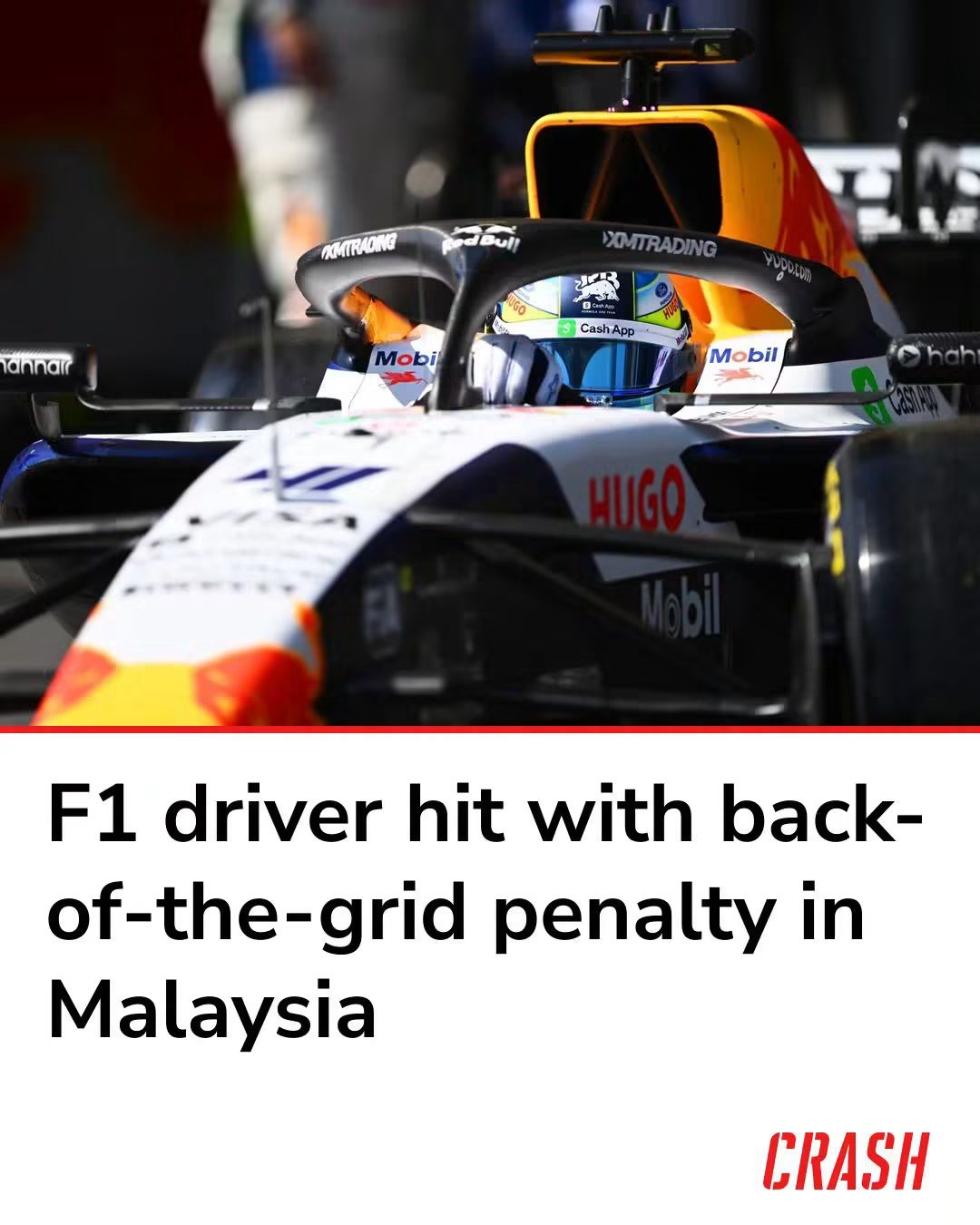
Formula 1’s long-awaited return to the Sepang International Circuit this weekend already carries a significant pre-race headache for one young driver. Racing Bulls has confirmed that Arvid Lindblad will start the Bahrain Grand Prix in Malaysia from the very back of the grid after the team elected to fit multiple new power unit components that exceed his season allocation.
The decision, announced on Thursday at the circuit, means the British driver will take the mandatory backmarker position once the penalties stack beyond 15 places. It is the first major grid penalty of the weekend at a venue that has not hosted Formula 1 since 2017 and is standing in for the postponed Bahrain race.
WHY THE PENALTY WAS TRIGGERED
Under the 2026 power unit regulations, each driver is limited in the number of internal combustion engines, turbochargers, exhaust systems and other elements they can use across the season. Exceeding those limits triggers escalating grid drops: ten places for the first extra component of a type and five places for each subsequent one. Once the total reaches 15 or more unserved places, the driver is automatically sent to the rear of the field.
Racing Bulls has chosen this weekend to introduce a fresh set of components for Lindblad, pushing him over the threshold for the first time this year. The timing is deliberate. Sepang’s long straights and relatively generous overtaking opportunities make it a less punishing venue for a recovery drive than tighter, more processional circuits later in the calendar.
Lindblad is not alone in carrying a grid handicap into Sunday. Alpine’s Franco Colapinto must serve a five-place drop converted from a ten-second time penalty he was unable to take in Azerbaijan after colliding with teammate Pierre Gasly and McLaren’s Lando Norris. Red Bull’s Isack Hadjar is also expected to drop at least five places due to earlier component usage on his car.
WHAT THIS MEANS FOR LINDBLAD AND RACING BULLS
For a driver still establishing himself in Formula 1, starting last is never ideal, yet the strategic calculation is clear. Fresh power unit parts should deliver better reliability and potentially stronger performance across a race distance that demands consistent power delivery in the Malaysian heat and humidity. Sepang has always rewarded cars that can manage tyre degradation and extract usable power on the long back straight.
Racing Bulls will be hoping Lindblad can replicate the kind of recovery drives seen elsewhere this season when drivers have taken engine penalties at tracks that allow progress. The team’s second car, currently shared between Liam Lawson and other options depending on the weekend, will start free of such restrictions, giving the squad a cleaner shot at points from higher up the order.
The broader context is important. The 2026 power unit formula has already produced a higher volume of component changes than many expected, with several teams carefully timing their upgrades and replacements around circuits that offer the best chance of recovery. Starting from the back at Sepang is inconvenient but far from career-damaging, especially this early in the second half of the season.
THE BIGGER PICTURE FOR F1’S RETURN TO MALAYSIA
Formula 1’s return to Sepang is one of the more unusual stories of the 2026 calendar. The original Bahrain and Saudi Arabian races were disrupted by geopolitical events earlier in the year, leading organisers to relocate the Bahrain Grand Prix to Malaysia while retaining the Bahrain branding. For local fans and the circuit itself, the weekend represents a major opportunity to showcase the venue after nearly a decade away from the championship.
Drivers who raced at Sepang in its previous era have spoken of the circuit’s unique character: the combination of high-speed sections, technical corners and the ever-present tropical weather. Newer members of the grid have been preparing on simulators and soaking up the local atmosphere, from karting sessions to tourist visits around Kuala Lumpur.
A back-of-the-grid start for Lindblad adds an extra narrative thread to an already unusual event. It forces Racing Bulls to prioritise race pace and strategy over qualifying position, and it gives the rest of the field a clear target to manage in the early laps. In a season already defined by power unit management and the careful rationing of components, this weekend’s decision is simply the latest example of teams playing the long game.
LOOKING AHEAD
Lindblad’s penalty will not define the championship, but it does highlight how tightly the new regulations constrain teams. Reliability remains a competitive advantage, and every component change carries a cost that must be absorbed somewhere on the calendar. For Racing Bulls, absorbing it at Sepang makes strategic sense. For Lindblad, it offers a chance to demonstrate racecraft under pressure in front of a large Malaysian crowd eager to welcome Formula 1 back.
Expect the usual flurry of strategy speculation once the cars hit the track. Fresh power units can unlock performance, but they also require careful management in the opening stints. How quickly Lindblad can climb through the field will be one of the more interesting subplots of Formula 1’s Malaysian weekend.